The Soul’s Loom: Weaving the Invisible Threads of a Child’s Personalized Learning Journey
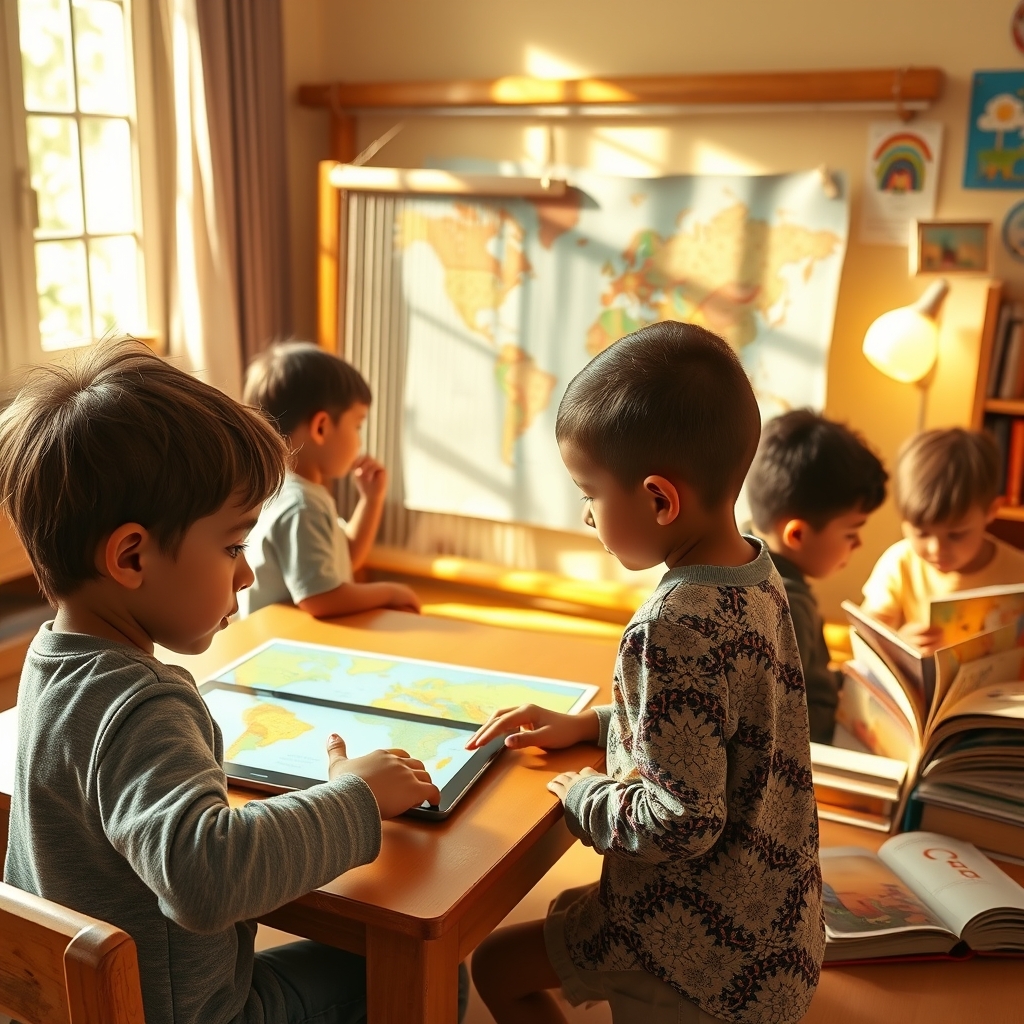
There is a quiet magic in the way a child’s mind unfolds—not in the rigid lines of a textbook, but in the meandering paths of curiosity, the sudden leaps of insight, the hesitant steps into the unknown. Education, at its most profound, is not a destination but a journey, one that bends and breathes with the rhythm of the learner. It is a loom where the threads of experience, inquiry, and connection intertwine, weaving something far greater than the sum of its parts: the soul of a learner, vibrant and alive.
The Alchemy of Personalization
What does it mean to walk alongside a child in their learning, rather than ahead of them, pulling them forward? It is to recognize that each mind is a unique landscape, with its own valleys of struggle and peaks of triumph. Personalized learning is not merely a method; it is an act of reverence, a acknowledgment that the child is not a vessel to be filled, but a fire to be kindled. When we tailor education to the contours of a child’s interests, strengths, and pace, we do more than teach—we honor the sacredness of their individuality.
Imagine a classroom where the curriculum does not march forward in lockstep, but flows like a river, carving its own path around the rocks of challenge and the still pools of reflection. Here, a child who struggles with numbers might find solace in the patterns of music, discovering that fractions are not barriers but bridges to harmony. Another, who stumbles over words on a page, might find their voice in the vivid storytelling of digital media, where images and sounds become the ink of their imagination. This is the alchemy of personalization: turning the lead of frustration into the gold of discovery.
The Living Pulse of Experiential Transitions
Transitions are the thresholds of learning, where the familiar gives way to the unknown, and the child steps—sometimes hesitantly, sometimes boldly—into new territories of growth. But what if these transitions were not abrupt cliffs to be scaled, but gentle slopes, guided by the steady hand of experience? Experiential school transitions are not merely about moving from one grade to the next; they are about crafting bridges between the child’s inner world and the outer landscape of learning.
Consider the child who leaves the nurturing cocoon of early education for the wider skies of primary school. The shift can feel like being cast adrift in a vast ocean. But when that transition is softened by the warmth of mentorship, the familiarity of collaborative projects, or the continuity of a responsive curriculum, the child does not drown—they learn to swim. They carry with them the threads of what they have known, even as they reach for what they have yet to discover. These transitions become not fractures, but seams, where the fabric of learning is stitched together with care.
The Heartbeat of Collaboration
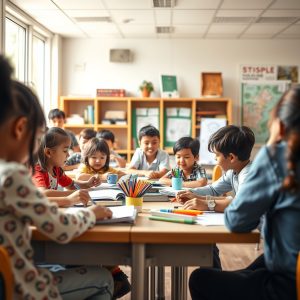
Learning is not a solitary endeavor. It is a dance, a conversation, a shared exploration where the boundaries between teacher and student, between peer and peer, blur into something fluid and alive. Collaborative learning environments are the crucibles where empathy is forged, where the quiet child finds their voice in the chorus of ideas, where the confident learner discovers the humility of listening. Here, knowledge is not hoarded but shared, like bread broken at a communal table.
In these spaces, the child learns that their perspective is not the only one, that the world is richer for its diversity of thought. A group project on sustainability might begin with a debate—some advocating for solar energy, others for wind, a few for the untapped potential of tidal power. But as they research, discuss, and create together, something remarkable happens. The debate softens into dialogue, the differences become strengths, and the project evolves into a tapestry of ideas, each thread essential to the whole. This is the heartbeat of collaboration: the realization that we are not alone in our learning, that the journey is richer when shared.
The Digital Tapestry: Where Technology Meets the Soul
Technology in education is often seen as a double-edged sword—capable of both illuminating and overshadowing the learning experience. But when wielded with intention, it becomes a loom in its own right, weaving digital threads into the fabric of a child’s education. Digital classroom integration is not about replacing the human touch with cold screens; it is about enhancing the connection between learner and knowledge, between curiosity and discovery.
Imagine a child in a rural classroom, their eyes wide as they explore the pyramids of Egypt through virtual reality, their fingers tracing the hieroglyphs as if they were standing in the shadow of the Sphinx. Or a student with dyslexia, who finds their voice in the rhythm of a text-to-speech program, where words no longer feel like obstacles but like stepping stones. Technology, when used thoughtfully, does not distance us from learning—it brings the world closer, making the abstract tangible, the distant intimate. It is not the enemy of the soul; it is another thread in the loom, one that can weave light into the darkest corners of ignorance.
The Unseen Curriculum of Well-Being
What good is knowledge if the heart that holds it is weary? Education is not merely about filling the mind; it is about nurturing the whole child—their emotions, their resilience, their sense of self. Holistic development programs recognize that a child’s well-being is the soil in which learning grows. When we tend to the roots of their emotional and social needs, the branches of their intellect reach higher, their leaves more vibrant.
This is the unseen curriculum, the one that teaches children how to navigate failure with grace, how to sit with discomfort without breaking, how to celebrate their victories without diminishing others. It is the lesson of mindfulness, where a child learns to pause, to breathe, to listen to the quiet voice within. It is the practice of empathy, where they learn to see the world through another’s eyes, to feel the weight of another’s struggle. These are not soft skills; they are the foundation upon which all other learning rests.
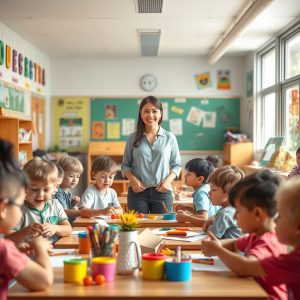
And so, the loom of education continues its work, not in the grand gestures, but in the quiet moments—the pause before a question is answered, the shared laughter over a failed experiment, the steady gaze of a teacher who sees not just the student, but the soul within. It is a journey without end, for the threads of learning are infinite, and the tapestry they weave is as vast as the human spirit. Each child who steps into the classroom brings with them a unique pattern, a story waiting to be told. And it is our privilege, our responsibility, to help them weave it into something beautiful.