The Soul’s Loom: How Collaborative Learning Weaves the Invisible Threads of Belonging
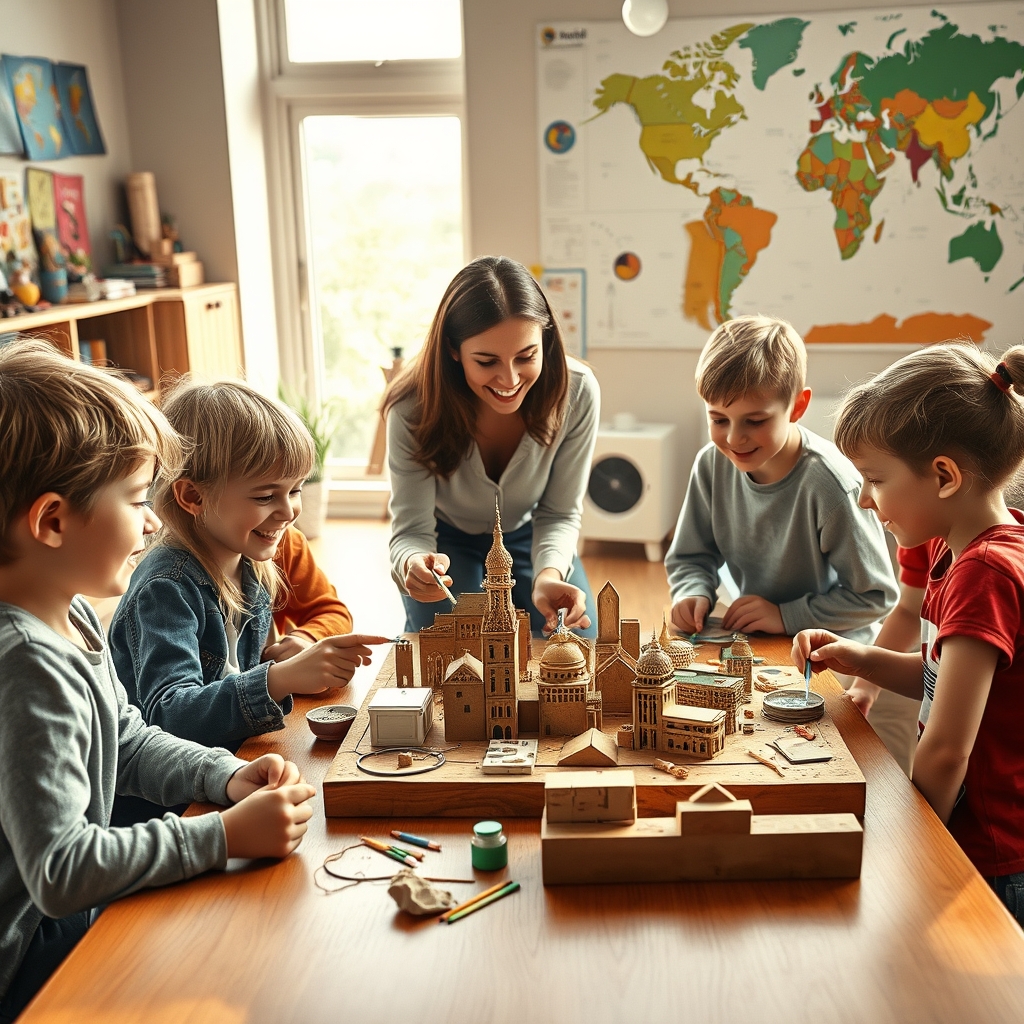
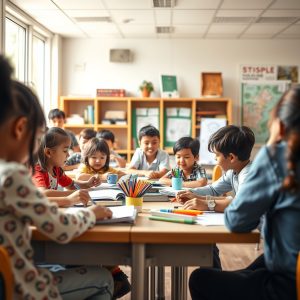
There is a quiet magic in the way children lean into one another, their small hands reaching across the table not just to share a crayon or a book, but to share the weight of a thought, the shape of an idea. It is in these moments—when a hesitant voice finds courage in the echo of another, when a stumbling question is met not with silence but with a chorus of “What if?”—that the true alchemy of learning unfolds. This is the soul of collaborative learning: not the rigid rows of desks or the measured cadence of a lesson plan, but the living, breathing tapestry of minds intertwining, each thread pulling taut to hold the others in place.
The Unseen Architecture of Shared Discovery
I remember the first time I witnessed it—the way a classroom could transform from a collection of individuals into a single, humming organism. It was during a project on ancient civilizations, where students were tasked not with memorizing dates or dynasties, but with building a miniature city from clay and cardboard, each child responsible for a different aspect: the aqueducts, the temples, the markets. There was no script, no step-by-step guide. Just a room full of children, their hands smudged with paint, their voices rising and falling like the tide, negotiating, compromising, laughing when the walls of their ziggurat collapsed for the third time. What emerged was not just a model of Babylon, but something far more enduring: the realization that knowledge is not a solitary pursuit, but a shared fire, one that burns brighter when fed by many hands.
This is the paradox of collaborative learning—it does not diminish the individual, but rather, it illuminates the unique light each child brings to the collective. The quiet observer, the relentless questioner, the dreamer who sees connections where others see only fragments: all are essential. The classroom becomes a microcosm of the world, a place where differences are not obstacles but the very materials from which understanding is built. And in this space, children learn something far more profound than history or math: they learn that their voice matters, that their perspective is a gift, that belonging is not something granted to them, but something they co-create.
The Fragile Ecosystem of Trust
Yet, this kind of learning does not happen by accident. It requires a deliberate unraveling of the traditional power structures that have long defined education—the teacher as the sole authority, the student as the empty vessel. Instead, it demands a shift: toward a model where the teacher is not the gatekeeper of knowledge, but the gardener, tending to the soil so that ideas might take root and grow. It requires trust, not just in the process, but in the children themselves. Trust that they are capable of more than we often give them credit for. Trust that their curiosity is not a distraction, but the very engine of their learning.
I have seen what happens when this trust is absent. The silence that settles over a room when children are afraid to speak, the way their shoulders hunch inward, their eyes darting to the teacher for approval before daring to offer an answer. It is a silence that speaks volumes, a silence that says, “I do not belong here.” But I have also seen what happens when trust is present—the way a child’s face lights up when their idea is met with enthusiasm, the way their posture shifts, their voice growing stronger with each affirmation. This is the invisible architecture of belonging, built not with bricks and mortar, but with the small, daily acts of validation that say, “You are seen. You are heard. You are enough.”
The Alchemy of Small Gestures
Collaborative learning is not about grand gestures or sweeping reforms. It is about the small, almost imperceptible moments that accumulate over time, like the slow accretion of sediment that forms a riverbed. It is the way a teacher kneels beside a student to ask, “What do you think?” instead of supplying the answer. It is the way a group of children huddle together, their heads bent over a problem, their voices a low murmur of possibility. It is the way a child who struggles with reading finds their place in the rhythm of a group project, their strengths—perhaps in storytelling, or in building, or in listening—valued in ways that standardized tests never could.
These moments are the threads that weave the fabric of belonging. They are the quiet rebellions against an education system that too often prioritizes efficiency over empathy, uniformity over individuality. And they are the antidote to the loneliness that can pervade modern learning, the sense that one is adrift in a sea of expectations, struggling to keep up or to fit in. In a collaborative classroom, no one is adrift. Each child is anchored by the others, their differences not erased, but celebrated as the very things that make the collective stronger.
The Living Curriculum of the Heart
What does it mean to educate a child? Is it to fill their minds with facts, to prepare them for tests, to shape them into productive members of society? Or is it something deeper, something more elusive—to nurture the spark of curiosity, to cultivate the courage to ask questions, to foster the empathy that allows them to see the world through another’s eyes? Collaborative learning suggests that the answer lies not in the either/or, but in the both/and. It is possible to teach children the skills they need to navigate the world while also teaching them the values that make that navigation meaningful: kindness, resilience, the willingness to listen, the courage to speak up.
This is the living curriculum of the heart, the one that cannot be measured by grades or standardized tests, but by the way a child’s face lights up when they realize they are not alone in their struggles, by the way their voice grows stronger when they realize their ideas have power. It is the curriculum that teaches them that learning is not a solitary journey, but a shared one, a path walked together, where the destination is not as important as the company kept along the way.
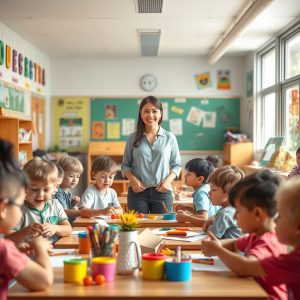
And so, the classroom becomes more than a room with four walls. It becomes a sanctuary, a place where children are not just taught, but seen. Where they are not just instructed, but inspired. Where they learn not just to answer questions, but to ask them. Where they discover that their voice is not just welcome, but necessary. And in this discovery, they find something even more precious: the quiet, unshakable knowledge that they belong—not just to the classroom, but to each other, to the world, to the endless, unfolding story of what it means to be human.