The Silent Cartography of the Classroom: Mapping the Unseen Territories of Belonging
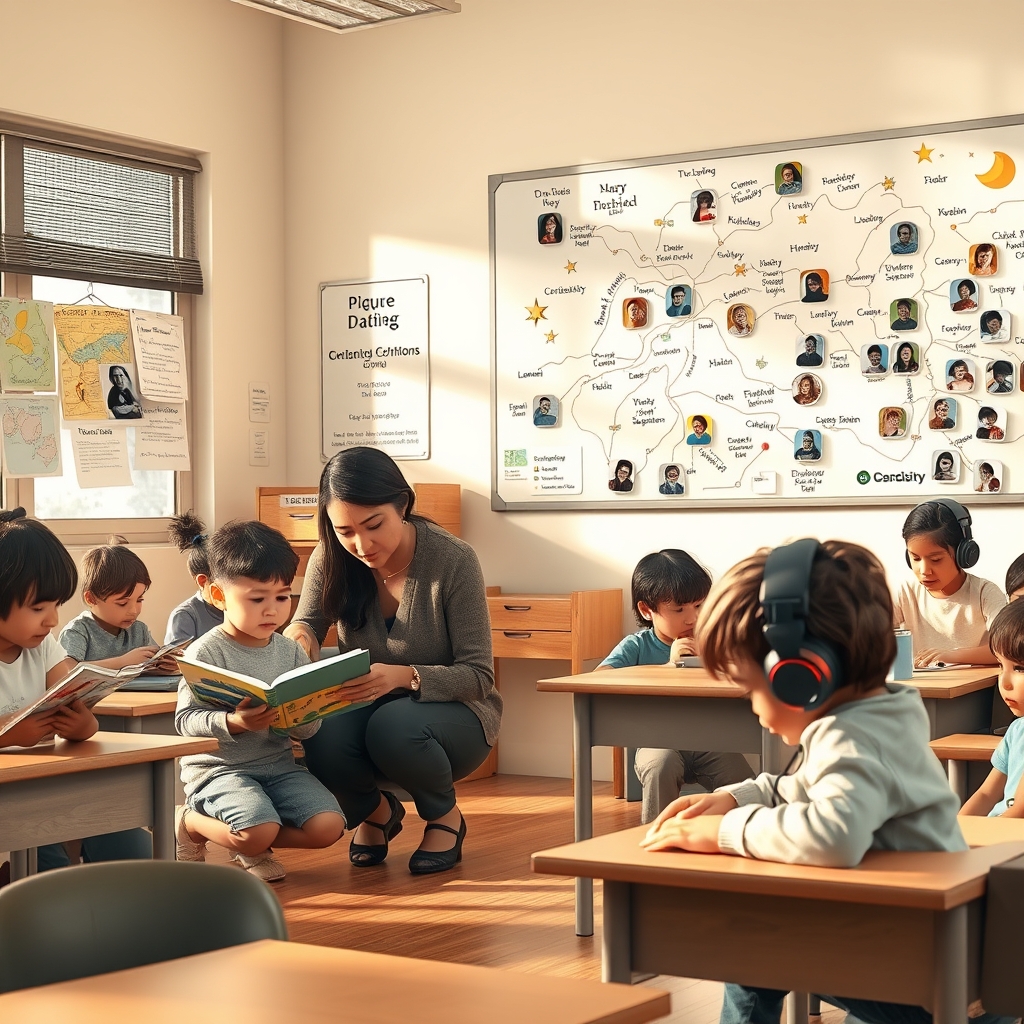
The classroom is not merely a room with four walls, desks, and a chalkboard; it is a living, breathing entity—a silent cartographer sketching the contours of young minds. Each day, it draws invisible maps of belonging, tracing the edges of inclusion and exclusion with the precision of an old sailor navigating by the stars. Yet, unlike the sailor’s charts, these maps are not etched in ink but in the fleeting glances, the hesitant smiles, and the quiet sighs that linger in the air like unspoken prayers.
The Unseen Borders of Belonging
Every child who walks through the door carries an invisible atlas within them, a collection of maps that chart their fears, their hopes, and the fragile boundaries of their self-worth. For some, these maps are well-trodden paths, familiar and secure. For others, they are uncharted territories, marked by the jagged lines of anxiety and the shadowy forests of uncertainty. The teacher’s role is not merely to instruct but to navigate these maps with care, to redraw the borders so that no child finds themselves stranded in the wilderness of isolation.
Inclusive education is not a destination but a journey, one that requires us to see beyond the surface—to recognize that the child who sits alone at lunch is not merely “shy” but may be navigating the labyrinth of social cues that feel as foreign to them as a language they have never heard. It is about understanding that the student who disrupts the class is not a “problem” but a soul crying out for a different kind of map, one that acknowledges their struggles without reducing them to a label.
The Language of Shadows
There is a language spoken in the classroom that exists beyond words, a dialect of shadows and silence. It is the language of the child who doodles in the margins of their notebook, not out of boredom, but as a way to anchor themselves in a world that feels too loud, too bright. It is the language of the student who averts their gaze when called upon, not out of defiance, but because the weight of expectation feels like a stone pressing against their chest. To teach inclusively is to learn this language, to listen not just with our ears but with our hearts, to hear the stories that are whispered in the spaces between words.
This is where the art of differentiated instruction becomes not just a strategy but a sacred act. It is the recognition that no two minds are alike, that the path to understanding is as unique as the child walking it. It is the willingness to adapt, to bend the rigid structures of curriculum and expectation so that every child can find their way. For the child with dyslexia, it might mean offering an audiobook instead of a printed text. For the student with ADHD, it might mean breaking a lesson into smaller, more manageable pieces. These are not accommodations; they are acts of love, small but profound gestures that say, “I see you. You belong here.”
The Geography of Emotional Landscapes
If the classroom is a map, then emotions are its topography—the hills and valleys that shape the journey. Social-emotional learning is not an addendum to education but its very foundation. It is the understanding that a child who is hungry, or afraid, or grieving cannot learn, no matter how brilliant the lesson plan. It is the recognition that academic growth is inextricably linked to emotional well-being, that the heart must be tended to before the mind can flourish.
Yet, how often do we treat emotions as obstacles to be overcome rather than landscapes to be explored? We tell children to “calm down” when their feelings are a storm raging within them, as if emotions were something to be tamed rather than understood. But what if we saw these storms not as disruptions but as opportunities? What if we taught children to navigate their emotions with the same care and curiosity we bring to a science experiment or a history lesson? To name their feelings, to sit with them, to understand that even the darkest emotions are not permanent but passing weather, part of the ever-changing sky of the self.
The Alchemy of Small Mercies
In the grand tapestry of education, it is often the smallest threads that hold the most weight. A teacher’s smile, a gentle touch on the shoulder, a moment of undivided attention—these are the quiet alchemies that transmute the lead of loneliness into the gold of belonging. They are the unspoken promises that say, “You are seen. You matter.” And in a world that often measures worth by productivity and achievement, these small mercies are revolutionary.
Consider the child who struggles with behavioral challenges, whose outbursts are not acts of defiance but cries for help. The traditional response might be punishment, a withdrawal of affection or privilege. But what if, instead, we responded with curiosity? What if we asked, “What is this behavior trying to tell us?” What if we saw these moments not as failures but as opportunities to deepen our understanding, to build a bridge between the child’s inner world and the classroom’s outer one?
The Cartographer’s Dilemma
To teach is to be a cartographer of the unseen, to map the territories of the heart with the same precision we bring to the territories of the mind. But here lies the dilemma: the maps we draw are never complete. They shift and change with each passing day, each new experience, each unspoken fear or fleeting triumph. The child who was once the class clown may one day fall silent, their laughter replaced by a quiet sadness. The student who struggled with reading may suddenly find their voice in writing, their words a lifeline to a world that once felt out of reach.
This is the paradox of inclusive education: it is both a science and an art, a practice grounded in research and theory but brought to life through intuition and empathy. It requires us to hold two truths at once—that every child is unique, and that every child deserves to belong. It asks us to be both the mapmaker and the traveler, to chart the course while remaining open to the unexpected detours that make the journey meaningful.
The classroom, then, is not just a place of learning but a living laboratory of humanity, where the experiments are not conducted with test tubes and microscopes but with hearts and minds. It is where we learn that inclusion is not a checkbox to be ticked or a policy to be implemented but a daily practice, a way of being in the world that says, “You are welcome here, exactly as you are.” And in this practice, we find that the maps we draw are not just for the children we teach but for ourselves, for in the act of creating spaces where others belong, we discover the contours of our own humanity, too. The silent cartography of the classroom is not just about guiding others; it is about finding our way home.