The Canvas of Compassion: How Inclusive Education Paints the Soul of Every Child A
The first time I saw a child press their palms against the classroom window, their breath fogging the glass like a tiny storm, I didn’t understand the weight of what I was witnessing. It wasn’t just the longing for the world beyond the walls—it was the quiet ache of knowing that world wasn’t built for them. Not yet. Not in the way it should be. Inclusive education isn’t just a methodology; it’s a promise whispered into the hollows of exclusion, a vow that every child, no matter how their mind or body moves through the world, will find a place where they belong. But promises, like classrooms, are only as strong as the hands that hold them.
The Alchemy of Small Mercies
There is a kind of magic in the way a teacher adjusts their voice, not louder, but softer, when a child with sensory sensitivities flinches at the sound of a chair scraping against the floor. It’s the same magic that happens when a lesson plan bends like a reed in the wind, adapting not because it’s written in some pedagogical manual, but because a child’s eyes have gone distant, their fingers twisting the hem of their shirt into knots. These are the moments that alchemize the lead of indifference into the gold of belonging. They are small, almost invisible, but they are the stitches that hold the fabric of an inclusive classroom together.
Yet, for all its quiet power, inclusive education is often reduced to a checklist of accommodations, a series of boxes ticked off with the same detached efficiency as a grocery list. Ramp installed. Check. Large-print books ordered. Check. Behavioral intervention plan in place. Check. But where is the space for the child who doesn’t fit neatly into any of these categories? The one whose struggles are as intangible as the wind, whose needs are written not in diagnostic codes but in the language of sighs and silences? True inclusion isn’t about making sure every child can access the classroom—it’s about making sure the classroom can access every child.
The Unseen Cartography of the Classroom
Every classroom is a landscape, its contours shaped by the invisible forces of expectation, fear, and hope. For some children, this landscape is a gentle meadow, easy to navigate, its paths well-trodden and familiar. For others, it’s a labyrinth, its walls shifting with every step, its exits obscured by the fog of misunderstanding. Inclusive education is about redrawing these maps, not by erasing the labyrinths, but by giving every child a compass—one that points not to some arbitrary destination, but to the quiet certainty that they are not lost.
This is where the art of differentiated instruction comes into play. It’s not about watering down the curriculum or lowering the bar—it’s about recognizing that the bar isn’t the same height for every child. For one, it might be a hurdle to leap over; for another, it might be a mountain to climb. The goal isn’t to make the climb easier, but to make sure every child has the tools, the support, and the belief that they can reach the summit in their own way. This is the heart of an Individualized Education Plan (IEP)—not a bureaucratic document, but a living, breathing testament to a child’s potential, a roadmap that says, We see you. We believe in you. And we will walk with you.
The Ghosts in the Classroom
But even the most carefully crafted plans can falter when they collide with the ghosts that haunt every classroom—the unspoken biases, the lingering stigmas, the quiet assumptions that some children are too much or not enough. These ghosts don’t announce themselves with fanfare; they slip into the room on the wings of a whispered comment, a rolled eye, a sigh of exasperation. They are the reason why a child with ADHD might be labeled disruptive instead of energetic, why a child with dyslexia might be called lazy instead of determined. They are the reason why inclusion so often feels like an afterthought, a concession rather than a celebration.
To exorcise these ghosts, we must first acknowledge their presence. We must listen not just to the words that are spoken in the classroom, but to the ones that aren’t—the hesitations, the omissions, the things left unsaid. We must look beyond the surface of a child’s behavior to the story it tells, the needs it masks, the fears it conceals. This is the work of educational psychology, not as a clinical discipline, but as a practice of deep, radical empathy—a willingness to sit with discomfort, to question our own assumptions, to see the child behind the label.
The Language of Light and Shadow
Inclusive education is also about learning to speak in the language of light and shadow, to recognize that every child carries both within them. There is the light of their strengths, their passions, their unique ways of seeing the world—and there is the shadow of their struggles, their fears, their moments of doubt. Too often, we focus only on the light, as if acknowledging the shadow is a betrayal of the child’s potential. But the shadow is not the absence of light; it is the proof of its presence. It is what makes the light visible, what gives it depth and meaning.
This is where Social Emotional Learning (SEL) becomes not just a curriculum, but a lifeline. It’s about teaching children to name their emotions, to understand that their feelings are not obstacles to be overcome, but signals to be heeded. It’s about creating a classroom where vulnerability is not a weakness, but a strength—a place where a child can say, I’m struggling, without fear of judgment, and where their peers can respond not with pity, but with solidarity. This is the foundation of true inclusion, the belief that every child’s story, no matter how messy or complicated, deserves to be heard.
The Quiet Revolution of Belonging
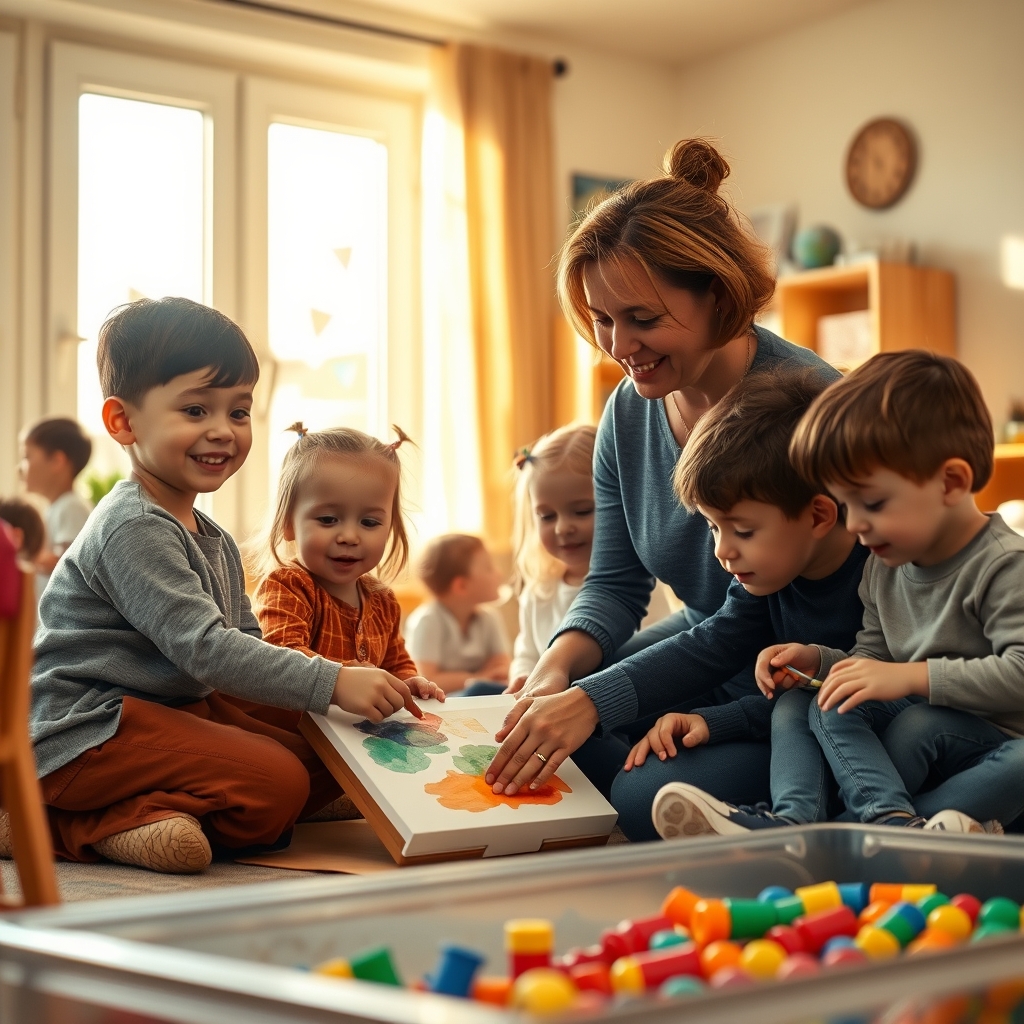
In the end, inclusive education is not about grand gestures or sweeping reforms. It’s about the quiet revolution of small, everyday acts—the teacher who kneels beside a child’s desk to offer a word of encouragement, the student who chooses to sit with the child who is always alone, the moment when a lesson plan is set aside because a child’s heart is too heavy to carry the weight of algebra. These are the moments that build an inclusive classroom, not brick by brick, but breath by breath, heartbeat by heartbeat.
And perhaps this is the greatest lesson of all: that inclusion is not a destination, but a journey—one that requires us to constantly question, to adapt, to grow. It asks us to see the world not as it is, but as it could be, and to believe that every child, no matter how different, has a place in that world. It reminds us that the classroom is not just a place of learning, but a microcosm of the society we hope to build—a society where no child is left standing at the window, their breath fogging the glass, their heart aching for a world that wasn’t built for them. Because in the end, the promise of inclusive education is not just that every child will belong, but that the world will be better for their presence in it.