The Symphony of Small Mercies: How the Quietest Moments in Education Shape the Soul of a Child
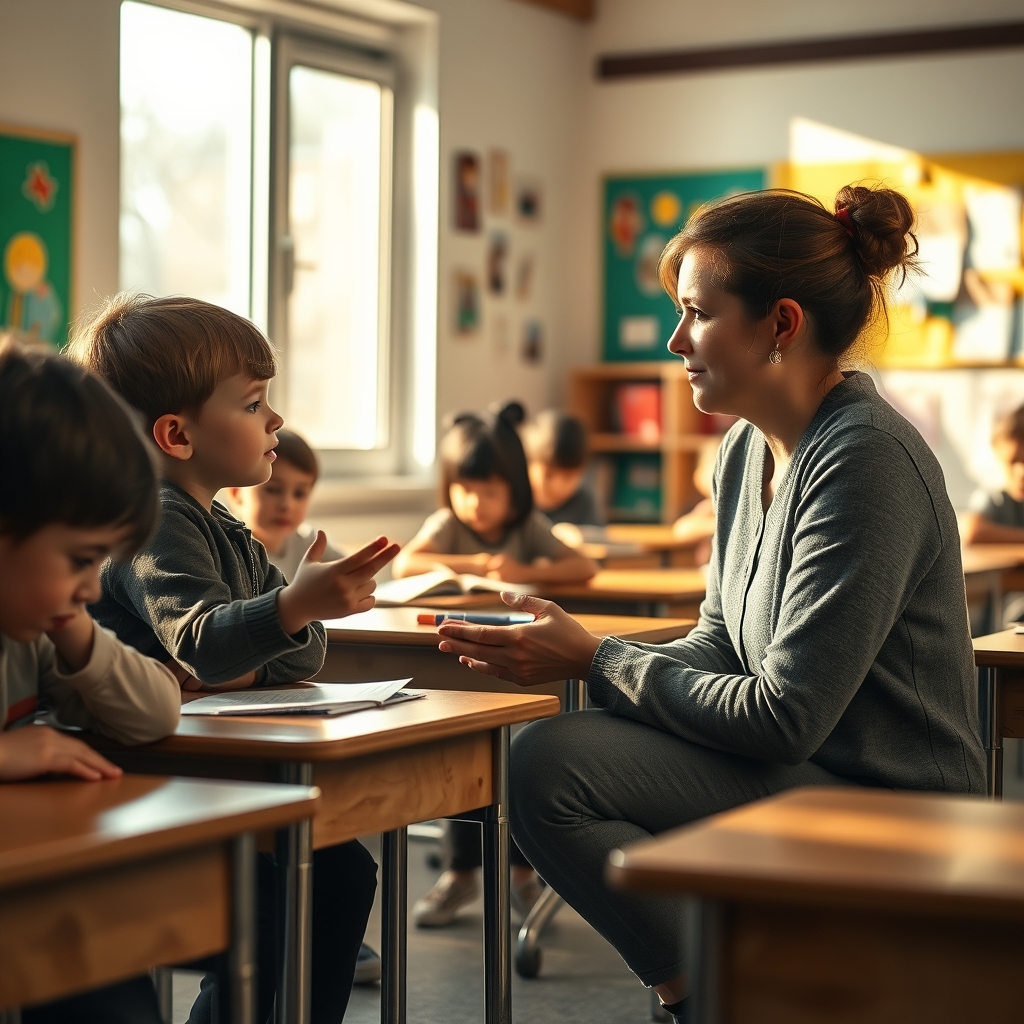
There is a moment, fleeting and unremarkable, that lingers in the memory like the soft brush of a feather against skin. It happens in the hush between lessons, in the pause before the bell rings, when the classroom hums with the quiet energy of children lost in thought. A teacher kneels beside a desk, not to correct or instruct, but simply to listen—to the stuttered words of a child who struggles to speak, to the halting confession of one who fears they do not belong. In that suspended breath of time, something shifts. Not in the grand, measurable ways education so often demands, but in the subtle, unseen architecture of a child’s heart.
The Alchemy of Being Seen
Inclusive education is not merely a methodology; it is a way of seeing. It is the art of recognizing that the child who fidgets at the back of the room is not a disruption but a story waiting to be heard. It is the patience to understand that the one who stares out the window is not disengaged but perhaps navigating an internal landscape too vast for the confines of four walls. The greatest gift a classroom can offer is not a perfect lesson plan, but the quiet assurance that every child is seen—not for what they produce, but for who they are.
Yet, how often do we mistake visibility for inclusion? A child may sit in the same room, occupy the same space, but if their soul is not met with recognition, if their struggles are reduced to checkboxes on an Individualized Education Plan, they remain invisible in the ways that matter most. True inclusion is not about proximity; it is about presence. It is the difference between a teacher who marks attendance and one who takes attendance of the heart.
The Weight of the Unsaid
There are truths in education that are rarely spoken aloud. The child with dyslexia who memorizes entire passages to hide their struggle. The one with ADHD who has learned to shrink themselves into stillness, lest they be labeled disruptive. The quiet observer in the corner, whose silence is mistaken for indifference when it is, in fact, a fortress built to keep the world at bay. These are the ghosts that haunt the margins of the classroom, the ones we claim to serve but so often overlook in our pursuit of efficiency, of order, of measurable outcomes.
Social-emotional learning is not a curriculum to be taught; it is a language to be spoken. It is the unscripted moments—the shared laughter over a spilled box of crayons, the collective sigh when a lesson falls flat, the way a teacher’s eyes soften when a child finally finds the courage to raise their hand. These are the threads that weave the fabric of belonging. Yet, in our rush to standardize, to quantify, to fit the messy, beautiful chaos of human growth into neat little boxes, we risk losing the very essence of what it means to educate.
The Myth of the Perfect Classroom
We have built an illusion of the ideal classroom—one where every child sits attentively, where every lesson lands with precision, where behavioral interventions unfold like a well-rehearsed play. But education is not a performance; it is a conversation. And conversations, by their very nature, are unpredictable. They stumble, they meander, they sometimes fall silent. The most transformative moments in a child’s learning journey often happen not when everything goes according to plan, but when it doesn’t.
Differentiated instruction is not a strategy; it is an act of love. It is the willingness to abandon the script when a child’s eyes light up with understanding, or to pause when another’s fill with tears. It is the courage to say, “I don’t know, but let’s find out together.” The myth of the perfect classroom is just that—a myth. The reality is far messier, far more human. It is in the spilled milk and the forgotten homework, in the wrong answers and the unasked questions, that the true work of education unfolds.
The Sacredness of Small Adjustments
Inclusive education is not about grand gestures; it is about small mercies. The extra five minutes given to a child who needs more time to process. The whispered encouragement when the world feels too loud. The way a teacher rearranges the desks not for efficiency, but to ensure no one sits alone. These are the acts that build the invisible scaffolding of trust, the kind that holds a child not just academically, but emotionally, spiritually.
Neurodiversity is not a challenge to be overcome; it is a spectrum of human experience to be honored. The child who sees the world in patterns others cannot, the one who feels emotions with an intensity that drowns out reason, the one who moves through space in ways that defy convention—these are not problems to be fixed. They are variations of humanity to be celebrated. When we design classrooms that accommodate only one way of being, we send a message: *You do not belong here.* But when we create spaces that bend and flex, that make room for the unexpected, we say something far more powerful: *You are home.*
The Unseen Curriculum
There is a curriculum that is never written down, never tested, never graded. It is the lesson of kindness learned when a teacher stays late to help a struggling student. It is the quiet confidence that grows when a child is given the space to fail and try again. It is the understanding that intelligence is not a single path but a vast, winding landscape, and that every child’s journey through it is unique. This is the unseen curriculum—the one that shapes not just minds, but souls.
Moral education is not about teaching children what to think; it is about giving them the tools to navigate the complexities of being human. It is the difference between a classroom that punishes mistakes and one that treats them as stepping stones. It is the understanding that equity is not about giving every child the same thing, but about giving each child what they need to thrive. When we reduce education to a series of benchmarks, we lose sight of its true purpose: to help children become not just smarter, but wiser; not just more knowledgeable, but more compassionate.
The classroom is not a factory. It is a garden. And like any garden, it requires patience, care, and the willingness to tend to each plant differently. Some need more sunlight, others more shade. Some will bloom quickly, others will take their time. But if we nurture them with intention, if we create a space where every seed has the chance to grow, we will witness something extraordinary: not uniformity, but a tapestry of life, each thread unique, each color vibrant, each story worthy of being told. And in that tapestry, every child will find their place—not because they were forced to fit, but because the space was made for them all along.