The Lighthouse Keeper’s Lesson: How the Steady Glow of Inclusive Education Guides the Storm-Tossed Soul
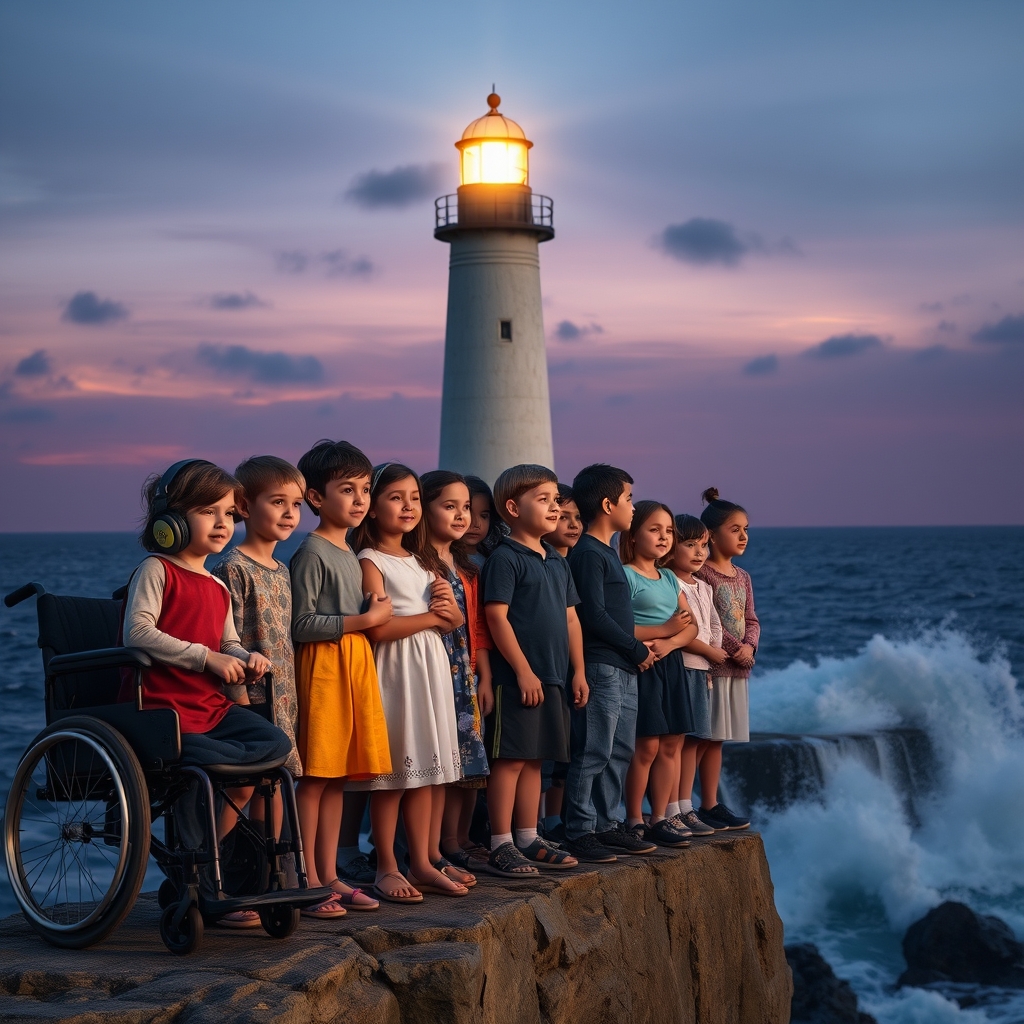
The sea does not ask the lighthouse why it shines. It simply does, night after night, casting its unwavering beam across the dark waters, a silent promise to those adrift. In the classroom, too, there are storms—waves of doubt, undercurrents of fear, the howling winds of expectation. And yet, there are those who stand like lighthouses, not to tame the tempest, but to remind the lost that they are not alone in it. This is the quiet miracle of inclusive education: not the absence of struggle, but the presence of someone who refuses to let the struggle define the child.
The Weight of Being Seen
There is a kind of exhaustion that comes not from effort, but from invisibility. A child who spends their days navigating a world that does not see them—does not see their way of thinking, their way of feeling, their way of being—carries a fatigue deeper than bone. It is the weariness of constantly translating oneself, of shrinking to fit into spaces not built for them, of watching the light in their eyes dim with every unmet need. Inclusive education does not erase this exhaustion, but it offers a reprieve: the chance to be seen, not as a problem to be solved, but as a soul to be understood.
To see a child fully is to recognize that their struggles are not flaws, but facets of a prism that refracts the world in ways others cannot. It is to understand that a meltdown is not defiance, but a language spoken in the only way the child knows how. It is to listen when the words won’t come, to hear the silence between them, and to answer not with correction, but with curiosity. This is the first lesson of the lighthouse keeper: the light is not for the storm, but for those caught within it.
The Alchemy of Small Anchors
Inclusion is not a grand gesture, but a thousand tiny acts of holding space. It is the teacher who learns to read the flicker of frustration in a child’s eyes before it erupts into flame. It is the peer who offers a fidget toy not out of pity, but because they, too, know what it is to need something to ground them. It is the lesson plan that bends, not breaks, when a child’s attention drifts like a leaf on the wind. These are the anchors that keep a child from being swept away, not because they are heavy, but because they are steady.
Consider the child who cannot sit still, whose body hums with restless energy. The traditional classroom demands stillness, but an inclusive one asks: What does this movement teach us? Perhaps it is a need for sensory input, a way of processing the world through motion. The solution is not to suppress, but to adapt—to offer a wobble stool, a standing desk, a quiet corner where the body can move without judgment. These are not accommodations; they are acknowledgments. They say: You are not wrong for being who you are.
The Myth of the Perfect Vessel
There is a dangerous illusion in education: the idea that every child must fit into the same vessel to reach the same shore. But the sea does not care about the shape of the boat. It carries them all, so long as they are seaworthy. Inclusive education understands this. It does not seek to mold children into identical shapes, but to help them discover the vessels that will carry them forward—whether that vessel is a traditional classroom, a specialized program, or a hybrid path uniquely their own.
This is where the Individualized Education Plan (IEP) becomes more than a document; it becomes a covenant. It is a promise that the child’s journey will not be dictated by the limitations of a system, but by the possibilities of their own potential. Yet, too often, the IEP is treated as a checklist, a series of boxes to be ticked rather than a living, breathing map of a child’s growth. The lighthouse keeper knows that the light must be tended, not just lit. So, too, must the IEP be revisited, revised, and reimagined as the child changes and grows.
The Geography of Belonging
Belonging is not a place, but a feeling—a sense that one’s presence is not just tolerated, but valued. It is the difference between a child who is in the classroom and a child who is of the classroom. The former is a visitor; the latter, a citizen. Inclusive education seeks to turn visitors into citizens, not by erasing their differences, but by making those differences part of the landscape.
This requires more than policies or programs. It requires a shift in the soul of the classroom. It is the teacher who greets each child by name, not as a formality, but as a recognition of their existence. It is the curriculum that includes stories of neurodiversity, of learning disabilities, of mental health, not as cautionary tales, but as threads in the tapestry of human experience. It is the classroom design that considers not just the physical space, but the emotional one—where a child can retreat when overwhelmed, where they can seek connection when lonely, where they can be themselves without fear.
The Unseen Currents
Beneath the surface of every classroom, there are unseen currents—whispers of anxiety, ripples of trauma, undertows of unmet needs. These currents shape the child’s experience in ways that are often invisible to the naked eye. A child who seems disengaged may be drowning in sensory overload. A child who acts out may be crying for help in the only way they know how. The lighthouse keeper does not ignore these currents; they learn to navigate them.
This is where social-emotional learning (SEL) becomes not just a curriculum, but a lifeline. It is the practice of teaching children to name their emotions, to understand their triggers, to develop coping strategies. But SEL is not just for the children; it is for the teachers, too. It is the recognition that a teacher’s emotional state ripples through the classroom, that their patience—or lack thereof—sets the tone for the day. The lighthouse keeper must tend to their own flame, for a light that flickers cannot guide others.
The Steady Glow
In the end, inclusive education is not about fixing children. It is about fixing the spaces around them—making them wider, softer, more adaptable. It is about recognizing that the storm is not the child’s fault, but the lighthouse is their right. The light does not calm the sea; it simply reminds those adrift that they are not alone in it. And sometimes, that is enough. Enough to keep going. Enough to believe that the shore is not so far away. Enough to trust that, no matter how dark the night, the light will always find them.
The classroom, then, becomes more than a place of learning. It becomes a sanctuary—a place where every child, no matter how storm-tossed, can find their way home. And the teacher, in their quiet, unwavering way, becomes the keeper of that light. Not because it is their job, but because it is their calling. For the sea does not ask the lighthouse why it shines. It simply does. And in that doing, it saves lives.