The Living Curriculum: How the Earth Itself Became My Most Patient Teacher
The first time I pressed my palm against the bark of an ancient oak, I understood what it meant to learn without a syllabus. The tree did not hand me a worksheet or demand I recite its Latin name. It simply stood there, rooted in centuries of quiet wisdom, offering its rings as a silent testament to time. That moment marked the beginning of my education in what I now call the living curriculum—a way of learning that breathes beyond the four walls of a classroom, where the world itself becomes both textbook and teacher.
The Soil of Experience
There is a particular kind of knowledge that only reveals itself when your hands are caked in mud. I learned this while volunteering at a community farm during my final year of high school, a place where teenagers were encouraged to dig, plant, and fail without the pressure of grades. The first time I attempted to graft a fruit tree, my cuts were clumsy, the sap sticky against my fingers. The tree did not thrive. Neither did my pride. But in that failure, I discovered something more valuable than a perfect score: the humility of growth. The farm’s coordinator, a woman with sun-creased skin and infinite patience, never once told me I was wrong. Instead, she handed me another sapling and said, “Try again. The earth will teach you what I cannot.”
This was experiential learning in its purest form—not as a buzzword, but as a necessity. The soil did not care about my GPA or my college applications. It only responded to my presence, my effort, my willingness to listen. In that space, education was not something handed down from an authority figure; it was something coaxed from the land itself, a dialogue between human curiosity and the natural world.
The Classroom Without Walls
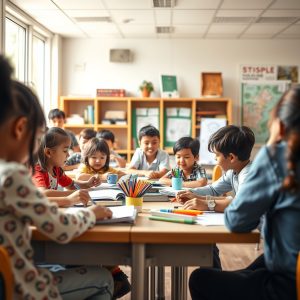
What if we designed schools the way we design gardens? Not as rigid rows of desks, but as sprawling, interconnected ecosystems where each student could wander, explore, and find their own path? I’ve seen glimpses of this in progressive schools where project-based learning isn’t an add-on but the foundation. Students don’t just study environmental science—they restore wetlands. They don’t just read about history—they interview elders in their community and archive oral stories. The curriculum isn’t a fixed document but a living thing, shaped by the questions students ask and the problems they seek to solve.
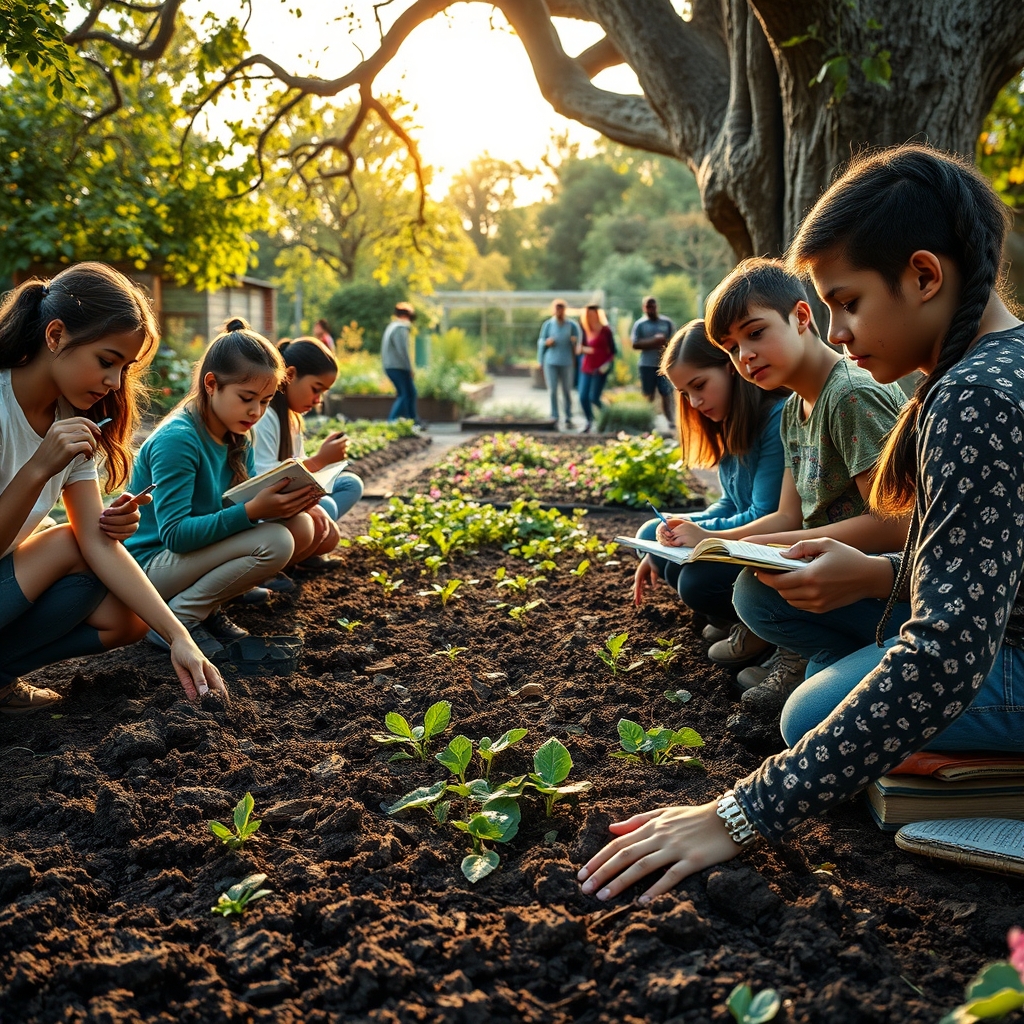
In one such school, I watched a group of ninth-graders transform an abandoned lot into a thriving urban garden. They measured soil pH, researched native plants, and negotiated with local businesses for funding. Along the way, they learned algebra (calculating irrigation systems), biology (understanding pollination), and civic engagement (advocating for green spaces). But more importantly, they learned resilience. They learned that setbacks—like a late frost or a vandalized fence—weren’t failures but part of the process. The garden didn’t just grow vegetables; it grew humans.
The Alchemy of Real-World Skills
There’s a quiet tragedy in how we’ve reduced education to a series of standardized tests and college prep checklists. We’ve convinced ourselves that the purpose of school is to produce students who can ace exams, not students who can navigate the complexities of life. But what if we measured success differently? What if we valued the ability to collaborate as much as the ability to calculate? What if empathy, adaptability, and problem-solving were given the same weight as algebra and grammar?
I’ve met young people who’ve learned more about leadership by organizing a community cleanup than they ever did in a student council meeting. I’ve seen shy teenagers find their voices by performing spoken-word poetry about social justice. These are not soft skills—they are human skills, the kind that allow us to build bridges, heal divides, and imagine a better world. And yet, in most traditional schools, they are treated as extracurricular, as if they are less important than memorizing the periodic table.
The Unseen Syllabus
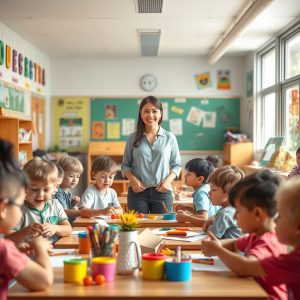
Perhaps the most radical idea in education is this: learning doesn’t stop when the bell rings. The world is our classroom, and every interaction, every challenge, every moment of wonder is a lesson waiting to be uncovered. The problem is that we’ve trained students to see education as something that happens to them, rather than something they actively participate in. We’ve turned curiosity into a chore and wonder into a worksheet.
But what if we flipped the script? What if we designed schools that didn’t just tolerate questions but demanded them? What if we created spaces where students were encouraged to follow their obsessions, even if those obsessions didn’t fit neatly into a curriculum? I’ve seen this in action in schools that embrace inquisitive growth mindsets, where failure isn’t punished but celebrated as a necessary step toward understanding. In these spaces, students don’t just learn about the world—they learn from it, and in doing so, they discover that they are not just passive recipients of knowledge but active creators of it.
The Quiet Revolution of Small Acts
Change doesn’t always arrive with fanfare. Sometimes, it begins with a single teacher who stays after school to help a struggling student. Sometimes, it starts with a parent who volunteers to lead a workshop on a topic they’re passionate about. Sometimes, it’s as simple as a school deciding to replace detention with meditation, or a district choosing to fund arts programs instead of standardized tests. These are not grand gestures, but they are revolutionary in their own way. They remind us that education is not a one-size-fits-all endeavor but a deeply personal journey, one that requires patience, creativity, and a willingness to listen.
The oak tree didn’t rush me as I pressed my hand against its bark. It didn’t demand that I understand its history or its biology. It simply stood there, a silent witness to my learning. And in that stillness, I realized that the most profound lessons are often the ones we stumble upon when we’re not looking for them. The living curriculum doesn’t come with a textbook or a lesson plan. It doesn’t fit neatly into a semester or a standardized test. It is messy, unpredictable, and endlessly rewarding. And it is always, always there—waiting for us to pay attention.