The Cartography of Curiosity: Mapping the Uncharted Territories of a Student-Centric Classroom
The first time I watched a child’s eyes widen at the edge of discovery, I understood that education was not a path laid in stone, but a living, breathing landscape—one that shifts with every question asked, every stumble taken, and every horizon glimpsed. There is a quiet magic in the moment when a learner realizes that the classroom is not a place where answers are dispensed, but where questions are cultivated like rare and delicate seeds. This is the essence of a student-centric education: not the transmission of knowledge, but the awakening of a mind to its own potential.
The Compass of Personalization
We have long measured education in standardized increments—grades, benchmarks, assessments—yet the soul of learning resists such rigid confines. A child does not unfold like a textbook, chapter by chapter, but like a wildflower, bending toward the light in its own time and in its own way. Personalized learning journeys acknowledge this truth. They do not demand conformity; they invite exploration. When a student’s curiosity becomes the compass, the classroom transforms into a vast and varied terrain, where every hill climbed and every valley crossed is a lesson in resilience, self-awareness, and the sheer joy of discovery.
Yet personalization is not merely about tailoring content to individual interests—it is about honoring the pace at which a mind grapples with complexity. Some children sprint toward understanding; others linger, turning over ideas like stones in a stream, searching for the glint of meaning beneath the surface. Adaptive education strategies do not rush this process. They meet the learner where they are, not where a curriculum dictates they should be. In this way, education becomes less about reaching a destination and more about savoring the journey itself.
The Alchemy of Experience
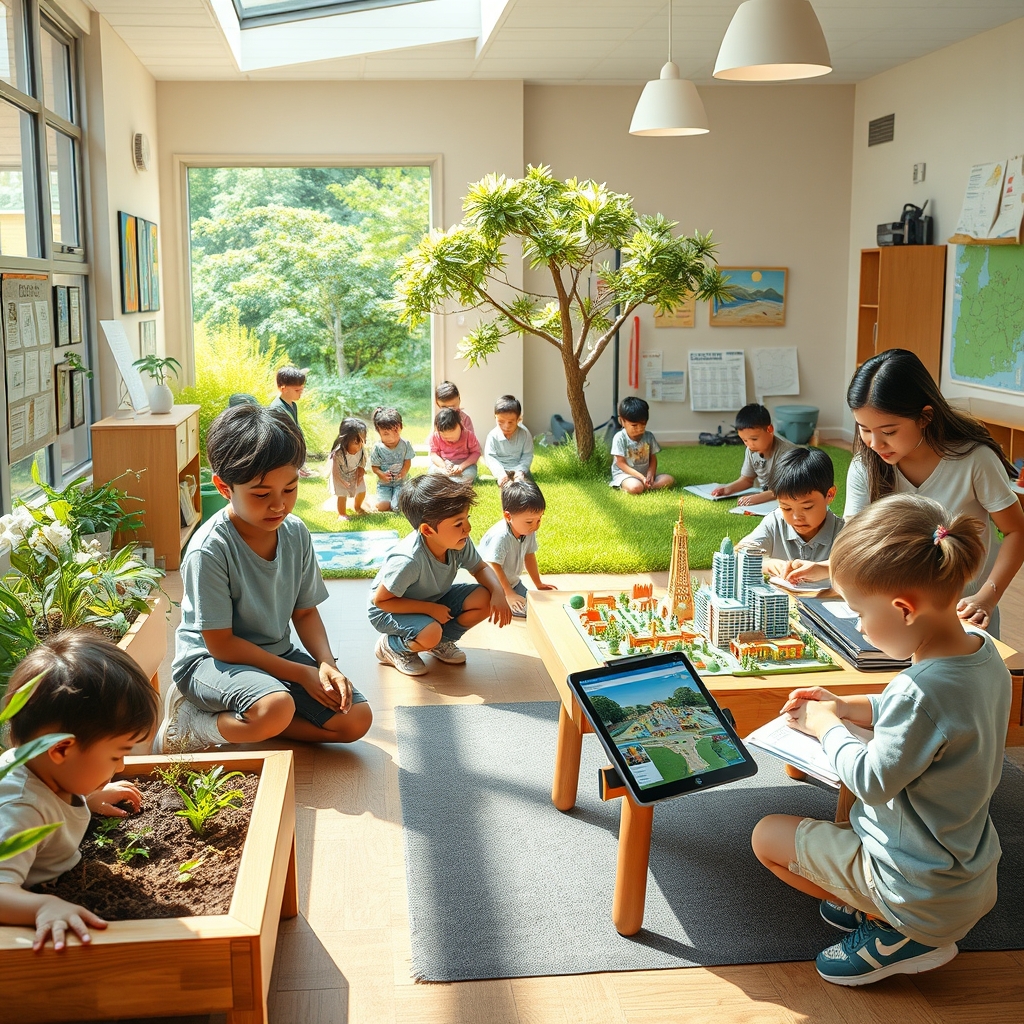
There is a difference between knowing and understanding, between memorizing and internalizing. Experiential school transitions—those moments when learning spills beyond the classroom walls—bridge this gap. A child who plants a garden does not merely learn about photosynthesis; they feel the weight of soil in their hands, witness the stubborn resilience of a seedling pushing through earth, and taste the sweetness of a tomato ripened under their care. These are the lessons that linger, not because they were taught, but because they were lived.
Project-based learning is another kind of alchemy, turning abstract concepts into tangible creations. When students collaborate to build a model of a sustainable city, they are not just applying math and science—they are negotiating, compromising, and problem-solving in real time. They are learning that knowledge is not static, but a tool to shape the world. In these moments, the classroom becomes a microcosm of life itself, where failure is not a setback but a stepping stone, and success is not an end but a beginning.
The Ecosystem of Collaboration
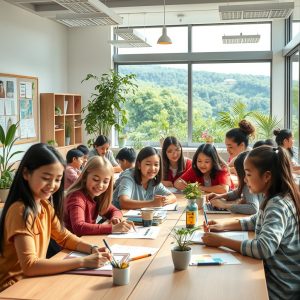
No learner exists in isolation. Even the most solitary mind is shaped by the voices around it—teachers, peers, parents, and the broader community. Collaborative learning environments recognize this truth. They are not merely spaces where students work together; they are ecosystems where ideas cross-pollinate, where perspectives clash and coalesce, and where empathy is not taught but practiced. In such classrooms, the quiet child learns to speak, the boisterous child learns to listen, and every voice finds its place in the chorus.
Interactive parental involvement extends this ecosystem beyond the school walls. When parents are not just spectators but active participants in their child’s education, the learning becomes a shared journey. A dinner table conversation about a history project, a weekend spent volunteering at a community garden tied to a science unit—these are the threads that weave school and home into a seamless tapestry of growth. The child no longer sees education as something that happens to them, but as something they are a part of, something they co-create.
The Heartbeat of Holistic Development
We have spent centuries dissecting education into subjects, as if the mind were a machine with interchangeable parts. But a child is not a collection of skills to be honed; they are a whole being, with a heart that feels, a body that moves, and a spirit that yearns. Holistic development programs acknowledge this wholeness. They do not silo learning into math, science, or literature, but recognize that creativity is as vital as calculation, that emotional intelligence is as crucial as academic achievement.
Student well-being is not an afterthought in this model; it is the foundation. A child who is anxious, hungry, or disconnected cannot learn. Schools that prioritize well-being—through mindfulness practices, movement breaks, or simply the space to be still—are not indulging in frivolity; they are tending to the soil in which learning grows. When a child feels safe, seen, and supported, their capacity for growth becomes limitless.
The Digital Horizon
Technology is often framed as the great disruptor of education, but it need not be its adversary. Digital classroom integration, when thoughtfully applied, can be a bridge rather than a barrier. Adaptive learning platforms that adjust to a student’s pace, virtual reality field trips that transport learners to ancient Rome or the depths of the ocean, collaborative online spaces where ideas flow freely—these tools do not replace the human element of education; they amplify it. They allow us to meet students where they are, in a language they understand, and to guide them toward horizons they might never have imagined.
Yet for all its potential, technology is only as powerful as the hands that wield it. A screen cannot replace a teacher’s intuition, nor can an algorithm replicate the warmth of a mentor’s encouragement. The most effective digital classrooms are those where technology serves as a tool, not a crutch—where it enhances rather than replaces the human connections that lie at the heart of learning.
In the end, the most profound lessons are not the ones we set out to teach, but the ones that find us when we are open to them. A student-centric classroom is not a place of answers, but of questions; not a destination, but a journey. It is a space where every child is given the freedom to explore, the support to stumble, and the encouragement to rise. And in that space, something extraordinary happens: the learner becomes the teacher, the student becomes the guide, and the classroom becomes not just a place of education, but a home for the curious heart.