The Garden of Forking Minds: How Adaptive Education Blooms in the Soil of Curiosity
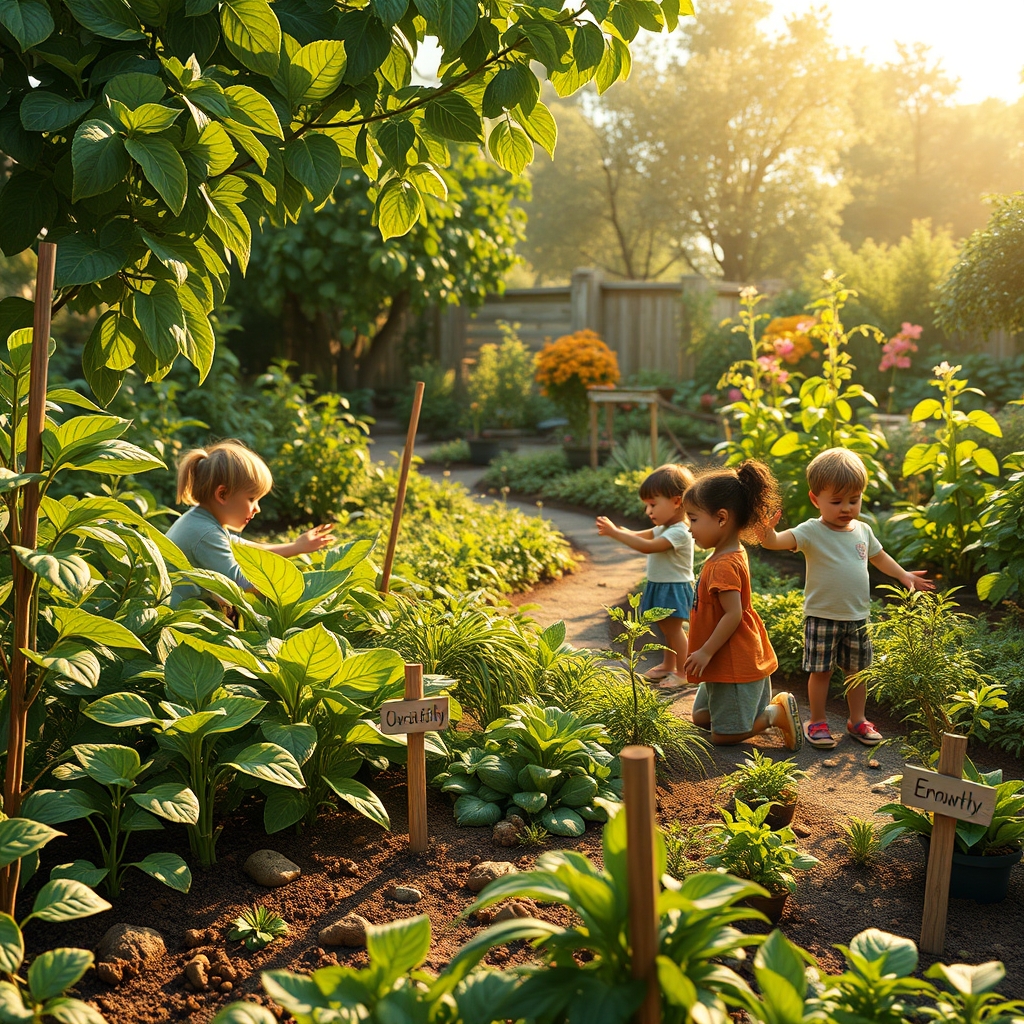
The first time I saw a child’s face light up not with the answer, but with the question itself, I understood something profound: education is not a destination, but a living, breathing garden. Each student is a seed, unique in its shape, its needs, its pace of unfurling. And yet, for so long, we have tried to grow them all in the same plot, under the same sun, with the same watering schedule. The result? Some flourished, yes—but others wilted, their potential buried beneath the weight of expectation, their leaves curling inward in silent protest.
The Myth of the Monoculture Classroom
We built our schools on the idea of uniformity—rows of desks, synchronized lessons, standardized tests. It was efficient, we told ourselves. It was fair. But efficiency is not the same as growth, and fairness is not the same as justice. A monoculture may yield a predictable harvest, but it is a fragile one, vulnerable to the first storm, the first drought. What if, instead, we tended a garden of diversity, where each plant was given the space to stretch toward the light in its own way? Where the soil was enriched not by rigid rules, but by the nutrients of curiosity, empathy, and trust?
This is the promise of adaptive education—a shift from the assembly line to the greenhouse, where learning is not a one-size-fits-all product, but a collaborative act of cultivation. It begins with the radical idea that every child arrives in the classroom with their own map of the world, their own questions, their own pace. Some will sprint ahead in mathematics, only to linger in the quiet corners of literature. Others will paint the air with ideas before they can write them down. And still others will need to move, to touch, to build before the abstract takes shape in their minds. To honor these differences is not to lower the bar—it is to raise it, to acknowledge that mastery is not a race, but a deeply personal journey.
The Alchemy of Personalized Pathways
Imagine a classroom where no child is left waiting for the rest to catch up, nor forced to march ahead before they are ready. Where a student struggling with fractions might explore them through baking, measuring cups in hand, while another dives into the patterns of Fibonacci in nature. Where a child who learns best through stories might write their way into history, while another builds a model of the Colosseum to understand its engineering. This is not fantasy—it is the quiet revolution of project-based learning, where the curriculum bends to the child, not the other way around.
But personalization is not just about academics. It is about seeing the whole child—their fears, their joys, their unspoken struggles. A student who acts out in class may not be defiant; they may be carrying a weight no one has bothered to ask about. A child who is silent may not be disengaged; they may be listening in ways we have yet to understand. Adaptive education demands that we become detectives of the heart, reading the subtle signs of a child’s inner weather and adjusting our approach accordingly. It is a dance, not a drill—a conversation, not a lecture.
The Digital Soil: How Technology Roots Itself in Humanity
There is a fear that technology will replace the human touch in education, that algorithms will reduce children to data points. But what if technology, when wielded with intention, could do the opposite? What if it could free teachers from the tyranny of the lesson plan, allowing them to spend more time truly seeing their students? Adaptive learning platforms can adjust in real-time to a child’s progress, offering challenges when they are ready and support when they falter. Digital tools can turn a classroom into a global village, connecting students to peers across continents, to experts in fields they are passionate about, to the vast library of human knowledge at their fingertips.
Yet, for all its potential, technology is only as good as the hands that guide it. A tablet cannot teach empathy. A screen cannot hold a child’s hand when they are afraid. The most powerful tool in education remains the human heart—the teacher who stays after school to listen, the parent who asks not “What did you learn today?” but “What made you curious today?”, the community that wraps around a child like a warm embrace. Technology can till the soil, but it is the human touch that plants the seeds.
The Ripple Effect of Community
No child grows in isolation. The roots of their learning stretch beyond the classroom, into the home, the neighborhood, the wider world. When parents are not just spectators but collaborators—when they are invited into the learning process, not just as homework helpers but as storytellers, mentors, and co-explorers—something magical happens. The boundaries between school and life begin to blur. A trip to the grocery store becomes a lesson in economics. A walk in the park becomes a study of ecology. A family dinner becomes a forum for debate, for storytelling, for the kind of learning that cannot be measured on a test.
And when the community steps in—when local artists teach workshops, when scientists open their labs, when elders share their stories—the classroom expands into the world. Learning is no longer confined to four walls; it is alive in the streets, in the soil, in the hands of those who have walked the path before. This is the essence of community-supported learning: it takes a village not just to raise a child, but to educate one.
The Invisible Curriculum of Well-Being
We speak of holistic development, but what does it truly mean? It is not just about adding yoga to the schedule or a mindfulness app to the tablet. It is about recognizing that a child’s well-being is the foundation upon which all learning rests. A mind that is anxious, a heart that is heavy, a body that is exhausted—these cannot absorb knowledge, no matter how brilliantly it is delivered. Adaptive education must begin with the question: How is this child, really? Are they sleeping enough? Are they nourished, not just with food, but with love, with safety, with the freedom to be exactly who they are?
This is where the responsive curriculum comes in—not just adapting to a child’s academic needs, but to their emotional and physical ones as well. It might mean starting the day with a check-in, where students share not just their goals, but their moods. It might mean building movement into lessons, recognizing that some children think better when their bodies are in motion. It might mean creating spaces for silence, for reflection, for the kind of stillness that allows a child to hear their own thoughts. And it means teaching children to listen to themselves, to recognize when they need a break, when they need help, when they need to pause and breathe.
The garden of adaptive education is not a place of perfect order. It is wild, at times messy, always evolving. There are days when the soil feels hard, when the seeds refuse to sprout, when the storms threaten to uproot everything. But it is in this very messiness that growth happens—not in spite of the challenges, but because of them. For it is the cracks in the earth that let the water in, the struggles that strengthen the roots, the questions that lead to the most beautiful blooms. And when we tend to this garden with patience, with care, with an unwavering belief in the unique brilliance of every child, we do not just teach them. We give them the tools to grow into the fullest, most radiant versions of themselves, ready to tend their own gardens in turn.