The Whispering Compass: Navigating the Labyrinth of Personalized Learning Journeys
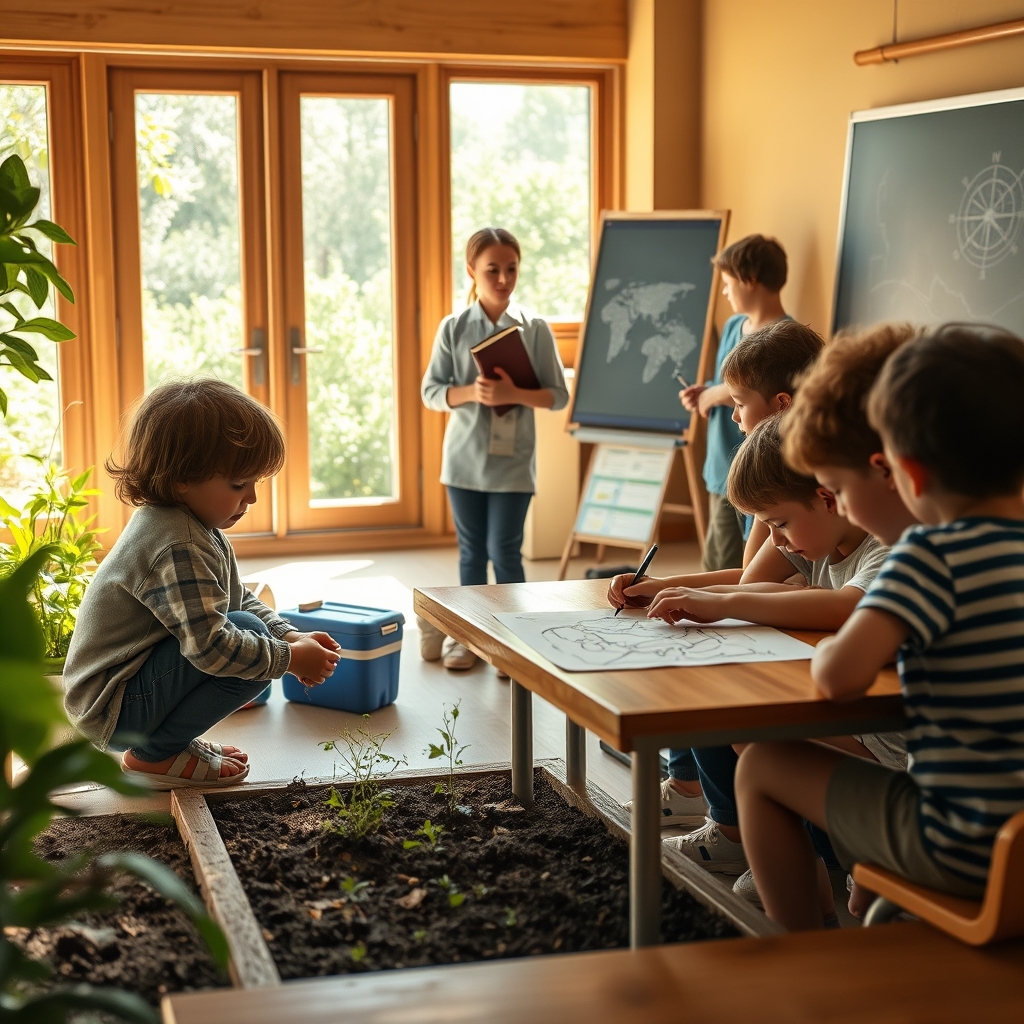
There is a quiet hum in the air when a child first discovers the shape of their own curiosity—a moment so fragile it could shatter like spun glass, yet so powerful it bends the light of their entire world. It is the sound of a mind awakening, not to the rigid cadence of a lesson plan, but to the organic rhythm of a question that refuses to be silenced. This is the heart of personalized learning journeys, where education ceases to be a monologue delivered from the front of a classroom and instead becomes a dialogue, a dance, a shared exploration of the unknown.
The Cartography of the Self
Every child carries within them an atlas of uncharted territories—interests that flicker like fireflies in the dusk, passions that burn with the quiet intensity of embers, and fears that loom like shadowy forests. Traditional education often flattens these landscapes into a two-dimensional map, where every student is expected to follow the same path, at the same pace, toward the same destination. But what if the map itself is the problem? What if the true purpose of education is not to guide every child along a preordained route, but to teach them how to read their own inner compass?
Personalized learning is not merely about differentiation—it is about revelation. It is the art of holding up a mirror to a child’s soul and saying, “Look. This is who you are. This is what sets your heart alight. Now, let us walk together and see where it leads.” It requires educators to step back from the role of the all-knowing sage and instead become co-conspirators in discovery, asking questions that do not have answers, but pathways. What if we measured success not by how well a student adheres to a curriculum, but by how deeply they come to understand themselves?
The Alchemy of Experience
There is a difference between learning about something and living through it. The first is a transaction—information exchanged for a grade, a checkbox ticked, a milestone achieved. The second is transformation. Experiential school transitions, project-based learning, and real-world skill acquisition are not just pedagogical strategies; they are invitations to alchemy. They ask students to step into the fire of their own education, to feel the heat of failure, the weight of persistence, the exhilaration of creation.
Consider the child who builds a garden not because it is assigned, but because they wonder how seeds know which way is up. Or the student who writes a play not for a rubric, but because they are haunted by a story that demands to be told. These are not extracurricular activities; they are the curriculum. When learning is rooted in experience, it ceases to be something that happens to a child and becomes something that happens with them. The classroom expands beyond four walls, and the teacher’s role shifts from instructor to witness, from evaluator to collaborator. The question is no longer, “Did you memorize this?” but “What did this teach you about yourself?”
The Symphony of Collaboration
No child learns in isolation. Even the most solitary moments of discovery are shaped by the voices that came before, the hands that guided, the eyes that reflected back understanding. Collaborative learning environments are not just about group work or shared projects; they are about the recognition that knowledge is a living, breathing entity, something that grows and evolves when it is passed between people. It is the difference between a solo performance and a symphony.
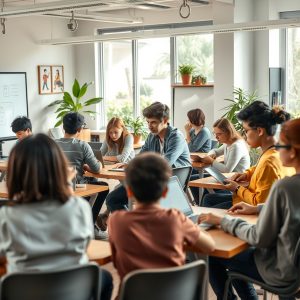
In these spaces, students learn that their voice matters not because it is the loudest, but because it is theirs. They discover that empathy is not a soft skill, but the foundation of all meaningful work. They come to understand that the most profound questions are often the ones that cannot be answered alone. When a classroom becomes a community, learning is no longer a competition, but a collective act of creation. The teacher is no longer the sole authority, but one voice among many, a guide who knows that the best way to teach is sometimes to step aside and let the students lead.
The Unseen Curriculum of Well-Being
What does it profit a child to master algebra if they do not know how to sit with their own sadness? To write a flawless essay if they cannot recognize the ache of loneliness in another? Holistic development programs and a student well-being focus are not luxuries; they are the invisible threads that hold the fabric of education together. They ask us to consider: What is the point of knowledge if it does not make us more human?
Schools that prioritize well-being understand that the mind is not a vessel to be filled, but a garden to be tended. They create spaces where emotions are not distractions from learning, but the soil in which it grows. They teach children to name their feelings, to sit with discomfort, to extend kindness not as a performance, but as a practice. This is not touchy-feely idealism; it is the recognition that resilience, creativity, and critical thinking are not just cognitive skills, but emotional ones. A child who feels safe, seen, and valued is a child who is free to take risks, to fail, to try again. That is the true measure of an education.
The Digital Threshold
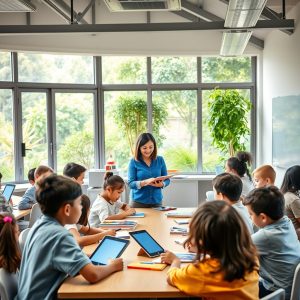
Technology in the classroom is often framed as either a savior or a villain—a tool that will either revolutionize education or reduce it to a series of algorithms. But the truth is more nuanced. Digital classroom integration is not about replacing teachers with screens, but about expanding the possibilities of what a classroom can be. It is about giving students the keys to libraries without walls, to communities without borders, to worlds without limits. When used thoughtfully, technology does not dehumanize education; it re-humanizes it, allowing each child to learn in the way that best suits their mind, their pace, their passions.
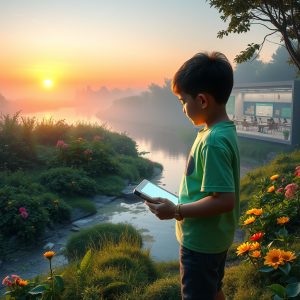
Yet, for all its potential, technology is only as powerful as the hands that wield it. A tablet is just a tool until a teacher uses it to spark a conversation. An adaptive learning program is just code until a student discovers within it a reflection of their own potential. The challenge is not to let technology dictate the terms of education, but to ensure that it serves the deeper purpose of connection—between student and teacher, between curiosity and discovery, between the self and the world.
The most beautiful thing about personalized learning journeys is that they never truly end. There is no final destination, no graduation from the act of discovery. The goal is not to arrive, but to keep walking, to keep wondering, to keep allowing the path to unfold beneath your feet. Education, at its best, is not a means to an end, but a way of being in the world—a way of seeing, questioning, creating, and connecting. It is the whispering compass that guides us not toward a single answer, but toward the infinite possibilities of who we might become.