Unlocking Tomorrow’s Minds: Key Trends Shaping Modern Education
The landscape of education is undergoing a profound transformation, driven by technological advancements and a deeper understanding of how individuals learn best. As we navigate an increasingly complex world, the traditional one-size-fits-all approach is giving way to dynamic and adaptable models. At the heart of this evolution is the concept of Personalized Learning, tailoring educational experiences to meet the unique needs, pace, and preferences of each student. This shift isn’t just about technology; it’s about fostering environments where every learner can thrive and reach their full potential.
The Power of Personalized Learning and AI in Education
One of the most significant drivers of this educational revolution is the integration of Artificial Intelligence In Education. AI-powered tools are revolutionizing how content is delivered and understood, making learning more efficient and effective. These technologies enable sophisticated Adaptive Learning Platforms that dynamically adjust curriculum and challenges based on a student’s performance and learning style. This ensures that learners are consistently engaged, neither bored by easy tasks nor frustrated by overly difficult ones.
Furthermore, AI can help identify learning gaps and recommend targeted resources, optimizing the educational journey. This data-driven approach supports Competency Based Education, where students progress based on demonstrated mastery of skills rather than seat time. Understanding the brain’s processes, a field known as Neuroeducation, further enhances these platforms by informing teaching strategies that align with cognitive science, leading to more impactful learning outcomes.
Engaging Learners Through Innovative Pedagogies
Beyond personalization, modern education emphasizes engagement and active participation. Gamification, the application of game-design elements and game principles in non-game contexts, is proving incredibly effective in boosting Student Engagement. By incorporating points, badges, leaderboards, and challenges, learning becomes an interactive and motivating experience. This playful approach can be seen across various subjects, making even complex topics more accessible.
Another powerful methodology is Project Based Learning, where students tackle real-world problems and create tangible solutions. This fosters critical thinking, problem-solving, and collaboration. Complementing this, Collaborative Learning environments encourage students to work together, sharing insights and building collective knowledge. Initiatives like Peer To Peer Tutoring not only reinforce the tutor’s understanding but also provide relatable support for the tutee, strengthening the entire learning community. These hands-on approaches, especially in STEM Activities, prepare students for future challenges.
Flexible and Accessible Learning Ecosystems
The demand for flexibility has led to the widespread adoption of diverse learning models. Hybrid Learning and Blended Learning combine traditional face-to-face instruction with online components, offering the best of both worlds. This allows for greater scheduling flexibility and access to a wider range of resources. Virtual Classrooms have become commonplace, enabling remote learning and connecting students globally, breaking down geographical barriers.
Mobile Learning, facilitated by smartphones and tablets, makes education accessible anytime, anywhere. This pairs well with Microlearning, which delivers content in small, digestible chunks, perfect for busy schedules and on-the-go consumption. Additionally, Open Educational Resources (OER) provide free and openly licensed educational materials, democratizing access to high-quality content. Even Educational Podcasts are emerging as a popular medium for continuous learning, allowing individuals to absorb knowledge during commutes or daily routines.
Preparing for the Future: Skills, Credentials, and Well-being
The ultimate goal of modern education is to prepare individuals for lifelong success. This involves cultivating not just academic knowledge but also essential life skills. Social Emotional Learning (SEL) focuses on developing self-awareness, self-management, social awareness, relationship skills, and responsible decision-making, crucial for navigating personal and professional challenges. These ‘soft skills’ are increasingly valued in the workplace.
As the job market evolves, traditional degrees are being supplemented by alternative credentials. Microcredentials offer focused, verifiable proof of specific skills, making them ideal for upskilling and reskilling. This aligns with Skills Based Hiring practices, where employers prioritize demonstrated competencies over formal qualifications. Emphasizing Career Readiness and Digital Literacy ensures that students are equipped with the tools and mindsets necessary for the modern workforce. Ultimately, these integrated approaches foster Lifelong Learning, encouraging continuous growth and adaptation throughout one’s career and personal life.
Immersive Technologies for Deeper Understanding
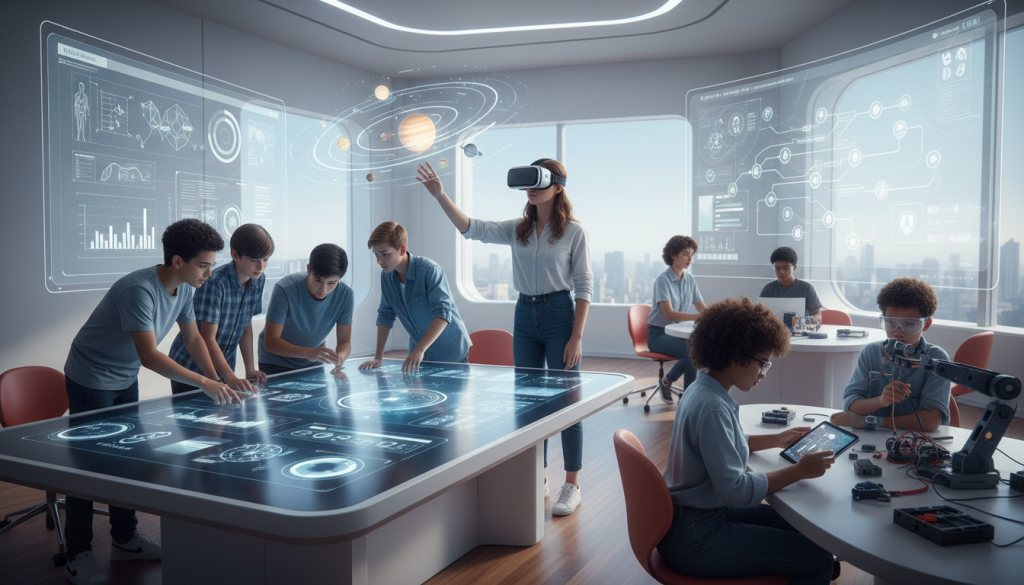
Looking ahead, Immersive Technology, including Virtual Reality (VR) and Augmented Reality (AR), promises to revolutionize learning experiences. Imagine dissecting a virtual frog in biology class, exploring ancient Rome in a VR headset, or practicing complex surgical procedures in a simulated environment. These technologies offer unparalleled opportunities for experiential learning, making abstract concepts concrete and engaging multiple senses. They provide safe, interactive spaces for exploration and practice, significantly enhancing understanding and retention. Embracing these innovations means moving beyond passive consumption to active, embodied learning, preparing students for an ever-changing world with practical, relevant skills.