The Unfinished Symphony: How Every Child Composes the Music of Belonging
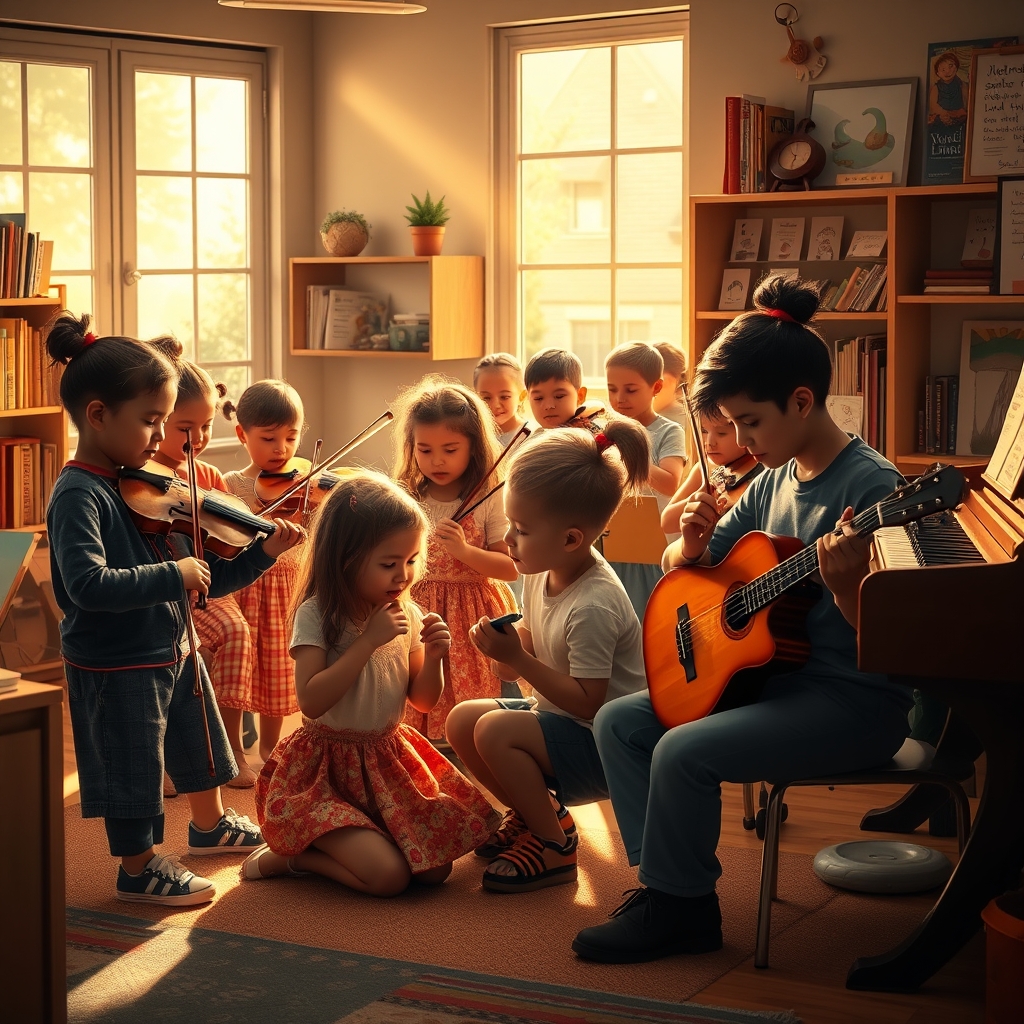
The classroom is not a stage where knowledge is performed, but a quiet orchestra where every child is handed an instrument—some polished and familiar, others strange and unyielding. The music does not begin when the conductor raises their baton; it hums in the silence before, in the breath held between notes, in the way a child’s fingers tremble over the keys or the strings. Inclusive education is not about forcing every child to play the same melody, but about listening deeply enough to hear the song they were born to compose, even when it arrives in fragments, in whispers, in the spaces between the expected and the known.
The Myth of the Perfect Score
We have built an education system that worships at the altar of uniformity, where success is measured in perfect scores and flawless performances. But what of the child who hears the music differently? The one whose rhythm stutters, whose tempo lags, whose hands struggle to keep pace? We label them “behind,” “challenged,” “at risk,” as if their struggle is a deviation from the norm rather than a variation of the human experience. The truth is, there is no single score that defines mastery. The most profound learning often happens in the dissonance, in the moments when a child’s unique way of processing the world clashes with the rigid structures we’ve erected. It is in these collisions that growth occurs—not despite the struggle, but because of it.
The Conductor’s Dilemma
The teacher, then, is not a conductor demanding synchronization, but a fellow musician, attuned to the subtle harmonies and discordant notes alike. Their role is not to correct the child’s music, but to help them find their voice within it. This requires a kind of listening that goes beyond the ears—it is a listening of the heart, a willingness to sit with the discomfort of not knowing, of not having all the answers. It is about recognizing that the child who scribbles outside the lines is not defying the rules of art, but expanding them. The child who speaks in metaphors when others demand literal answers is not confused, but seeing the world in a way that others have yet to imagine.
The Architecture of Acceptance
An inclusive classroom is not one where every child fits neatly into the same mold, but one where the mold itself is shattered, where the boundaries of what is possible are redrawn with every new voice that joins the chorus. This is not a matter of policy or procedure, but of philosophy—a fundamental shift in how we see the purpose of education. It is not about preparing children for a world that already exists, but about equipping them to imagine and create a world that could be. The walls of such a classroom are not barriers, but canvases, where every child’s story is painted in bold strokes and delicate hues, where the light filters through the cracks of their struggles and illuminates the beauty of their resilience.
The Unseen Instruments
Some children arrive with instruments we do not recognize. Their music is not written in the traditional notation of grades and benchmarks, but in the language of emotion, of intuition, of a kind of knowing that defies measurement. These are the children who teach us that intelligence is not a single spectrum, but a vast and varied landscape. They challenge us to rethink what it means to learn, to grow, to belong. Their presence in the classroom is not a disruption, but an invitation—an invitation to expand our understanding of what it means to be human, to be capable, to be whole.
The Silence Between the Notes
In the rush to fill every moment with instruction, with assessment, with the relentless march toward some imagined ideal, we often overlook the power of silence. The pauses between the notes are where the music truly lives. They are the spaces where a child gathers their courage, where they make sense of the chaos, where they find the strength to try again. These silences are not empty; they are full of possibility. They are the moments when a child realizes, perhaps for the first time, that their voice matters, that their way of seeing the world is not a flaw but a gift. It is in these quiet interludes that the seeds of belonging are planted, where the roots of confidence take hold.
The Risk of Being Seen
To be truly seen is a vulnerable act. It requires a child to step into the light, to risk being misunderstood, to trust that their uniqueness will not be met with judgment but with curiosity. This is the essence of inclusive education—not the erasure of differences, but the celebration of them. It is about creating a space where a child can say, “This is who I am,” and hear in response, “We see you. You belong here.” This kind of acceptance does not come from a curriculum or a lesson plan, but from the daily, deliberate acts of kindness, of patience, of unwavering belief in a child’s potential. It comes from the teacher who kneels beside a struggling student and says, “I’m here. Let’s figure this out together.”
The symphony of an inclusive classroom is never finished. It is a living, breathing composition, evolving with every child who joins its ranks. The music is not perfect, but it is real—raw, honest, and deeply human. It is the sound of children learning to trust themselves, to trust each other, to trust the world enough to share their gifts. And if we listen closely, we might just hear the most beautiful melody of all: the sound of belonging, rising like a chorus from the hearts of those who were once told they did not fit in. For in the end, the music was never about fitting in. It was always about finding the courage to stand out.