
The Soul’s Echo: How Inquisitive Growth Mindsets Resonate Through the Halls of Learning
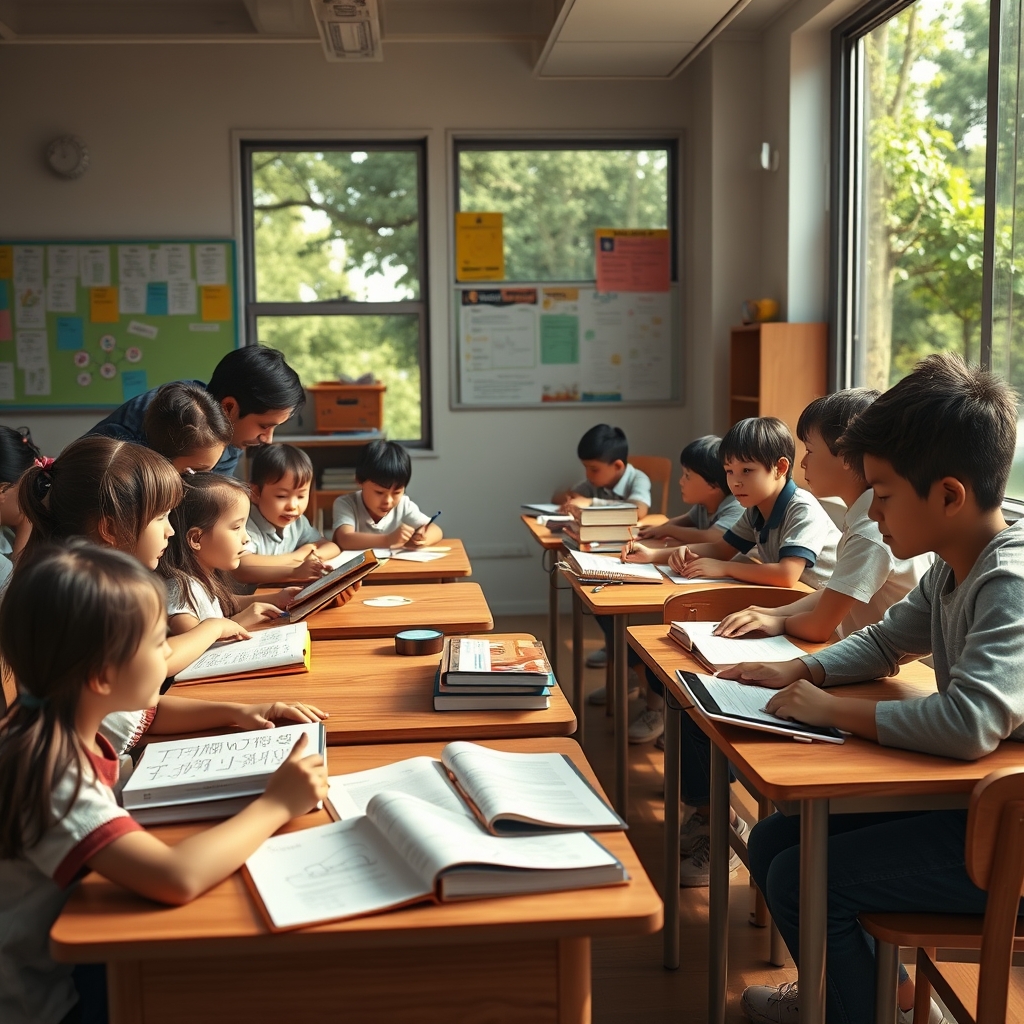
The first time I truly understood the power of a question, it wasn’t spoken aloud. It lingered in the air like the hum of a tuning fork, vibrating between the pages of a book I had just closed. The words on those pages had not given me answers—they had given me something far more precious: the courage to wonder. That moment was the quiet ignition of an inquisitive growth mindset, a spark that would later illuminate the corridors of my own learning and, eventually, the classrooms where I stood as both student and guide.
The Alchemy of Wonder
There is a kind of magic in the way a child’s mind alights upon the unknown. It is not the magic of grand revelations or thunderous epiphanies, but the quiet, persistent glow of curiosity that refuses to be extinguished. In the traditional classroom, this glow is often dimmed by the weight of standardized expectations, where answers are prized over questions, and compliance over exploration. Yet, when we shift the lens—when we design learning spaces that honor the alchemy of wonder—something extraordinary happens. The classroom becomes a living organism, pulsing with the energy of inquiry, where every student’s voice is not just heard but celebrated as a vital thread in the tapestry of collective discovery.
This is the essence of a student-centric education: a space where the curriculum bends to the rhythm of the learner, not the other way around. It is a place where mistakes are not failures but signposts, guiding the way forward. Where struggle is not a signal of weakness but an invitation to dig deeper, to ask again, to refine the question until it yields not just an answer, but understanding. The inquisitive growth mindset thrives here, nourished by the freedom to explore, to stumble, and to rise with newfound clarity.
The Architecture of Adaptive Pathways
Imagine a classroom where no two journeys are the same. Where a student who struggles with numbers finds solace in the patterns of geometry, or where a child who resists the rigidity of grammar discovers the poetry of language through storytelling. This is the promise of tailored academic pathways—an education that adapts not just to the pace of the learner, but to the unique contours of their mind. It is a radical departure from the one-size-fits-all model, a departure that requires us to rethink not just how we teach, but why we teach.
Adaptive education strategies are not merely tools; they are the scaffolding of a more humane and responsive system. They allow us to meet students where they are, not where we assume they should be. This is not about lowering standards, but about elevating the individual—recognizing that mastery is not a destination but a process, one that unfolds at its own pace and in its own way. When we embrace this truth, we create classrooms that are less like factories and more like gardens, where each plant is nurtured according to its needs, and where growth is measured not in inches but in the vibrancy of its bloom.
The Role of the Guide
In this landscape, the teacher’s role transforms. No longer the sole keeper of knowledge, they become a guide, a co-conspirator in the act of discovery. Their work is not to impart information but to cultivate the conditions in which learning can flourish. This requires a deep well of empathy, a willingness to listen more than they speak, and an unwavering belief in the potential of every student. It is a role that demands humility, for the best teachers are those who understand that they, too, are learners—forever students of the craft of teaching itself.
This shift is not without its challenges. It requires us to relinquish control, to trust in the process, and to embrace the messiness of authentic learning. But the rewards are immeasurable. When students are given the space to explore their passions, to follow their questions wherever they lead, they develop not just knowledge but resilience, not just skills but a sense of agency. They learn that their voices matter, that their ideas have value, and that the world is a place they can shape, not just inhabit.
The Ripple Effect of Community
Yet, the soul of an inquisitive growth mindset does not thrive in isolation. It is nourished by the soil of community—by the collective energy of peers, mentors, and families who believe in the power of curiosity. Collaborative learning environments are the crucibles in which this mindset is forged. They are spaces where ideas collide, where perspectives are challenged, and where the act of learning becomes a shared endeavor. Here, students learn not just from their teachers but from one another, discovering that knowledge is not a finite resource but a living, breathing entity that grows when it is shared.
Interactive parental involvement is another vital thread in this tapestry. When families are invited into the learning process—not as spectators but as active participants—the boundaries between school and home blur, creating a seamless web of support. Parents become allies in the journey, offering encouragement, sharing insights, and reinforcing the value of curiosity in everyday life. This partnership is not about hovering or micromanaging; it is about creating a culture of inquiry that extends beyond the classroom walls, where questions are as welcome at the dinner table as they are in the science lab.
The Digital Bridge
In this modern age, technology serves as a bridge, connecting the physical and digital realms of learning. Digital classroom integration is not about replacing the human element but enhancing it, offering tools that can personalize the learning experience in ways previously unimaginable. Adaptive software, virtual simulations, and interactive platforms can tailor content to a student’s unique needs, providing instant feedback and allowing them to progress at their own pace. Yet, these tools are only as powerful as the hands that wield them. Used thoughtfully, they can amplify the inquisitive growth mindset, opening doors to new worlds of exploration. Used carelessly, they risk reducing learning to a series of clicks and swipes, devoid of the depth and meaning that come from authentic engagement.
The key lies in balance. Technology should serve as a catalyst, not a crutch—a means to deepen understanding, not a substitute for it. When integrated with intention, it can transform the classroom into a dynamic, responsive space where students are not just consumers of information but creators of knowledge. It can connect them to global communities, expose them to diverse perspectives, and empower them to solve real-world problems. But it must always be guided by the same principles that underpin all great education: curiosity, empathy, and a commitment to the whole child.
The Unseen Curriculum of the Heart
Beneath the surface of lessons and assessments lies an unseen curriculum, one that shapes not just what students know but who they become. This is the curriculum of the heart, where values like resilience, empathy, and perseverance are not taught but lived. It is here, in the quiet moments between the lines of the syllabus, that the inquisitive growth mindset takes root. When a student is encouraged to try again after a failure, when they are celebrated for asking a question no one else thought to ask, when they see their teacher model the same curiosity they are being asked to embrace—these are the moments that shape a learner for life.
Holistic development programs recognize this truth. They understand that education is not just about preparing students for exams but for life. They weave social-emotional learning into the fabric of the school day, creating spaces where students can explore their identities, build relationships, and develop the skills they need to navigate an ever-changing world. These programs are not an add-on; they are the foundation upon which all other learning rests. For what good is knowledge if it is not paired with the wisdom to use it wisely? What value is a skill if it is not guided by compassion?
As the echoes of that first question still resonate within me, I am reminded that the true measure of an education is not what a student knows, but how they choose to live. It is in the way they approach the unknown—not with fear, but with wonder; not with hesitation, but with the quiet confidence that comes from knowing they are capable of growth. The halls of learning are not just places where facts are memorized and tests are passed. They are sanctuaries where the soul is nourished, where the mind is stretched, and where the heart is reminded of its own infinite capacity to learn, to adapt, and to thrive. And in that sacred space, the inquisitive growth mindset does not just survive—it sings.