
The Soul’s Compass: How Experiential School Transitions Shape the Geography of a Child’s Heart
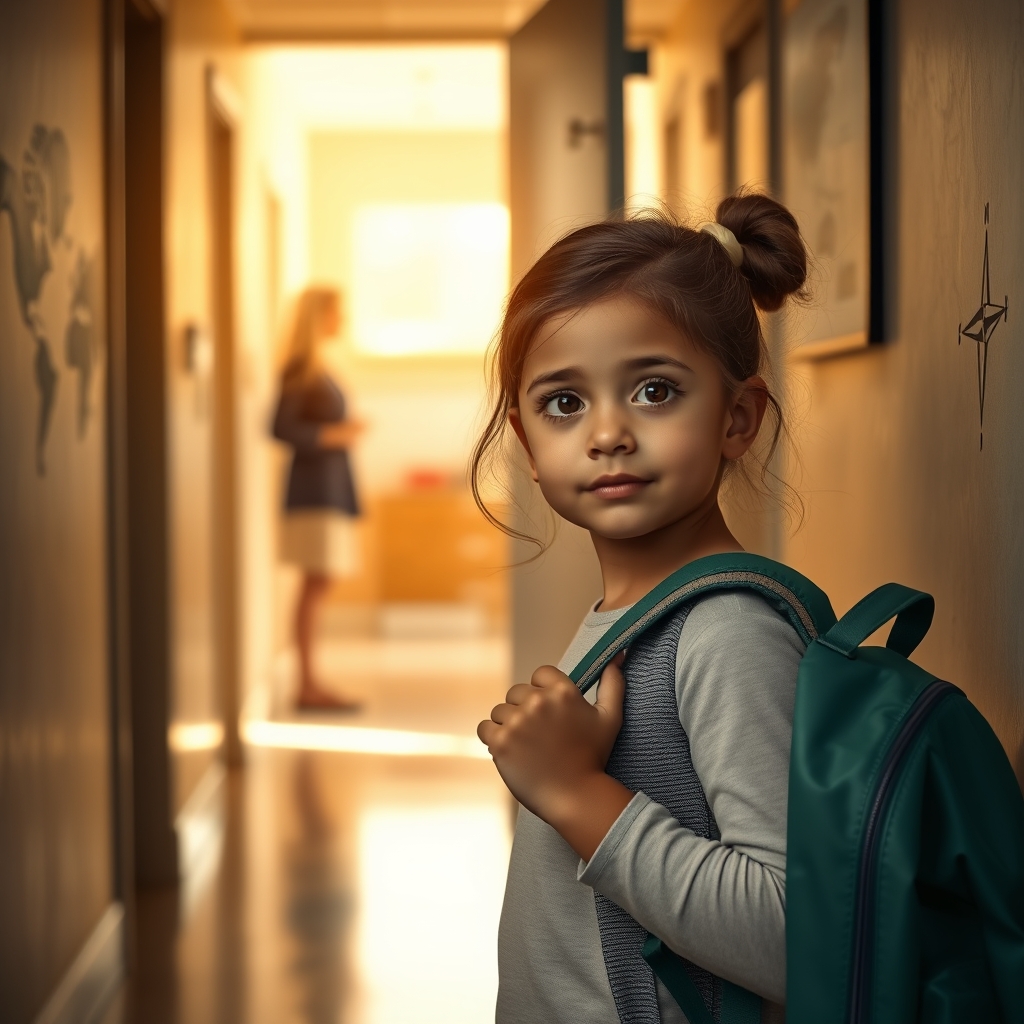
There is a moment, fleeting yet profound, when a child stands at the threshold of change—not the kind that arrives with the turning of a calendar page, but the kind that reshapes the very landscape of their inner world. It is the moment of transition, when the familiar hum of one classroom fades into the quiet anticipation of another, when the hands that once guided them gently release their grip, and the child must step forward, not just into a new space, but into a new version of themselves. These are not merely shifts in routine; they are the silent earthquakes of growth, the tremors that rearrange the tectonic plates of a young soul’s understanding of who they are and where they belong.
The Alchemy of Letting Go
I remember the first time I witnessed this alchemy in action. It was not in the grand gestures of a graduation ceremony, nor in the polished speeches of educators heralding a new chapter. It was in the hesitant pause of a seven-year-old, her fingers curled around the strap of her backpack, her eyes darting between the door of her old classroom and the unfamiliar hallway stretching before her. There was no fanfare, no applause—just the quiet weight of a decision: to step forward or to linger. In that moment, she was not just moving from one grade to the next; she was crossing an invisible border, leaving behind the version of herself that had been shaped by the rhythms of the past year and stepping into the unknown territory of what was to come.
What if we treated these transitions not as mere administrative milestones, but as sacred rites of passage? What if we recognized that the way a child navigates these shifts—whether with curiosity, trepidation, or a mix of both—holds the key to their sense of agency, their resilience, and their capacity to embrace the ever-unfolding nature of learning? The traditional model of education often reduces these moments to logistical hurdles: new schedules, new teachers, new expectations. But what if we dared to see them as opportunities to cultivate something deeper—a student-centric ethos that honors the emotional and psychological landscapes of the child as much as their academic progress?
The Classroom as a Living Ecosystem
Imagine, for a moment, a school where transitions are not abrupt disruptions but gradual, intentional evolutions. Where the move from one grade to the next is not a sudden leap but a carefully tended bridge, built with the materials of trust, collaboration, and experiential learning. In such a space, the classroom is not a static container of knowledge but a living ecosystem, one that breathes and shifts in response to the needs of its inhabitants. The teacher is not merely an instructor but a co-traveler, guiding students through the terrain of their own growth with a map that is redrawn daily, based on the contours of their curiosity and the weather patterns of their emotions.
This is the promise of experiential school transitions—a model that treats each shift not as an endpoint but as a threshold, a liminal space where the past and future converge in the present moment. It is a philosophy that recognizes that the most profound learning happens not in the mastery of facts, but in the mastery of self: the ability to adapt, to reflect, and to find meaning in the act of change itself. In such an environment, the curriculum is not a rigid structure but a responsive design, one that bends and flexes to accommodate the unique journeys of each child. Lessons are not confined to textbooks but spill over into the world beyond the classroom walls, where real-world skill acquisition becomes the compass that orients a child’s path.
The Unseen Curriculum of Belonging
At the heart of this approach lies a simple yet radical idea: that a child’s sense of belonging is not a given, but a living, breathing entity that must be nurtured with the same care as their academic growth. Too often, the emotional undercurrents of transition are overlooked in favor of the tangible markers of progress—grades, test scores, milestones. But what if we measured success not just by what a child knows, but by how they feel as they navigate the labyrinth of learning? What if we recognized that the true test of an educational system is not its ability to produce high achievers, but its capacity to cultivate resilient, empathetic, and self-aware human beings?
This is where the concept of holistic development programs takes root. These are not add-ons or afterthoughts, but the very foundation upon which academic learning is built. They are the invisible threads that weave together the fabric of a child’s experience, ensuring that no aspect of their growth is left to chance. From mindfulness practices that teach emotional regulation to project-based learning that fosters collaboration and critical thinking, these programs are designed to meet the child where they are—not just intellectually, but emotionally, socially, and spiritually. They are the quiet revolution in education, one that recognizes that the most powerful lessons are often the ones that cannot be measured on a standardized test.
The Digital Bridge: Technology as a Tool for Connection
In an era where screens often divide more than they unite, it is tempting to view technology as the antithesis of the human-centered education we seek. Yet, when wielded with intention, digital tools can become the very bridges that connect the islands of a child’s learning journey. Digital classroom integration is not about replacing the warmth of human interaction with the cold glow of a screen, but about using technology to deepen those interactions, to make them more accessible, more personalized, and more responsive to the needs of each child. Imagine a platform that adapts in real-time to a student’s learning style, offering resources and support tailored to their unique strengths and challenges. Or a virtual space where parents and teachers collaborate not as adversaries, but as partners in a child’s growth, sharing insights and strategies that span the boundaries of home and school.
This is the promise of tech-enabled early education—a future where technology is not a distraction but a conduit for connection, where the digital and the human coexist in harmony, each enhancing the other. It is a vision that requires us to rethink our relationship with screens, to see them not as barriers to engagement but as portals to new forms of learning and belonging. When used thoughtfully, technology can help us create classrooms that are not just smart, but wise—spaces that honor the complexity of the human experience while equipping children with the tools they need to thrive in an ever-changing world.
The Geography of the Heart
As I reflect on the countless transitions I have witnessed—both in my own life and in the lives of the children I have had the privilege to teach—I am struck by a simple truth: that the most meaningful journeys are not the ones that take us far from where we started, but the ones that bring us closer to ourselves. The child who stands at the threshold of a new school year is not the same child who will emerge on the other side. They will have grown, not just in height or in knowledge, but in ways that are invisible to the eye yet profound in their impact. They will have learned that change is not something to be feared, but something to be embraced—that every ending is also a beginning, and every transition is an invitation to discover a new part of themselves.
Perhaps this is the greatest gift we can offer our children: not a map that charts every step of their journey, but a compass that points them inward, toward the quiet voice that knows the way. For in the end, the most important lessons are not the ones we teach, but the ones they learn about themselves. And if we are lucky, if we listen closely enough, we might just find that their journeys have something to teach us, too—that the geography of the heart is not a destination, but a path we walk together, one step at a time.