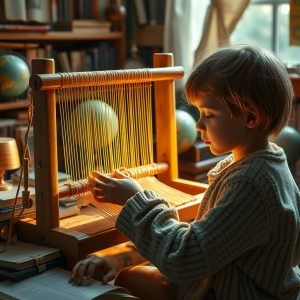
The Hushed Symphony: How Responsive Curriculum Design Composes the Soul of a Child’s Learning
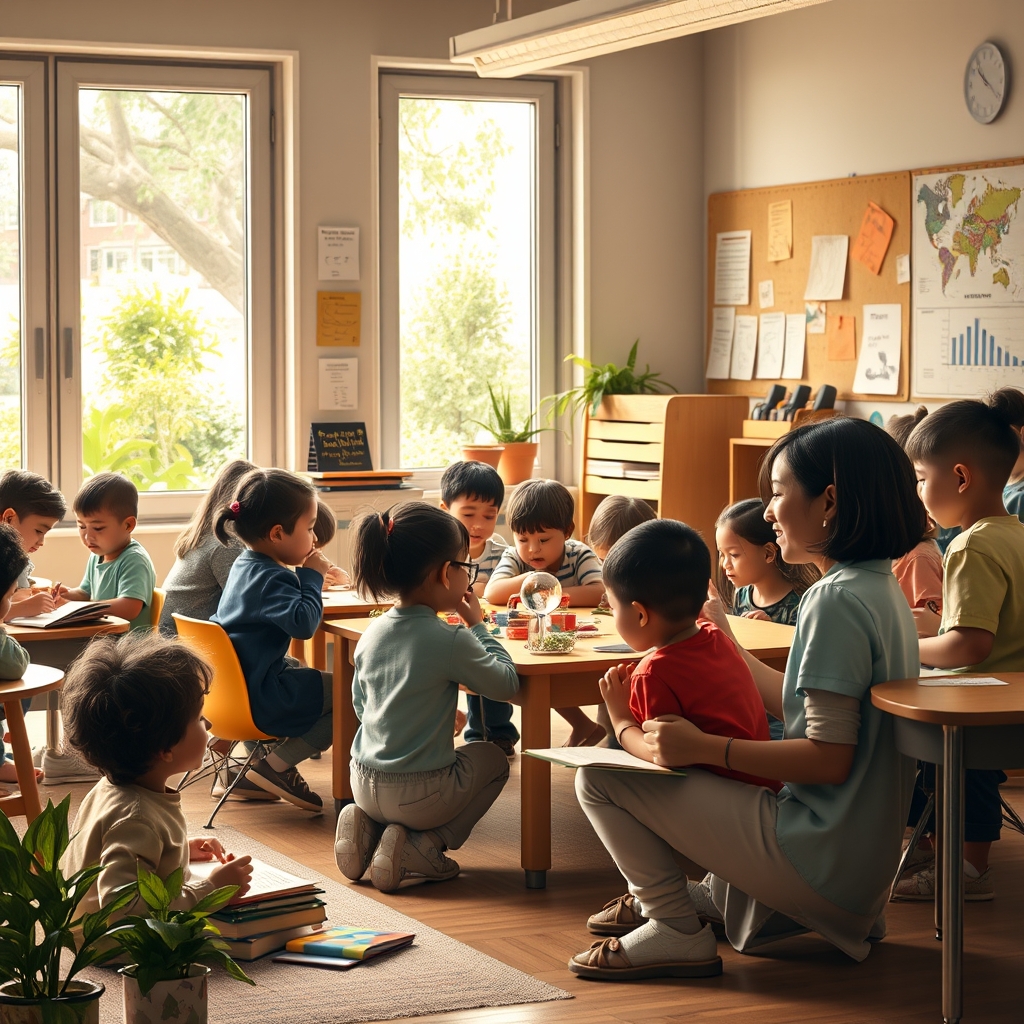
The first time I witnessed a classroom hum with the quiet electricity of a responsive curriculum, it felt like watching a river find its own path. There were no rigid banks, no forced channels—just the gentle, insistent pull of water carving its way through stone, guided by nothing more than its own curiosity. The children moved not in unison, but in harmony, each following the rhythm of their own questions, their own pace. It was not chaos; it was a symphony, conducted by the unseen hands of their own inquisitive growth.
The Alchemy of Listening
What does it mean to truly listen to a child? Not with the ears alone, but with the whole of one’s being—heart, mind, and the quiet spaces in between? A responsive curriculum does not begin with lesson plans or standardized benchmarks. It begins with a pause, a breath, a moment of stillness in which the teacher becomes a mirror, reflecting back not what they expect to see, but what is actually there. The child who stares out the window, fingers tapping absently against the desk, is not distracted. They are composing a poem in the language of light and shadow. The one who interrupts with a question that seems tangential is not disruptive. They are tracing the edges of their own understanding, mapping the contours of a thought that has not yet found its shape.
In such classrooms, the curriculum is not a fixed script but a living dialogue. It bends, it breathes, it evolves. A teacher might enter the room with a plan to explore the water cycle, only to find that the children’s questions have led them to the migration patterns of monarch butterflies, or the way rain sounds different on a tin roof than it does on pavement. The curriculum does not resist this detour. It welcomes it, because it understands that learning is not a straight line but a spiral, each loop bringing the child closer to the center of their own truth.
The Geography of Trust
At the heart of responsive curriculum design lies an unshakable trust in the child’s capacity to learn. This is not the blind faith of a gambler, but the deep, abiding certainty of a gardener who knows that the seed, given the right conditions, will inevitably sprout. The teacher’s role is not to force the growth, but to tend to the soil—ensuring it is rich with nutrients, free of toxins, and open to the rain and the sun. The child’s role is to grow, not in the way the teacher dictates, but in the way that is truest to their own nature.
This trust manifests in small, almost invisible ways. It is there in the way a teacher lingers after a lesson to listen to a child’s story about the spider they found in the corner of the room. It is there in the way they set aside the day’s agenda when a student arrives with eyes red from crying, choosing instead to sit in silence until the child is ready to speak. It is there in the way they celebrate not just the correct answer, but the courageous question, the wild guess, the quiet observation that no one else noticed. These moments are the stitches that hold the fabric of a responsive curriculum together, each one a tiny act of rebellion against the notion that learning must be rigid, uniform, or controlled.
The Dance of Collaboration
A responsive curriculum does not exist in isolation. It is not the work of a single teacher, nor even of a single school. It is a collaborative endeavor, a dance in which parents, community members, and even the children themselves take turns leading. The boundaries between the classroom and the world beyond blur, and suddenly, the grocery store becomes a lesson in fractions, the park a study in ecosystems, the kitchen a laboratory for chemical reactions. Learning is no longer confined to the pages of a textbook or the four walls of a room. It spills out into the world, messy and vibrant and alive.
Parents, too, become co-creators in this process. They are not passive recipients of report cards or occasional visitors to parent-teacher conferences. They are partners, bringing their own expertise, their own stories, their own questions into the classroom. A father who is a carpenter might teach a lesson on geometry through the building of a birdhouse. A mother who is a nurse might lead a discussion on the human body, using her own experiences to make the abstract tangible. The classroom becomes a microcosm of the community, a place where the boundaries between teacher and student, expert and novice, dissolve into something far more fluid and far more human.
The Echoes of Empathy
Perhaps the most radical act of a responsive curriculum is its refusal to treat children as empty vessels waiting to be filled. Instead, it sees them as whole beings, complex and contradictory, brimming with thoughts and feelings and ideas that are worthy of respect. It asks not, “What do you know?” but “What do you wonder?” It does not demand compliance, but invites curiosity. It does not measure success by the number of facts memorized, but by the depth of understanding, the strength of connection, the courage to ask, “What if?”
In such an environment, empathy is not an afterthought. It is the foundation. The teacher who notices the child who flinches at loud noises, the one who always sits alone at lunch, the one who speaks in a whisper—this teacher does not see these things as distractions from the curriculum. They see them as the curriculum. Because what is education, if not the art of helping another human being navigate the world with confidence, with kindness, with a sense of their own worth? A responsive curriculum does not shy away from the messiness of emotions. It embraces them, understanding that the heart and the mind are not separate, but intertwined, each shaping the other in ways both subtle and profound.
The Unfinished Map
There is no final destination in a responsive curriculum, no point at which the learning is complete. There is only the journey, the endless unfolding of questions and discoveries, the quiet joy of watching a child’s mind awaken to its own possibilities. The teacher is not a sage on the stage, but a fellow traveler, walking alongside the child, pointing out the wonders along the way, but never dictating the path. The child is not a passive recipient of knowledge, but an active explorer, charting their own course through the vast and uncharted territory of their own potential.
The beauty of such an approach is that it does not require grand gestures or elaborate resources. It requires only a willingness to listen, to adapt, to trust. It requires the courage to step off the well-worn path and into the unknown, to embrace the uncertainty, the messiness, the sheer unpredictability of learning. And in doing so, it offers something far more precious than a standardized test score or a report card full of A’s. It offers the child the chance to discover not just what they can do, but who they are—and who they might yet become.
In the end, a responsive curriculum is not just about education. It is about humanity. It is about recognizing that every child is a universe unto themselves, a constellation of dreams and fears and questions and ideas, and that the role of the teacher is not to tame that wildness, but to nurture it, to help it grow into something even more beautiful than it was before. It is about understanding that the most important lessons are not the ones that can be measured, but the ones that are felt—the quiet confidence of a child who knows they are seen, the quiet joy of a child who knows they are heard, the quiet strength of a child who knows they are enough, just as they are.