The Soul’s Laboratory: How Adaptive Education Strategies Brew the Elixir of Lifelong Wonder
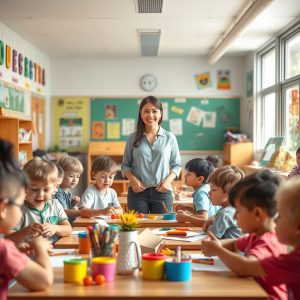
The first time I witnessed a child’s mind bend like light through a prism, I understood that education was not a straight line but a dance—a slow, deliberate unfurling of curiosity that refused to be contained. It was in a classroom where the walls were not barriers but invitations, where the air hummed with the quiet electricity of questions waiting to be asked. There, a boy named Eli, who had spent years being told he was “too slow,” discovered that his slowness was not a flaw but a different kind of speed. The kind that allowed him to see the veins in a leaf, the way sunlight pooled in the crevices of bark, the hidden geometry in a spider’s web. His teacher did not rush him. She did not force him to conform to the rhythm of the clock or the curriculum. Instead, she handed him a magnifying glass and said, “Tell me what you find.”
The Alchemy of Attention
What Eli’s teacher practiced was not magic, though it often feels like it. It was the art of adaptive education—a strategy that does not ask the child to fit the mold but reshapes the mold to fit the child. It is the quiet rebellion against the one-size-fits-all paradigm, a recognition that the human mind is not a factory assembly line but a wild, untamed garden where each seed requires different amounts of sunlight, water, and time to bloom. Adaptive education is not about lowering standards; it is about raising the ceiling of what is possible. It is the difference between handing a child a map and teaching them to read the stars.
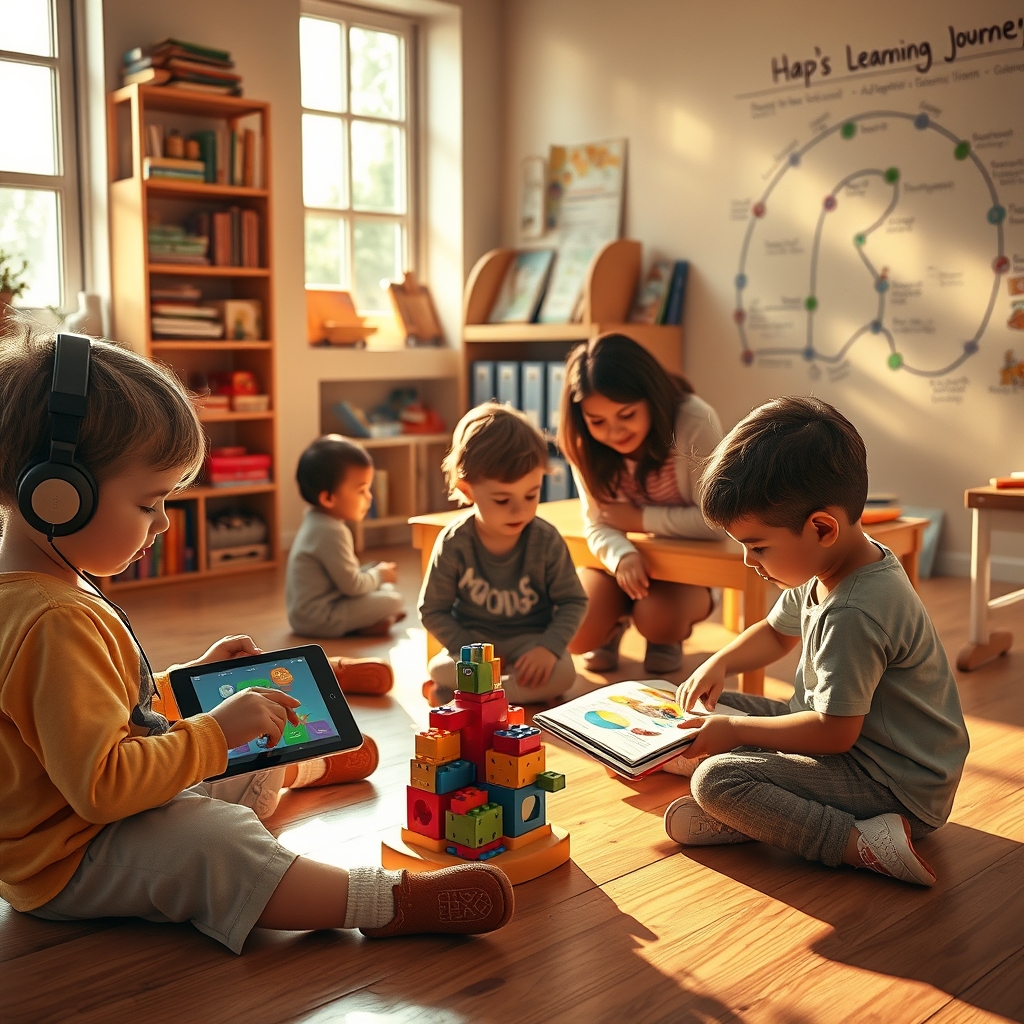
In this kind of learning environment, struggle is not a sign of failure but a signal of growth. A student who stumbles over a math problem is not met with frustration but with a question: “What part of this feels hard?” The answer might reveal a gap in understanding, a misconception, or simply a need for a different approach. Perhaps the numbers feel too abstract, and what they need is a story—a word problem about sharing apples among friends. Or maybe they need to touch the numbers, to arrange blocks into groups and see the problem take physical shape. Adaptive strategies meet the learner where they are, not where the lesson plan says they should be.
The Symphony of Small Adjustments
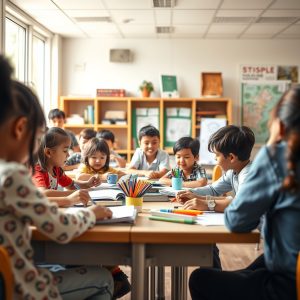
I once observed a classroom where a teacher used what she called “micro-adaptations.” A student who struggled with focus was given a fidget tool, not as a distraction but as a bridge—a way to channel restless energy into concentration. Another child, who found writing by hand laborious, was allowed to dictate her stories to a peer or use speech-to-text software. These were not grand gestures but small, intentional tweaks, like adjusting the lens of a camera to bring the world into sharper focus. The result was not chaos but harmony. The classroom did not descend into disorder; it became a place where every child could hear their own voice amid the chorus of learning.
These adaptations are not just for students with diagnosed challenges. They are for every learner, because every mind is unique. A child who excels in math but struggles with reading is not “good at one thing and bad at another.” They are a puzzle with pieces that do not yet fit together in the way we expect. Adaptive education is the art of turning the puzzle over, examining the edges, and finding new ways to connect them. It is the understanding that intelligence is not a single path but a vast, branching forest, and that the role of the educator is not to clear a single trail but to help each child find their own way through the trees.
The Heartbeat of the Classroom
At the core of adaptive education is a radical act of empathy. It requires the teacher to step out of their own expectations and into the child’s experience. It asks: What does this moment feel like for them? What do they see that I do not? What do they need that I have not yet provided? This is not a soft or sentimental approach. It is rigorous, demanding work. It requires observation, patience, and a willingness to let go of control. It is the difference between teaching a subject and teaching a child.
I remember a moment in a high school history class where a student, usually disengaged, suddenly leaned forward when the lesson turned to the Underground Railroad. His eyes lit up as he described the ingenuity of the routes, the courage of the conductors, the way ordinary people became heroes. The teacher, sensing his interest, handed him a book about local abolitionists and asked if he’d like to research and present on one of them. The student, who had rarely spoken in class, delivered a presentation so passionate and well-researched that it silenced the room. What had changed? Not the student’s ability, but the opportunity to connect the lesson to something that mattered to him. Adaptive education is not about making learning easier; it is about making it matter.
The Ripple Effect
The impact of adaptive strategies extends far beyond the individual. When one child is seen and supported, it sends a ripple through the entire classroom. Other students begin to understand that their differences are not weaknesses but strengths. They learn that there is no single way to be “smart.” A classroom that embraces adaptive education becomes a microcosm of the world we hope to build—one where diversity is not tolerated but celebrated, where every voice has a place, and where the act of learning is as unique as the learner.
This is not to say that adaptive education is without challenges. It requires resources, training, and a willingness to question long-held assumptions about how learning should look. It demands that teachers become not just instructors but observers, not just lecturers but listeners. It asks schools to move away from rigid structures and toward flexibility, from standardization to personalization. But the rewards are profound. When a child who once believed they were “not good at school” discovers that they are, in fact, a thinker, a creator, a problem-solver, something shifts. The world expands. The possibilities multiply.
The Unseen Curriculum
Perhaps the most powerful lesson of adaptive education is the one that is never explicitly taught. It is the lesson of self-trust. When a child is given the space to learn in a way that aligns with their strengths, they begin to believe in their own capacity. They learn that struggle is not a sign of inadequacy but a part of the process. They discover that their mind is not a fixed entity but a living, growing thing—capable of change, of adaptation, of wonder. This is the elixir of lifelong learning: the understanding that the journey is not about reaching a destination but about embracing the act of exploration itself.
In the end, adaptive education is not just a strategy. It is a philosophy—a belief that every child carries within them a spark of curiosity, and that the role of education is not to extinguish that spark but to fan it into flame. It is the quiet revolution of seeing each learner not as a vessel to be filled but as a fire to be kindled. And when that fire catches, it does not just illuminate the path for one child. It lights the way for all of us, reminding us that the most profound learning happens not when we follow the map, but when we dare to draw our own.