The Soul’s Crucible: How Adaptive Education Forges the Fire of Inquisitive Minds
The first time I witnessed a child’s mind ignite with understanding, it was not in the quiet hush of a library or the structured rows of a classroom, but in the wild, untamed space between curiosity and discovery. There was no lesson plan, no rigid syllabus—just the raw, unfiltered spark of a question meeting its answer in the most unexpected of places. It was then I realized that education, at its core, is not about filling vessels but about kindling fires. And yet, so often, we confine these flames to the cold, unyielding molds of tradition, wondering why they flicker instead of roar.
The Alchemy of Adaptive Education
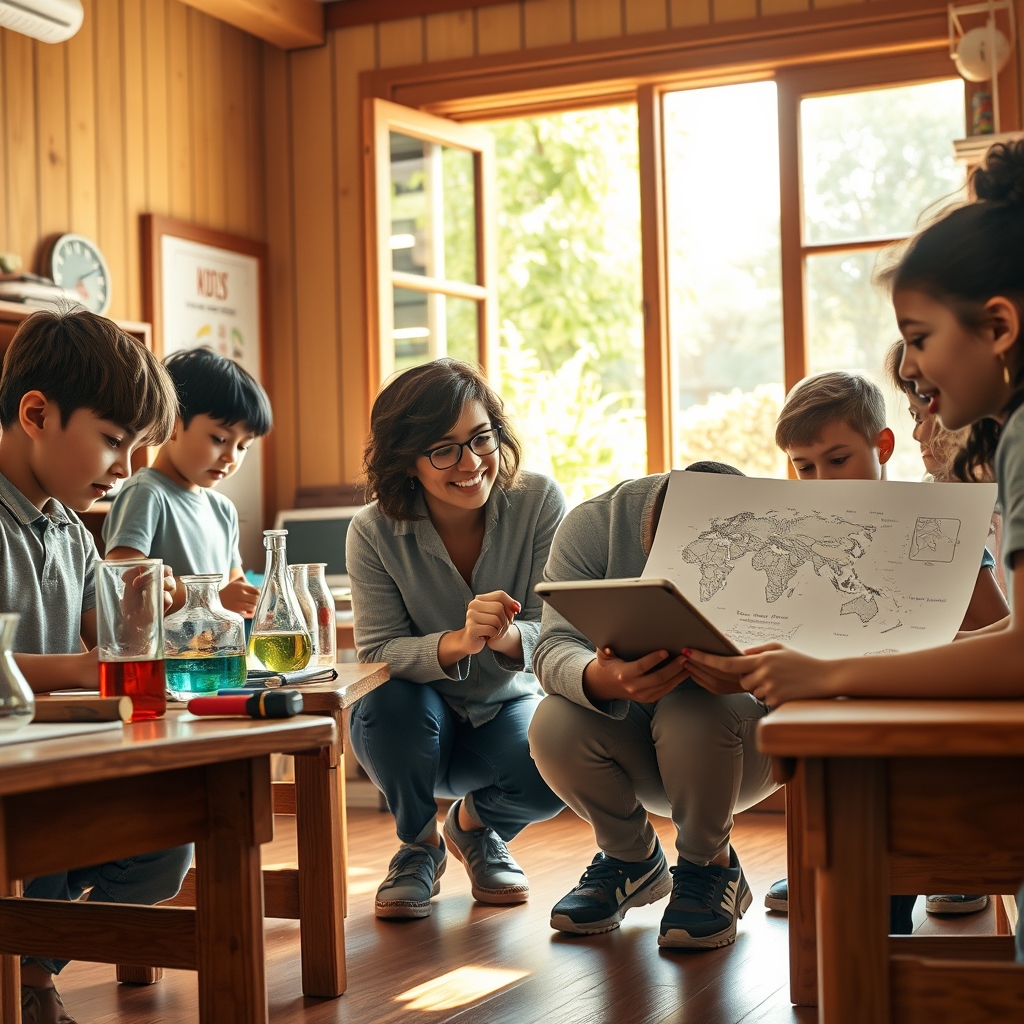
Adaptive education is not a method; it is an alchemy. It is the art of transmuting the base metal of standardized instruction into the gold of personalized inquiry. Imagine a classroom where the curriculum does not dictate the pace but dances with it, where the teacher is not a distant authority but a guide who walks beside the learner, attuned to the rhythm of their thoughts. This is the crucible where inquisitive minds are forged—not through force, but through the gentle, persistent heat of encouragement and the freedom to explore.
In such spaces, struggle is not a sign of failure but a necessary friction, the resistance that sharpens the blade of understanding. A child who grapples with a concept is not falling behind; they are carving their own path through the thicket of knowledge, their steps guided by the compass of their own questions. Adaptive strategies do not smooth the road; they teach the learner how to navigate its twists and turns, how to stumble and rise again, how to recognize that every misstep is a lesson in disguise.
The Symphony of Student-Centric Learning
What does it mean to place the student at the center of their own education? It is not merely about offering choices or tailoring assignments—it is about recognizing that every child is a universe unto themselves, with their own constellations of interests, fears, and aspirations. A student-centric classroom is a symphony where each instrument plays its part, not in isolation, but in harmony with the others. The teacher is the conductor, but the music belongs to the students.
In this symphony, silence is as important as sound. There are moments when a child needs to sit with their thoughts, to let them marinate in the quiet before they can articulate them. There are times when the most profound learning happens not in the clamor of group work but in the solitude of reflection. A truly student-centric environment honors these rhythms, allowing space for both the cacophony of collaboration and the hush of introspection.
The Crucible of Real-World Skill Acquisition
Knowledge is not a static thing, a collection of facts to be memorized and regurgitated. It is alive, breathing, evolving—and so too must be the way we acquire it. The most enduring lessons are not those that are taught but those that are lived. Project-based learning, experiential transitions, and community-supported education are not just pedagogical trends; they are the crucibles in which real-world skills are forged.
Consider the child who builds a garden to learn about ecosystems, not from a textbook but from the soil beneath their fingernails. Or the student who organizes a community project, discovering the weight of responsibility and the power of collaboration not through a lecture but through the sweat of their own effort. These are the lessons that linger, not because they were drilled into memory but because they were woven into the fabric of experience.
The Fragile Fire of Inquisitive Growth
Inquisitiveness is a fragile thing. It can be smothered by the weight of expectation, by the fear of failure, by the relentless march of a curriculum that leaves no room for wonder. But when nurtured, it becomes a fire that burns bright and steady, illuminating the path long after the last lesson has been taught. The role of education is not to contain this fire but to fan its flames, to provide the oxygen of encouragement and the fuel of opportunity.
This is the promise of adaptive education: that every child, regardless of their starting point, can find their way to the light. It is not about making learning easy—it is about making it meaningful. It is about recognizing that the journey is as important as the destination, and that the detours, the stumbles, the moments of doubt are not obstacles but essential parts of the path.
The Unseen Threads of Holistic Development
Education is not just about the mind. It is about the heart, the spirit, the whole being of a child. Holistic development programs do not treat these aspects as separate but as interconnected threads in the tapestry of learning. A child who feels seen, heard, and valued is a child who is free to explore, to take risks, to embrace the unknown. Well-being is not a luxury; it is the foundation upon which all learning rests.
In a world that often measures success by narrow metrics, holistic education reminds us that the true measure of a learner is not what they know but who they are becoming. It is about cultivating not just scholars but compassionate, resilient, curious human beings. It is about creating spaces where children can grow not just taller but deeper, where they can stretch their roots into the soil of their own potential and reach for the sky.
The classroom of the future is not a place but a living, breathing entity—a crucible where minds are not molded but set free to discover their own shape. It is a space where the fire of inquisitiveness is not just preserved but celebrated, where every question is a spark and every answer a flame. And in this crucible, we do not just teach children what to think; we teach them how to burn.