The Hollowed Ground of Expectation: How the Weight of What We Assume Shapes the Soil of Learning
The classroom is not just a room; it is a landscape of hidden valleys and unseen slopes, where the weight of expectation presses down upon the soil of learning like an ancient, invisible hand. We walk upon it daily, teachers and students alike, our footsteps leaving impressions that sink deeper than we realize. What grows here is not merely the curriculum we plant—fractions, verbs, the causes of revolutions—but something far more delicate: the fragile architecture of a child’s belief in themselves. And yet, how often do we pause to consider the shape of the ground beneath their feet?
The Geography of Assumption
Every child arrives at the threshold of education carrying an invisible satchel. Some are light, their contents known and celebrated—bright eyes, quick minds, the easy rhythm of compliance. Others are heavy, laden with labels: dyslexic, ADHD, emotionally disturbed, at-risk. These labels are not neutral. They are not mere descriptions; they are prophecies, whispered into the air before the child has even spoken. And prophecies, once spoken, have a way of hardening into stone.
I remember a boy named Eli, who sat in the back of my third-grade classroom, his fingers drumming against the desk like a metronome set to a rhythm only he could hear. The other teachers called him “disruptive.” The psychologists called him “oppositional.” The aides called him “a handful.” But no one called him by his name, not really—not in the way that mattered. Not in the way that acknowledged the boy beneath the behavior, the one who could recite entire passages from The Hobbit by heart but struggled to write a single coherent sentence. The ground beneath Eli was not level. It was tilted, uneven, and every time he stumbled, the adults around him attributed it to his own two feet rather than the slope of the land.
The Myth of the Level Playing Field
We speak often of equity in education, of leveling the playing field. But what if the field was never meant to be level? What if the very idea of a flat, uniform landscape is a fiction we cling to because it is easier to measure, easier to control? The truth is that children do not arrive at school as blank slates. They arrive as ecosystems—complex, interwoven, and deeply individual. Some thrive in the sunlight of high expectations; others wilt under its glare. Some need the cool shade of patience; others require the sturdy support of structure. To assume that one environment suits all is to ignore the very nature of growth itself.
Differentiated instruction is not a pedagogical trend; it is an acknowledgment of this reality. It is the art of reading the land, of understanding that what nourishes one seed may drown another. Yet how often do we treat it as a checklist, a series of boxes to tick rather than a living, breathing practice? We modify assignments, adjust timelines, provide scaffolds—all while forgetting that the most powerful differentiation happens not in the what, but in the how. It is not just about changing the content; it is about changing the way we see the child who receives it.
The Silence of the Unseen
There is a silence in classrooms that goes deeper than the absence of sound. It is the silence of the unseen—the child who raises their hand but is never called upon, the one who finishes their work early but is told to “just read quietly” while the rest of the class catches up, the one who sits in the front row but whose presence is as unremarkable as the wall behind them. This silence is not neutral. It is a void, and into that void, children pour their interpretations of their own worth.
I think of Maya, a girl in my fifth-grade class who rarely spoke unless spoken to. She was not shy; she was observant, her eyes tracking the room like a scholar studying an ancient text. One day, I asked her why she never volunteered answers, even when I knew she knew them. She looked at me for a long moment before replying, “Because no one ever listens anyway.” Her words were not an accusation; they were a statement of fact. And in that moment, I realized that the silence I had mistaken for compliance was, in truth, a kind of exile.
The Alchemy of Being Seen
What does it mean to truly see a child? It is not enough to look at them, to note their presence in the roll call of attendance. To see a child is to recognize the contours of their inner world—the fears that keep them awake at night, the triumphs that make their hearts swell, the quiet battles they wage against the expectations thrust upon them. It is to understand that their behavior is not a disruption but a language, a way of communicating what they cannot yet articulate in words.
Social-emotional learning is often framed as a set of skills to be taught: self-awareness, self-management, social awareness, relationship skills, responsible decision-making. But these are not skills to be drilled like multiplication tables. They are the threads that weave the fabric of a child’s soul. To teach them is not to instruct but to witness—to hold space for the messy, beautiful process of becoming. It is to say, “I see you,” not just with your eyes but with your entire being.
The Weight of What We Carry
Teachers, too, carry invisible satchels. We carry the weight of our own educations, the ghosts of the teachers who shaped us, the echoes of the children we could not reach. We carry the pressure of standardized tests, the demands of administrators, the expectations of parents. And sometimes, in the crush of all that weight, we forget that the most important thing we carry is not a lesson plan or a rubric, but a mirror. Every child who walks into our classroom holds it up to us, asking silently, “Do you see me? Do I matter?”
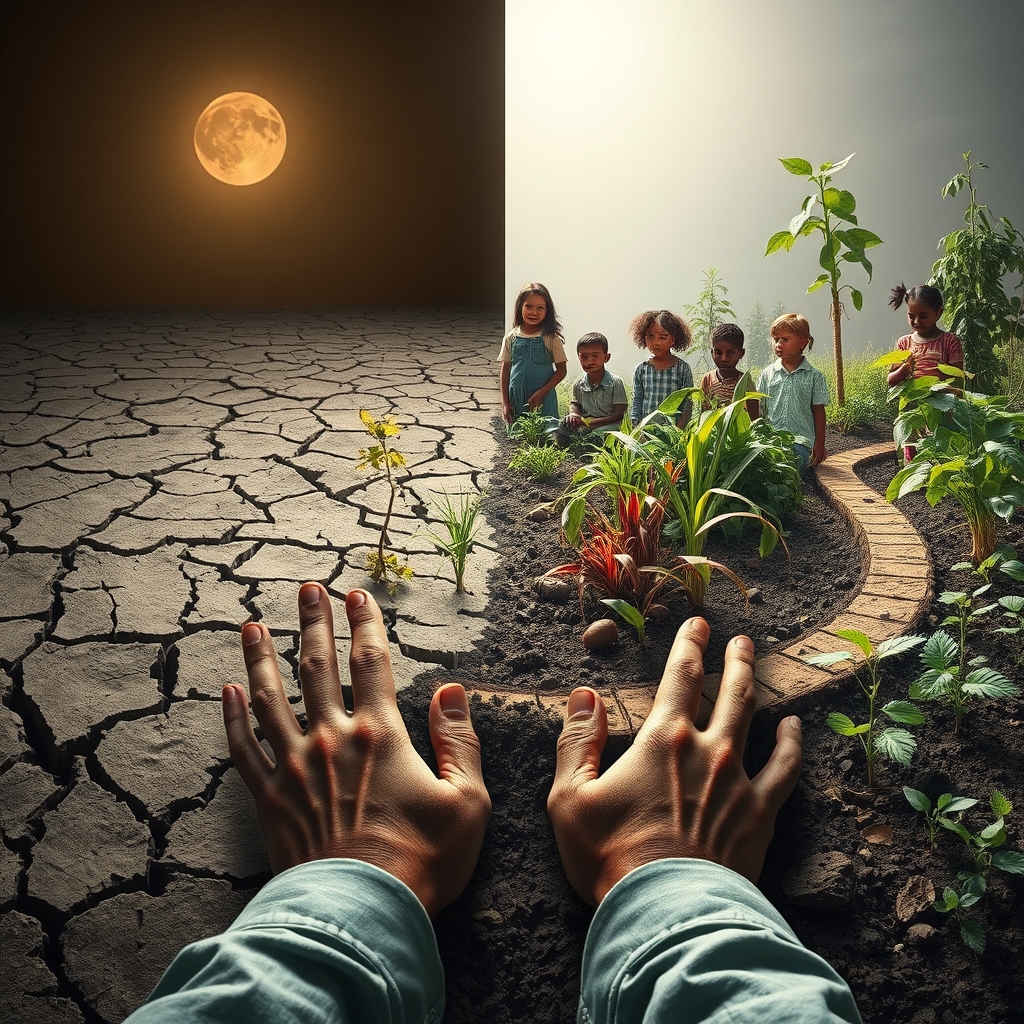
Inclusive education is not a destination; it is a practice, a daily recommitment to the belief that every child belongs—not in spite of their differences, but because of them. It is the understanding that the classroom is not a place where children are molded into a single shape, but a garden where each seed is given the conditions it needs to flourish. And sometimes, those conditions are not what we expect. Sometimes, they require us to dig deeper, to question the very ground we stand on.
The soil of learning is not static. It shifts with every footstep, every storm, every season. What we assume to be solid may, in truth, be hollow—eroded by the weight of our own expectations, our own unexamined biases. But if we are willing to kneel, to press our hands into the earth and feel its texture, its warmth, its hidden life, we may find that the ground is not as unyielding as we feared. It is rich, this soil. It is waiting. And if we tend to it with care, with humility, with the quiet understanding that every child’s story is worth telling, it will grow something beautiful.