The Unfolding Parchment: How the Stories We Choose to Read Shape the Soul of Education
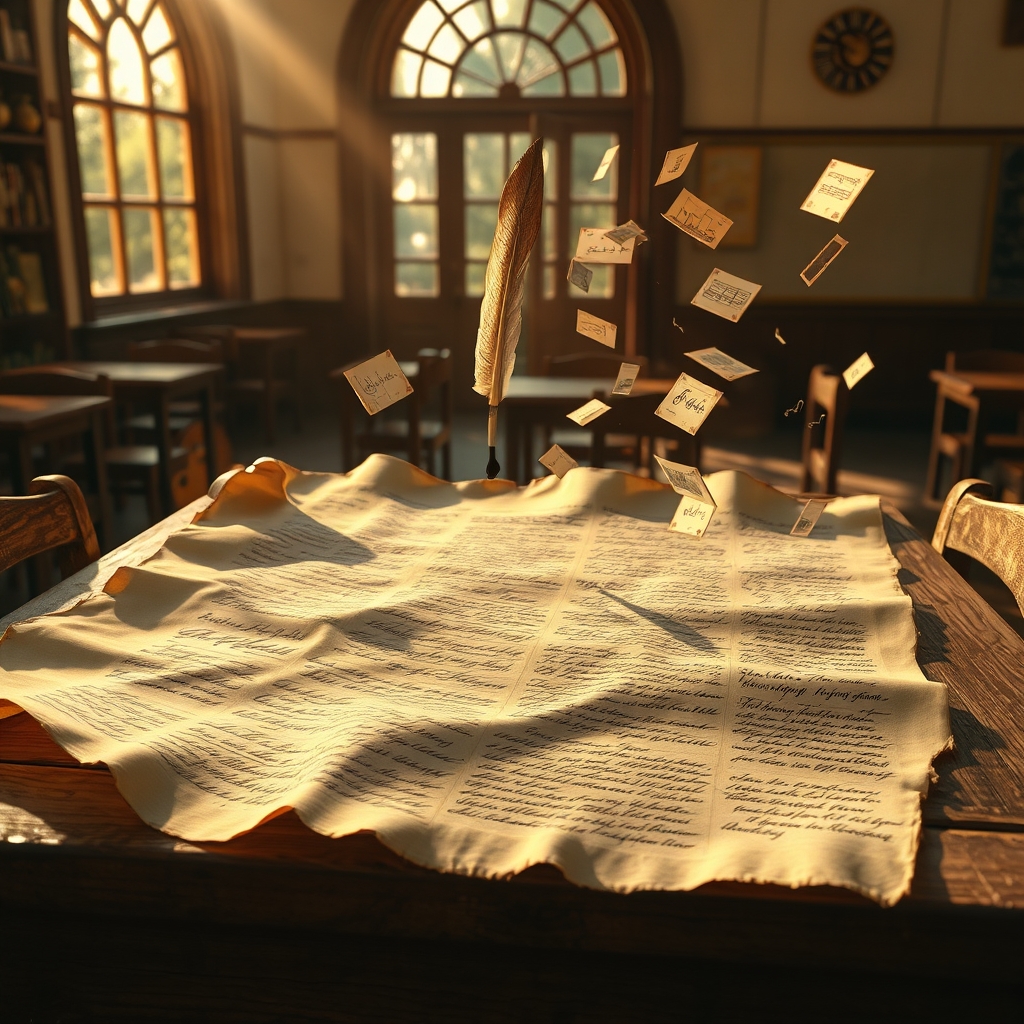
The classroom is not merely a room; it is a living, breathing parchment, its edges curling with the weight of stories untold, stories half-remembered, and stories that dare not whisper their names. We enter it with the best of intentions, armed with lesson plans and learning objectives, yet often forget that the most profound lessons are not the ones we write, but the ones we choose to read. And in the margins of those stories, in the spaces between the lines, lie the children who have been taught that their narratives are footnotes, not chapters.
The Stories We Overlook
There is a quiet violence in the act of overlooking. It is not the loud, clanging kind—the kind that shatters windows or leaves bruises—but the slow, insidious kind that seeps into the soul like ink on parchment, staining the edges of a child’s sense of self. We speak of inclusive education as if it were a destination, a place we arrive at after ticking the right boxes: differentiated instruction, individualized education plans, adaptive learning methods. But what if inclusion is not a place at all? What if it is a way of reading the world, a commitment to seeing the stories that others have deemed unworthy of the page?
Consider the child who sits in the back of the classroom, their hands folded neatly on the desk, their eyes fixed on some distant point beyond the window. To the untrained eye, they are disengaged, distracted, perhaps even defiant. But what if their silence is not an absence of thought, but a surplus of it? What if their mind is a library of stories, each one waiting for someone to pull the chair out from under them and say, Tell me yours? The tragedy of education is not that we fail to teach; it is that we fail to listen. We mistake compliance for understanding, silence for emptiness, and difference for deficiency.
The Parchment of the Heart
Every child carries within them a parchment, fragile and worn at the edges, upon which their experiences are etched in ink both bold and faint. Some of these stories are written in the language of triumph—a perfect score on a math test, a poem that made the class fall silent, a moment of unexpected kindness. Others are scrawled in the jagged script of struggle: the sting of a teacher’s dismissive comment, the weight of a diagnosis that feels like a life sentence, the loneliness of being the only one who doesn’t quite fit. And then there are the stories that remain unwritten, the ones that live in the spaces between words, in the hesitations and the half-finished sentences, in the things that are too painful or too beautiful to articulate.
Inclusive education is not about erasing these stories or smoothing over their rough edges. It is about holding the parchment gently, turning it this way and that to catch the light, and saying, This matters. You matter. It is about recognizing that the child who struggles to read the words on the page may be composing symphonies in their head, that the child who cannot sit still may be the one who notices the world in ways others cannot. It is about understanding that neurodiversity is not a flaw to be fixed, but a different way of reading the parchment of the world—a way that might, if we let it, teach us something new about what it means to be human.
The Teachers Who Dare to Read Differently
There are teachers who understand this. They are the ones who see the child in the back of the room not as a problem to be managed, but as a story waiting to be heard. They are the ones who design classrooms not as factories of conformity, but as gardens where every plant, no matter how unusual, is given the space to grow. They are the ones who replace the rigid scripts of behavioral interventions with the quiet art of presence, who understand that sometimes the most powerful thing you can do for a child is to sit beside them in silence, letting them know that their story is safe in your hands.
These teachers do not see themselves as saviors or heroes. They see themselves as readers—imperfect, sometimes stumbling, but always curious. They know that the parchment of a child’s soul is not something to be corrected or edited, but something to be honored. They understand that equity in education is not about giving every child the same story, but about giving every child the chance to tell theirs. And they know that the most important professional development they will ever undertake is not the latest workshop on differentiated instruction, but the daily practice of humility: the willingness to admit that they do not have all the answers, that they, too, are still learning how to read.
The Stories We Choose to Write
But here is the truth we often avoid: the parchment of the classroom is not just something we read; it is something we write. Every lesson plan, every policy, every whispered comment in the staff room is a stroke of the pen, a line added to the collective story of what education is and who it is for. And too often, we write in haste, in fear, in the grip of systems that demand measurable outcomes and standardized results. We write stories that leave little room for the messy, the unpredictable, the beautifully human.
What if we paused, just for a moment, and asked ourselves: What story are we writing here? Are we writing a story of inclusion, or are we writing a story of compliance? Are we writing a story that honors the complexity of every child’s parchment, or are we writing a story that flattens them into data points and labels? Are we writing a story that says, You belong here, exactly as you are, or are we writing a story that says, You must change to fit in?
The most radical act a teacher can commit is not to stand at the front of the room and deliver a lesson, but to sit down beside a child and say, Tell me your story. I want to read it. It is an act of rebellion against a world that would have us believe that some stories are more important than others, that some voices are more worthy of being heard. It is an act of love, an acknowledgment that every child’s parchment is sacred, and that the classroom is not a place where stories are graded, but where they are given room to breathe.
The parchment of the classroom is never finished. It unfolds, day by day, line by line, in the quiet moments between the lessons and the bells. And if we are lucky, if we are brave, we will look back one day and see that the story we have written is not the one we set out to tell, but the one that needed to be told all along. It will be a story of children who were seen, of voices that were heard, of souls that were given the space to grow. And in the margins, in the spaces between the lines, we will see the traces of our own humanity, written in ink that never fades.