The Soul’s Workshop: How Project-Based Learning Forges the Tools of a Lifetime
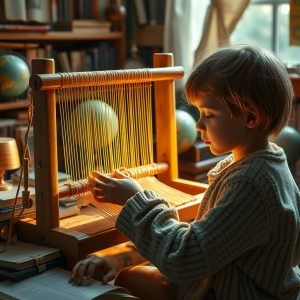
The first time I held a hammer in my small hands, I felt the weight of possibility. Not the kind that comes from textbooks or memorized facts, but the kind that hums in the bones, the quiet certainty that something real could be built from nothing. That moment didn’t happen in a classroom—it happened in my grandfather’s workshop, where the scent of sawdust and linseed oil mingled with the low murmur of his stories. He never gave me instructions; he simply handed me the tools and let me stumble through my own mistakes. That, I realize now, was my first taste of project-based learning—not as a pedagogical strategy, but as a way of being in the world.
The Alchemy of Doing
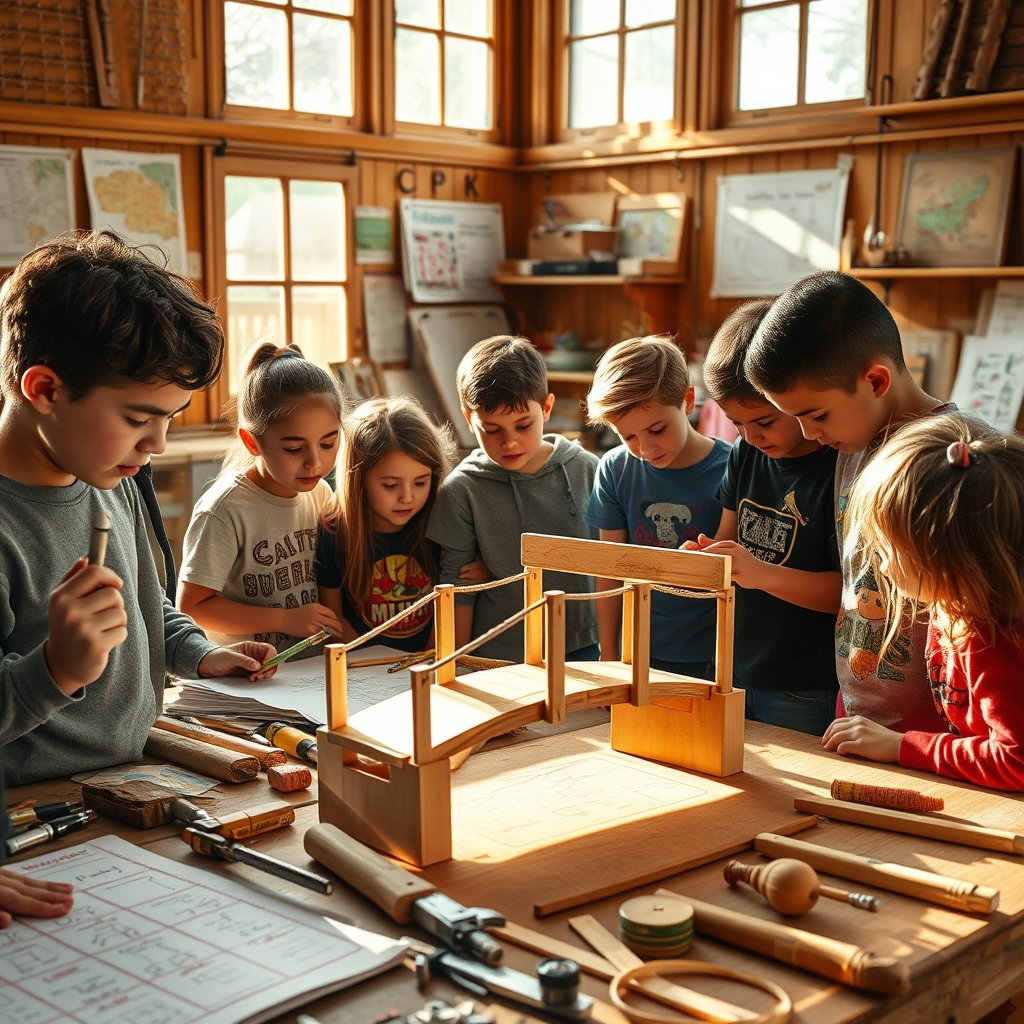
There is a kind of magic in the act of creation, the alchemy that occurs when curiosity meets action. Traditional education often treats knowledge as something to be consumed, a static entity to be transferred from teacher to student like a baton in a relay race. But project-based learning refuses this passivity. It demands engagement, not just of the mind, but of the hands, the heart, the stubborn persistence of trial and error. When a child builds a model bridge, writes a play, or designs a community garden, they are not merely applying what they’ve learned—they are discovering what it means to learn itself.
This is the soul of experiential education: the understanding that knowledge is not a destination but a journey, one that unfolds through doing. The bridge may collapse, the play may flop, the garden may wither—but in those failures, something far more valuable takes root. A child learns resilience, the quiet courage to try again. They learn that mistakes are not dead ends but detours, signposts pointing toward deeper understanding. And perhaps most importantly, they learn that their ideas have weight, that their efforts can shape the world around them.
The Classroom as a Living Laboratory
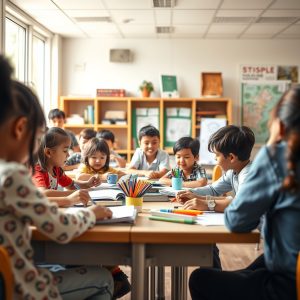
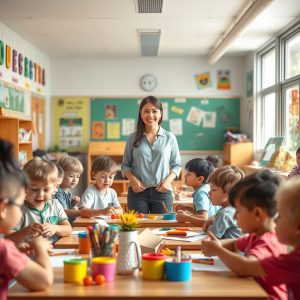
Imagine a classroom where the walls are not boundaries but invitations, where every surface hums with the potential for discovery. In such a space, a history lesson might become a living museum, with students researching, designing, and curating exhibits that breathe life into the past. A science unit could transform into a citizen science project, where young minds collect data, analyze patterns, and contribute to real-world research. Even math, that most abstract of subjects, finds its soul when students use geometry to design sustainable housing or algebra to model the spread of a local environmental issue.
This is the promise of project-based learning: it turns the classroom into a living laboratory, a place where theory and practice dance together. It is not enough to read about the water cycle; a student must track rainfall in their own backyard, measure its impact on local ecosystems, and present their findings to the community. It is not enough to memorize the branches of government; they must simulate a town hall meeting, debate policies, and grapple with the messy, beautiful complexity of democracy in action. In these moments, education ceases to be something done to students and becomes something they do—something they own.
The Quiet Revolution of Ownership
Ownership is a quiet revolution. It begins with the simple act of choice—the freedom to pursue a question that burns within you, to follow a thread of curiosity wherever it leads. In a project-based classroom, students are not passive recipients of a predetermined curriculum; they are co-creators of their own learning. This shift is subtle but profound. When a child chooses their project, they are not just selecting a topic; they are declaring, This matters to me. That declaration is the spark that ignites a lifelong love of learning.
But ownership is not just about choice—it is also about responsibility. When a student commits to a project, they are not just accountable to a teacher or a grade; they are accountable to themselves and to the community they serve. They learn that their work has consequences, that their ideas can inspire, challenge, or even change the world around them. This is the essence of student-centric education: it places the learner at the center, not as a vessel to be filled, but as a force to be reckoned with.
The Unseen Curriculum of Collaboration
No great work is ever done in isolation. Even the most solitary artist stands on the shoulders of those who came before, and every inventor, scientist, or leader relies on the collective wisdom of their community. Project-based learning understands this truth. It weaves collaboration into the fabric of education, not as an afterthought but as a fundamental principle. When students work together on a project, they learn more than just the subject matter—they learn how to listen, how to negotiate, how to lift others up even as they climb.
These are the soft skills that no standardized test can measure but that every human being needs to thrive. Empathy, for instance, is not taught in a lecture; it is cultivated in the quiet moments when a student helps a peer troubleshoot a problem or celebrates their success as if it were their own. Leadership is not a title bestowed upon the loudest voice in the room; it is the quiet confidence of a child who steps forward to guide their team through a challenge. In a collaborative learning environment, these skills are not add-ons—they are the very foundation of the work.
The Ripple Effect of Real-World Impact
There is a moment in every project when the abstract becomes tangible, when the work of the classroom spills out into the world. It might be the day a group of students presents their research on local food insecurity to the city council, or the afternoon a class’s environmental initiative leads to the planting of a school garden. In that moment, the boundaries between learning and living dissolve. The students see, perhaps for the first time, that their education is not just preparation for some distant future—it is a tool they can wield right now, in the here and now.
This is the power of real-world skill acquisition: it bridges the gap between theory and practice, between the classroom and the community. When students tackle authentic problems, they learn that their voices matter, that their ideas have the power to create change. They also learn humility—the understanding that no project is ever truly finished, that every solution leads to new questions, new challenges, new opportunities to grow. This is the heart of a sustainable education model: it does not treat learning as a finite resource but as a renewable one, a cycle of inquiry and action that continues long after the school bell rings.
The workshop of my grandfather’s garage was more than a place to build things—it was a sanctuary of becoming. The projects I undertook there were never just about the objects I created; they were about the person I was becoming. I learned patience in the slow, deliberate work of sanding a piece of wood. I learned perseverance in the face of a stubborn joint that refused to fit. I learned joy in the simple act of making something with my own two hands. These lessons were not written in any curriculum, but they shaped me more deeply than any textbook ever could. Project-based learning, at its best, is an invitation to that same kind of becoming—a chance for every child to discover not just what they know, but who they are and who they might yet be.