The River and the Reed: How Flexibility Shapes the Soul of Learning
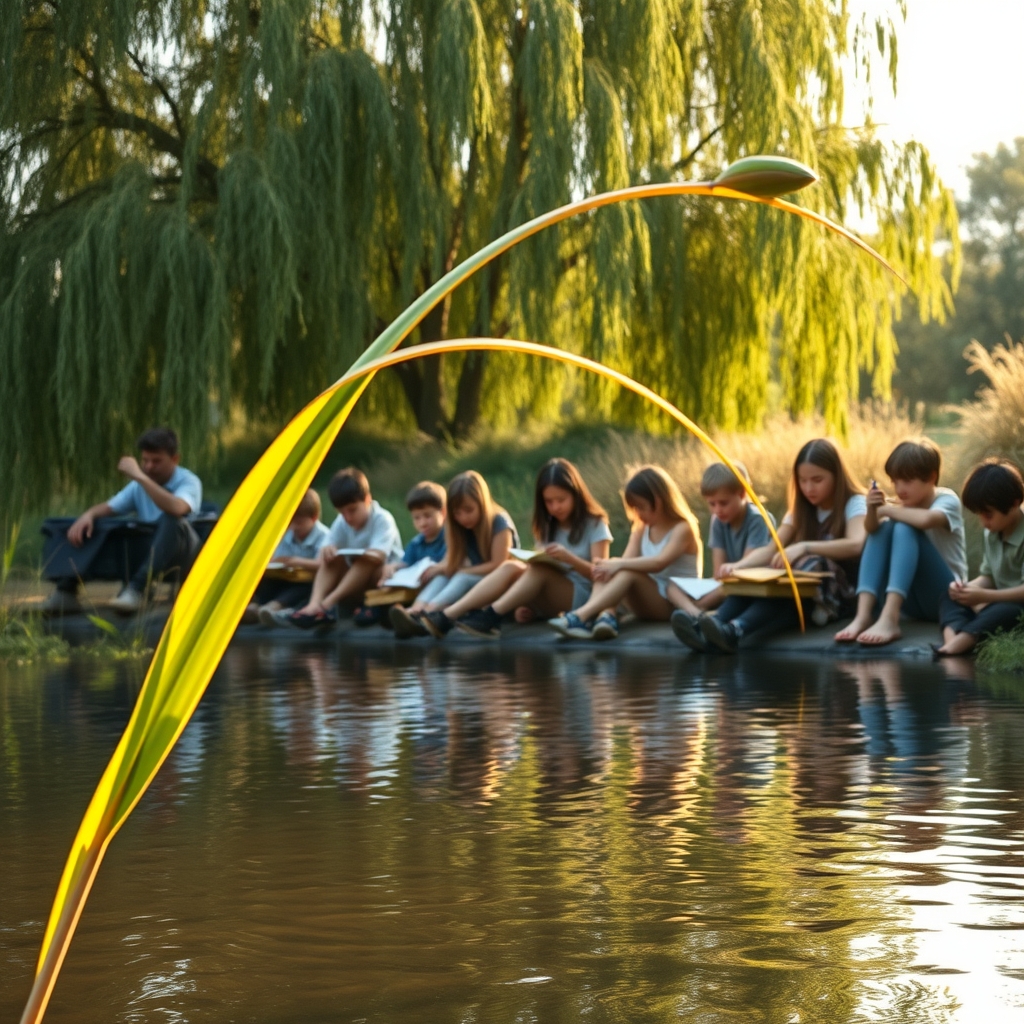
The first time I saw a reed bend in the wind, I mistook its surrender for weakness. It swayed, dipped, nearly touched the water, and for a moment, I thought it would break. But when the gust passed, it straightened again, unharmed, its slender body still intact. That reed became my first teacher in the art of responsive learning—how to yield without losing oneself, how to adapt without erasing identity. Education, I’ve come to understand, is less about standing rigid against the currents of change and more about learning the quiet wisdom of the reed.
The Myth of the Straight Path
We are told, from the earliest days of schooling, that learning is a linear journey. A to B. Kindergarten to college. One grade after another, each step a rung on a ladder that leads, inevitably, to success. But what if the ladder is an illusion? What if the most profound growth happens not in climbing, but in meandering—through the detours, the pauses, the moments when the path disappears entirely? The myth of the straight path is a story we tell ourselves to make sense of chaos, but it is not the truth of how minds unfold.
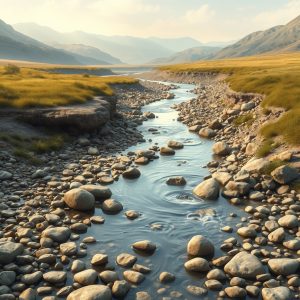
Personalized learning journeys do not follow a script. They twist like rivers, carving their own routes through the landscape of a child’s curiosity. Some students sprint ahead in mathematics only to linger in literature, savoring the weight of words like stones in their palms. Others dive deep into history, emerging with questions that rewrite the past in their own handwriting. The rigid curriculum, with its standardized tests and uniform expectations, often fails to honor these natural rhythms. It demands that all children bend to the same timetable, forgetting that the reed does not grow in a day.
The Classroom as a Living Ecosystem
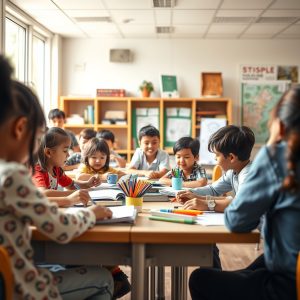
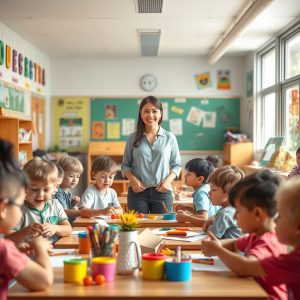
A student-centric education is not merely about giving children choices; it is about recognizing that a classroom is a living ecosystem, where every learner is both a participant and a shaper of the environment. In such spaces, teachers are not just instructors but gardeners—observing, nurturing, and sometimes stepping back to let the wildflowers grow. Project-based learning, for instance, is not a method but a philosophy. It acknowledges that knowledge is not a commodity to be delivered but a fire to be kindled, one that burns differently in each child’s hands.
I remember a classroom where students were tasked with designing a sustainable community. Some built models from recycled materials, their fingers smudged with glue and determination. Others wrote manifestos, their words sharp with conviction. A few created digital simulations, their screens glowing with the blueprint of a future they hoped to inhabit. There was no single correct way to approach the project, no rubric that could contain the diversity of their visions. And yet, by the end, each student had not only learned about sustainability but had also discovered something about themselves—what they valued, what they feared, what they were capable of creating.
The Alchemy of Adaptive Strategies
Adaptive education strategies are often misunderstood as mere technological tools—algorithms that adjust difficulty levels or software that tracks progress. But true adaptability is far more profound. It is the art of seeing a child not as a data point but as a story unfolding in real time. It is the teacher who notices when a student’s frustration is not laziness but a sign of being on the cusp of understanding, and who knows when to offer a hint and when to step away. It is the curriculum that bends to accommodate a child’s grief, their joy, their sudden obsession with the migration patterns of monarch butterflies.
In one school, I witnessed a teacher transform a lesson on fractions into an exploration of music. A student who had struggled with numbers for years suddenly understood division when it was framed as rhythm—how a whole note could be broken into halves, quarters, eighths. The classroom became a symphony of clapping hands and tapping pencils, and the child who had once seen math as a wall now saw it as a door. This is the power of adaptive strategies: they do not just teach content; they teach children how to learn.
The Unseen Curriculum of Well-Being
We speak often of holistic development, but how often do we pause to consider what it truly means? It is not enough to fill a child’s mind with facts if we neglect the soil in which those facts take root. A student’s well-being is not a separate subject to be addressed in occasional wellness workshops; it is the foundation upon which all learning rests. When a child is anxious, their brain is too busy surviving to thrive. When they are exhausted, their curiosity dims like a candle in the wind. The most innovative digital classroom integration, the most responsive curriculum design, will fail if it does not first tend to the heart.
I think of the schools where recess is not a break from learning but a part of it—where children climb trees not just for fun but to learn resilience, where they sit in circles not just to talk but to practice empathy. These are the places where education becomes more than the transmission of information; it becomes the cultivation of humanity. The most powerful lessons are not always found in textbooks. Sometimes, they are in the way a teacher kneels to tie a child’s shoelace, or in the silence that follows a difficult question, or in the moment when a student realizes that their voice matters.
The Collaboration of Hands
No child learns in isolation. Even the most solitary moments of discovery are shaped by the hands that have held theirs along the way—parents, teachers, peers, the quiet presence of a librarian who knows their favorite books. Collaborative learning environments are not just about group projects or shared desks; they are about the understanding that knowledge is a communal act. When a student struggles, it is not a personal failing but an invitation for others to step forward. When they succeed, it is not a solitary victory but a shared celebration.
I recall a classroom where students were paired across grade levels, the older ones mentoring the younger. At first, it seemed like a simple exercise in kindness, but over time, something deeper emerged. The older students, who had once seen themselves as separate from the “little kids,” began to see their own growth reflected in the eyes of their mentees. The younger ones, in turn, learned that wisdom is not confined to adults—that their peers, too, could be guides. This is the magic of community-supported learning: it dissolves the boundaries between teacher and student, between knowing and becoming.
The reed does not bend alone. It is shaped by the wind, the water, the earth beneath it. So too is a child shaped by the forces around them—the encouragement of a parent, the patience of a teacher, the curiosity of a friend. Education is not something we do to children; it is something we do with them, a collaboration of hands and hearts. And when we allow it to be flexible, when we trust the natural rhythms of growth, we create not just learners but whole human beings—rooted in the earth, reaching for the sky, bending but never breaking.