The Unseen Compass of the Heart: How Personalized Learning Journeys Chart the Soul’s True North
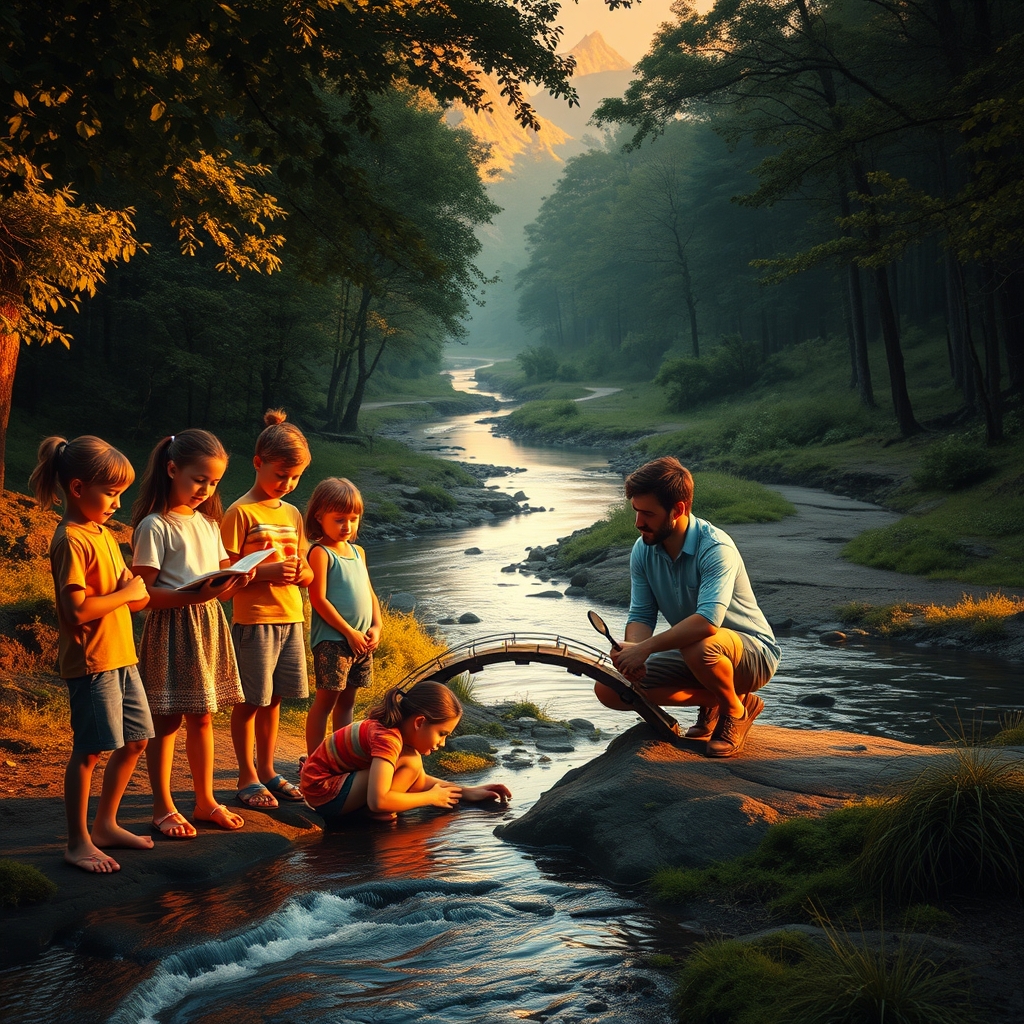
The first time I realized education was not a straight line, but a river with countless currents, I was twelve years old, standing at the edge of a classroom that no longer felt like mine. The teacher’s voice had become a distant hum, the textbook pages a blur of ink I could no longer decipher. I was adrift, not because I lacked intelligence, but because the path laid before me was one I was never meant to walk. It was then, in that quiet moment of disconnection, that I understood: learning is not a race to be won, but a journey to be felt, a landscape to be explored with the heart as much as the mind.
The Myth of the One-Size-Fits-All Classroom
We have built our schools on the illusion of uniformity—rows of desks, synchronized lessons, standardized tests that measure not the depth of understanding, but the speed of compliance. Yet, within every child lies a unique constellation of curiosities, a personal rhythm of discovery that cannot be forced into the rigid cadence of a bell schedule. The myth of the one-size-fits-all classroom is a relic of an industrial era, where children were seen as products to be molded, not souls to be nurtured. But what if we dared to imagine education as something far more fluid, far more intimate? What if the classroom became a living ecosystem, where each student’s journey was as distinct as the pattern of veins on a leaf?
The Alchemy of Personalized Pathways
Personalized learning is not merely a pedagogical strategy; it is an act of rebellion against the tyranny of averages. It is the quiet acknowledgment that a child who struggles with algebra may compose poetry that moves the soul, that the student who fidgets through history may build bridges in a makerspace that defy gravity. When we tailor academic pathways to the individual, we do more than accommodate differences—we celebrate them. We transform the classroom from a factory of conformity into a garden of possibility, where every seed is given the space to grow in its own time, toward its own light.
This alchemy requires more than adaptive software or differentiated worksheets; it demands a fundamental shift in how we perceive the role of the educator. No longer the sole keeper of knowledge, the teacher becomes a cartographer, mapping the terrain of each student’s potential. They are the quiet observer, the gentle guide, the one who asks, “What do you need to thrive?” and then listens—not just with their ears, but with their heart.
The Sacred Space of Experiential Transitions
Education is not a series of isolated moments, but a continuum—a river that carries us from one season of learning to the next. Yet, how often do we pause to honor the transitions between these seasons? The shift from elementary to middle school, from adolescence to young adulthood, is not merely a change in grade level; it is a rite of passage, a threshold where identities are tested and reshaped. When we treat these transitions as mere administrative formalities, we rob students of the opportunity to reflect, to grieve, to grow.
Rituals of Passage in a Digital Age
In a world where technology accelerates every aspect of life, the art of pausing has become revolutionary. What if, instead of rushing students from one grade to the next, we created spaces for them to mark their journey? A portfolio of their work, not just as a collection of assignments, but as a testament to their evolution. A conversation with a mentor, not just about their academic progress, but about their fears, their dreams, their questions about who they are becoming. These rituals of passage are not frivolous; they are the threads that weave the fabric of a student’s identity, helping them see their growth not as a series of disjointed moments, but as a cohesive narrative.
And what of the transitions that happen within the classroom itself? The moment a student grasps a concept that once eluded them, the shift from confusion to clarity, from frustration to flow—these, too, are sacred. When we design learning environments that honor these micro-transitions, we teach students that growth is not a destination, but a way of being.
The Quiet Revolution of Student-Centric Education
At its core, student-centric education is an act of love. It is the recognition that every child carries within them a universe of potential, and that our role as educators is not to impose our vision upon them, but to help them uncover their own. This revolution is not loud; it does not announce itself with fanfare or grand gestures. It happens in the quiet moments—a teacher kneeling beside a student to ask, “What do you think?” A classroom where students are given the freedom to choose their projects, to pursue their passions, to fail and try again. It is the understanding that the most powerful learning often happens not when we are teaching, but when we are listening.
The Paradox of Control and Freedom
One of the greatest fears in shifting toward student-centric education is the loss of control. If we let students choose their paths, will they not veer off course? If we give them freedom, will they not squander it? But this fear reveals a deeper misunderstanding: that learning is something we do to students, rather than something they do for themselves. The paradox is that when we release our grip on control, we create the conditions for true engagement. A student who is given the space to explore their interests will work harder, dig deeper, and learn more than one who is merely complying with our demands.
This is not to say that structure has no place in a student-centric classroom. On the contrary, the most effective learning environments are those that provide a balance—clear boundaries within which students can explore, a scaffold that supports them as they climb, but does not dictate the direction of their ascent. The goal is not to create chaos, but to cultivate a sense of agency, to help students see themselves as the authors of their own learning stories.
The Unwritten Curriculum of the Heart
Beneath the lessons of math and science, history and literature, lies an unwritten curriculum—one that teaches students how to navigate the world not just with their minds, but with their hearts. This is the curriculum of empathy, of resilience, of curiosity and courage. It is the understanding that education is not merely about acquiring knowledge, but about becoming more fully human. When we design learning experiences that honor this unwritten curriculum, we do more than prepare students for tests; we prepare them for life.
This is the promise of personalized learning journeys—not that they will make education easier, but that they will make it more meaningful. That they will help each student find their own true north, not by following a predetermined path, but by listening to the quiet compass of their own heart. And perhaps, in doing so, we will rediscover something profound: that the purpose of education was never to fill a vessel, but to kindle a fire. That the most important lessons are not the ones we teach, but the ones we learn alongside our students, as we walk beside them on the winding, beautiful, unpredictable path of growth.