The Soul’s Loom: How the Gentle Art of Interactive Parental Involvement Weaves the Unseen Threads of a Child’s Education
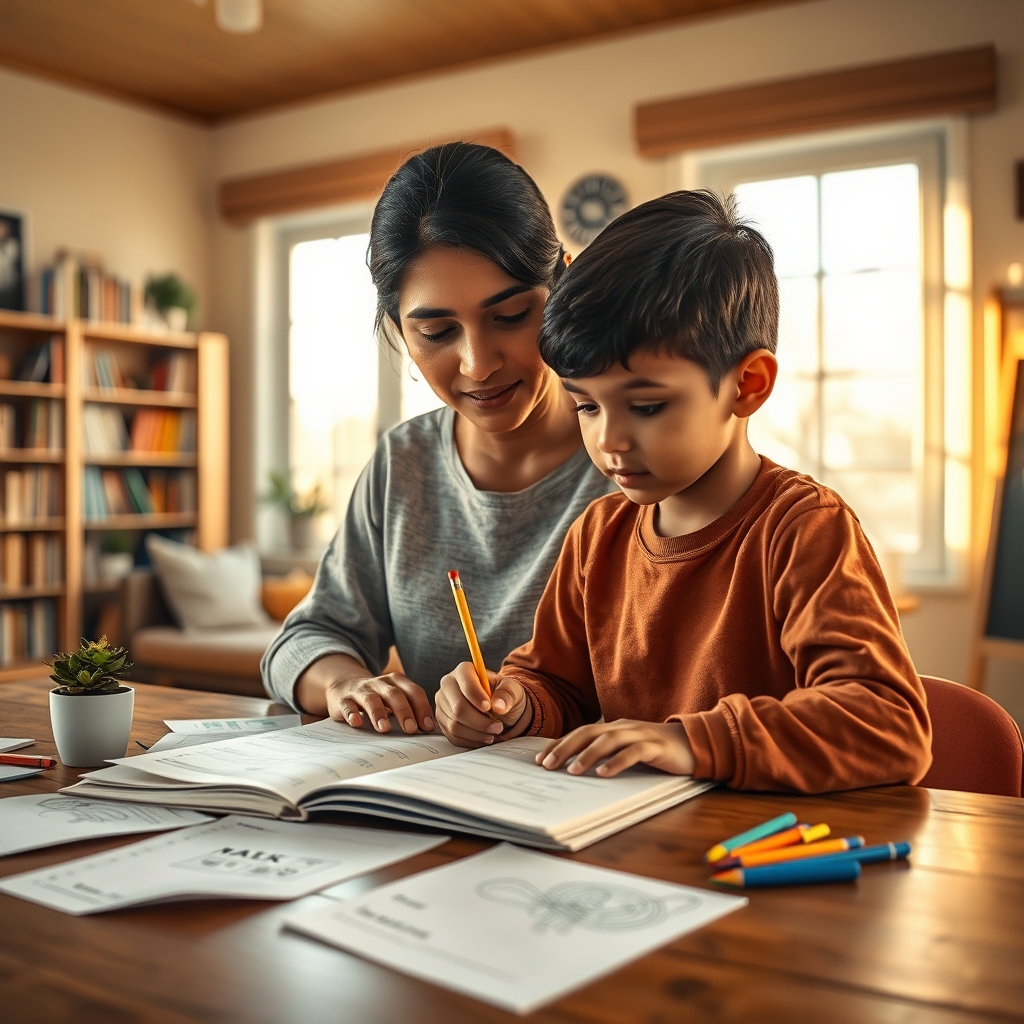
There is a quiet magic in the way a parent’s hand hovers just above the page of a child’s workbook, not to correct, but to wonder aloud—”What do you think happens next?” It is a moment suspended in time, where the weight of expectation dissolves into the lightness of shared curiosity. This is not the heavy-handed guidance of old, where answers were dictated and mistakes erased before they could breathe. This is something far more delicate: the art of interactive parental involvement, a dance of presence and absence, of holding space while allowing the child to step into it.
The Alchemy of Shared Silence
I remember the first time I sat beside my daughter as she grappled with a math problem, her pencil tapping against the paper like a metronome counting down the seconds until frustration would erupt. In the past, I might have reached for the pencil myself, eager to spare her the discomfort of struggle. But this time, I did something different. I sat. I watched. And when she finally looked up, her eyes searching mine for reassurance, I asked, “What part feels the hardest?” The question was not a lifeline but an invitation—an acknowledgment that the path to understanding was hers to walk, even if I walked beside her.
That small shift changed everything. It was not about providing answers but about validating the process of seeking them. In that shared silence, something alchemical occurred: the problem became less about getting it right and more about the act of thinking itself. The classroom, in that moment, expanded beyond four walls. It became the space between her uncertainty and my trust in her ability to navigate it.
The Unseen Architecture of Trust
Interactive parental involvement is not a technique but a philosophy—one that recognizes education as a collaborative act rather than a transactional one. It is the difference between a parent who says, “Let me show you how to do this,” and one who asks, “How would you solve this?” The first approach builds dependency; the second builds agency. The first constructs a scaffold of answers; the second lays the foundation for a lifetime of questions.
This philosophy extends beyond homework. It is present in the way a parent listens to a child’s rambling story about their day, not just for the facts but for the emotions woven between the words. It is there in the way a parent resists the urge to fix a social conflict and instead asks, “What do you think would help?” It is the quiet act of stepping back so the child can step forward, not because the parent is absent, but because they are present in a way that says, “I believe in you.”
The Echoes of Small Gestures
I once observed a father and his son in a park, not playing catch or pushing a swing, but sitting side by side on a bench, sketching the same tree. The father did not instruct; he simply drew, occasionally glancing at his son’s paper with a smile that seemed to say, “Look what we’re creating together.” That tree became more than a subject—it became a conversation, a shared experience, a thread in the tapestry of their relationship. Years later, I wonder if the son remembers the tree or the way his father’s presence made the act of creation feel sacred.
These small gestures are the building blocks of a child’s sense of self. When a parent engages not as a director but as a co-creator, the child learns that their ideas have value, their voice matters, and their journey is not a solo expedition but a shared pilgrimage. This is the essence of interactive involvement: it is not about doing for the child but about being with them, in the mess and the beauty of the learning process.
The Classroom Without Walls
What if we reimagined education not as something that happens to a child but as something that unfolds with them? Interactive parental involvement blurs the boundaries of where learning begins and ends. The kitchen table becomes a laboratory for fractions when baking a cake. A walk in the woods transforms into a lesson in ecology when a parent kneels to examine a mushroom and asks, “Why do you think it grows here?” The world becomes a classroom when curiosity is the curriculum, and the parent is not the teacher but the fellow traveler.
This approach requires a certain surrender—a willingness to let go of the illusion of control and trust in the child’s innate capacity to learn. It is not always easy. There are moments when the urge to intervene is overwhelming, when the fear of failure looms large. But in those moments, we must ask ourselves: What are we really afraid of? That the child will struggle? That they might not meet our expectations? Or that, in the end, they might forge a path we never could have imagined for them?
The Legacy of Being Seen
Perhaps the greatest gift of interactive parental involvement is the way it teaches a child that they are seen—not just for what they achieve, but for who they are. It is the difference between a parent who says, “You got an A! I’m so proud of you,” and one who says, “Tell me about what you learned. What was the most interesting part?” The first response measures worth by outcomes; the second honors the journey itself.
When a child feels seen, they begin to see themselves. They recognize their own capacity to think, to question, to create. They learn that their voice has weight, not because someone else told them so, but because they have experienced it. This is the foundation of a student-centric education—one that does not mold the child to fit the system but adapts the system to nurture the child’s unique potential.
There is a tenderness in the way a child’s face lights up when they realize they have been heard, truly heard, not just for the answer they got right but for the thought process that led them there. It is in these moments that the seeds of lifelong learning are planted. Not through lectures or drills, but through the quiet, consistent presence of someone who believes in their ability to grow. The classroom may be where the lessons are taught, but the home is where they take root—and it is the parent’s gentle, unwavering involvement that waters them, not with answers, but with the space to explore, to stumble, and ultimately, to flourish.
The threads of a child’s education are not woven in isolation. They are spun from the shared glances, the whispered questions, the moments of silent encouragement that say, without words, “I am here. You are not alone.” And in that shared space, the child learns not just about the world, but about themselves—about their capacity to wonder, to persist, to create. The loom is set, the threads are in hand. The tapestry is theirs to weave, but they do not weave it alone.