The Soul’s Garden: How Holistic Development Programs Cultivate the Hidden Landscapes of a Child’s Being
The first time I saw a child bloom—not in the way of grades or gold stars, but in the quiet unfurling of their own curiosity—I understood that education was never meant to be a race. It was a garden. And like any garden, it required patience, the right soil, and the courage to let things grow at their own pace. Holistic development programs do not merely tend to the mind; they nurture the soul’s hidden landscapes, those wild and untamed spaces where confidence takes root and resilience learns to dance with vulnerability.
The Soil of Belonging
Every child arrives in the classroom carrying a universe within them. Some universes are bright with laughter, others dimmed by doubt, but all of them pulse with the same quiet longing: to be seen. Holistic programs recognize this. They do not reduce a child to a set of skills to be sharpened or a checklist to be completed. Instead, they ask: What does this soul need to thrive? The answer is rarely found in textbooks alone. It lives in the way a teacher kneels to meet a child’s eyes, in the way a classroom hums with the energy of collaboration rather than competition. When a child feels they belong, the soil of their being becomes rich enough to grow anything.
The Roots of Resilience
Resilience is not a lesson to be taught; it is a rhythm to be felt. It grows in the moments between failure and trying again, in the space where a child learns that stumbling is not the same as falling. Holistic programs weave this understanding into the fabric of learning. They create environments where mistakes are not red marks on a page but stepping stones across a river. A project that fails becomes a conversation about what went wrong and how to try differently. A conflict between peers becomes an opportunity to practice empathy. These are not detours from learning—they are the very paths that lead to it.
The Light of Inquiry
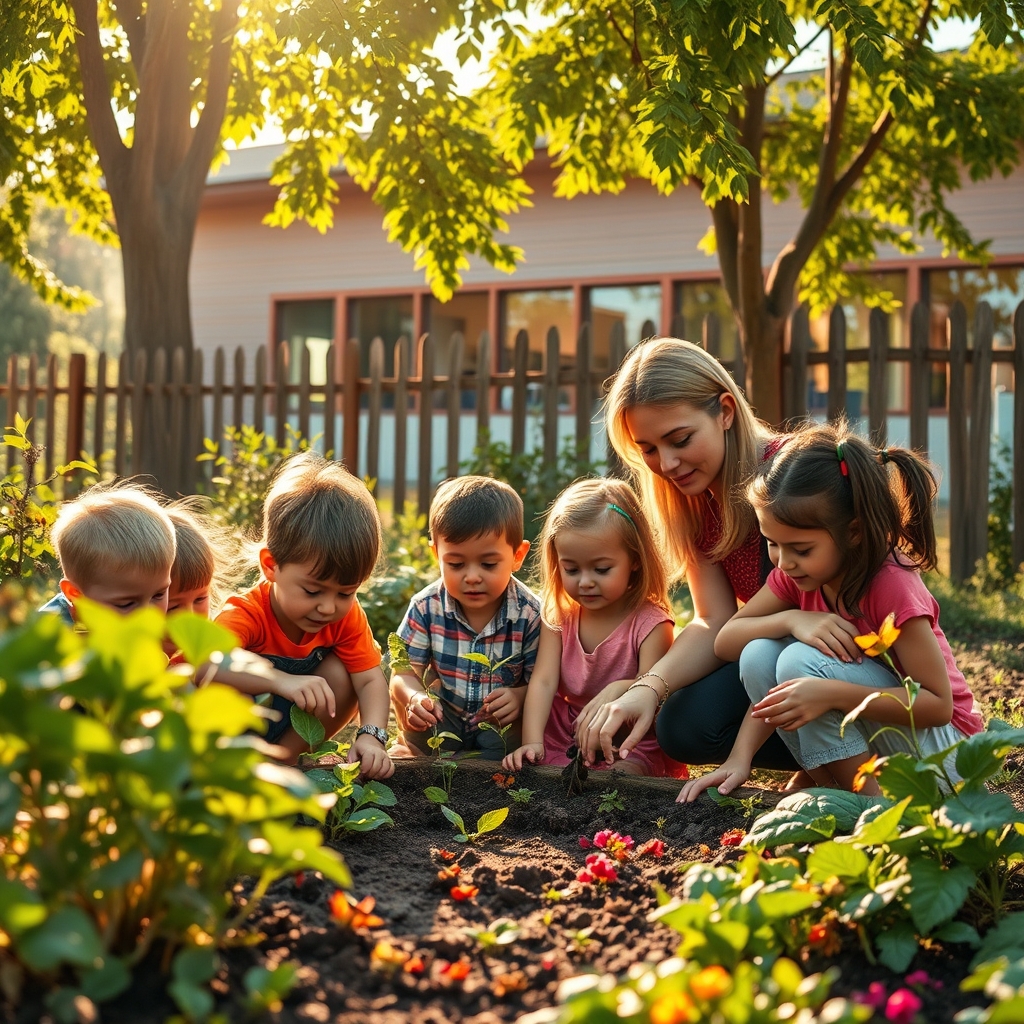
Children are born with questions tangled in their fists, but too often, the system pries their fingers open and replaces those questions with answers. Holistic education does the opposite. It fans the flames of inquiry, letting curiosity burn bright enough to light the way. In a classroom where questions are as valued as answers, a child learns that their wonder is not a distraction—it is their compass. Project-based learning becomes a vessel for this wonder, turning abstract ideas into tangible explorations. A unit on ecosystems might become a garden planted in the schoolyard, where math is measured in the growth of stems and science is tasted in the sweetness of homegrown tomatoes. Here, learning is not something that happens to a child; it is something that happens with them.
The Dance of Collaboration
No garden grows in isolation. The same is true for children. Collaborative learning environments remind us that we are not meant to walk this path alone. When children work together—building, creating, problem-solving—they learn that their differences are not barriers but bridges. A shy child finds their voice in the chorus of a group project. A child who struggles with focus discovers rhythm in the give-and-take of teamwork. These are not just skills for the classroom; they are lessons for life. The world does not need more individuals who can recite facts. It needs people who can listen, adapt, and lift each other up when the ground feels unsteady beneath their feet.
The Harvest of Well-Being
What good is knowledge if the heart that holds it is weary? Holistic development programs understand that well-being is not a footnote to education—it is the foundation. A child who is anxious, hungry, or disconnected cannot learn, no matter how brilliant the lesson plan. These programs tend to the whole child: body, mind, and spirit. They integrate mindfulness into the school day, turning moments of stillness into anchors in a stormy world. They prioritize play, recognizing that joy is not a reward for learning but a vital part of it. They teach children to name their emotions, to understand that sadness and frustration are not enemies to be vanquished but guests to be welcomed and understood.
The Unseen Curriculum
Some of the most important lessons are never written in a syllabus. They are the ones that seep into a child’s bones when no one is looking: the way a teacher stays after school to help with homework, the way a classmate offers a pencil without being asked, the way a school celebrates not just the highest grades but the kindest hearts. These are the moments that shape a child’s understanding of what it means to be human. Holistic programs do not just teach subjects; they teach humanity. They show children that their worth is not measured in test scores but in the way they move through the world.
Perhaps the most beautiful thing about a garden is that it is never truly finished. There is always another seed to plant, another weed to pull, another season to prepare for. Education, too, is an endless becoming. Holistic development programs do not seek to mold children into a single shape but to help them discover the shape they were always meant to grow into. They remind us that the purpose of education is not to fill a child with facts but to help them uncover the unique light they carry within. And when that light shines—unfiltered, unapologetic, and entirely their own—it illuminates not just their path but the paths of everyone around them.