The Hollow Echo of Empathy: When Classrooms Forget to Listen
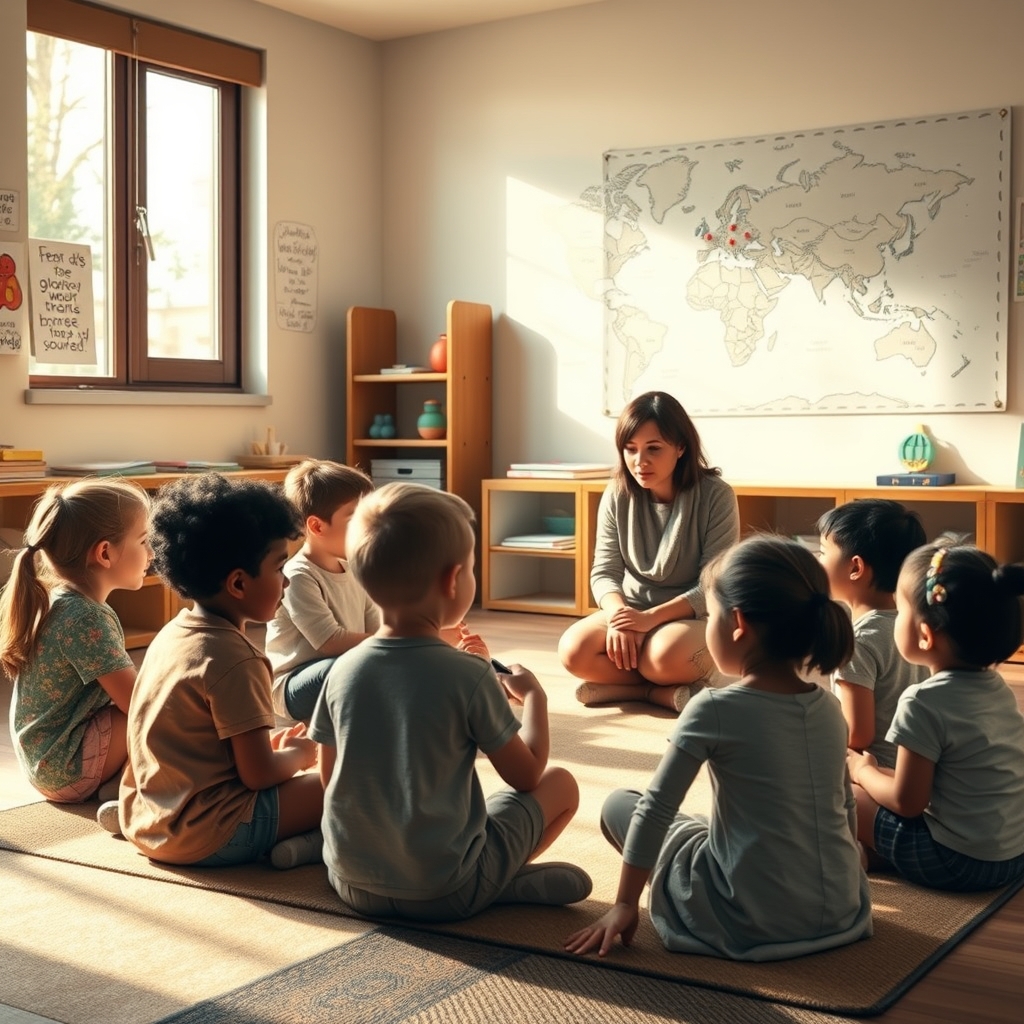
There is a silence that hums in the corners of every classroom, a quiet so profound it drowns out the clatter of chairs and the murmur of voices. It is the silence of the unseen, the unheard—the child who sits at the edge of the circle, fingers tracing the frayed edges of their notebook, eyes darting like a bird too afraid to land. We call this space inclusive, but what does that word even mean when the air itself feels thick with the weight of being tolerated rather than truly known?
The Illusion of Presence
We design our classrooms with intention, or so we tell ourselves. The desks arranged in careful clusters, the walls adorned with posters proclaiming the virtues of kindness and resilience, the carefully curated bookshelves that promise windows and mirrors for every child. Yet, for all our efforts, the room remains a stage where some children are handed scripts while others are left to improvise in the wings. Inclusion is not a set design; it is not a checklist of accommodations or a well-rehearsed performance of equity. It is the slow, deliberate act of seeing—not just the surface of a child, but the layers beneath, the ones that shift and settle like sediment in a riverbed.
How often do we mistake proximity for belonging? A child may sit in the same room, participate in the same activities, even receive the same grades as their peers, and yet feel as though they are observing their own life from behind a pane of glass. The illusion of presence is a cruel trick, one that convinces us we have done enough when, in truth, we have only begun to scratch the surface. The real work of inclusion is not in the seating chart or the differentiated worksheet; it is in the way we listen, not just with our ears, but with the quiet spaces between our words, where the unspoken truths reside.
The Myth of the Perfect Accommodation
We have turned education into a puzzle, one where every child is a piece that must fit neatly into the larger picture. The Individualized Education Plan (IEP) becomes a contract, a promise written in the sterile language of goals and benchmarks, as if a child’s worth could be measured in percentages and progress reports. But what happens when the puzzle piece doesn’t fit? Do we sand down the edges, force it into place, and call it inclusion? Or do we acknowledge that perhaps the puzzle itself is flawed, that the picture we are trying to create is not one of uniformity, but of something far more complex and beautiful?
The myth of the perfect accommodation is the belief that there is a one-size-fits-all solution, a magic bullet that will make every child feel seen. But children are not problems to be solved; they are stories to be heard. The IEP is not a blueprint for success; it is a conversation, one that must be revisited and revised, not just annually, but in the quiet moments when a child’s eyes flicker with something unnameable—a fear, a hope, a question that has no words. The real accommodation is not in the document; it is in the way we hold space for the child’s voice, even when it is messy, even when it disrupts our carefully laid plans.
The Weight of Being the Exception
To be the child who requires extra time, who needs a quiet space, who is pulled out of class for specialized instruction—this is to carry a weight that no child should have to bear. It is the weight of being the exception, the one who is always slightly out of step with the rhythm of the room. We tell these children that their differences are strengths, that they are unique, that they belong, but our actions often betray our words. The extra time becomes a mark of shame, the quiet space a reminder of their isolation, the pull-out sessions a signal that they do not quite fit.
What if we stopped treating differences as deviations from the norm and instead saw them as the norm itself? What if the classroom were designed not to accommodate the few, but to celebrate the many? The child who struggles to read is not broken; they are a reader in the making, one whose journey looks different from the others. The child who needs to move, to fidget, to stim—they are not disruptive; they are engaged in a way that defies our narrow definitions of focus. The real work of inclusion is not in making exceptions, but in dismantling the idea that there is a standard to begin with.
The Unlearning of Empathy
Empathy is not a skill to be taught; it is a practice to be unlearned. We enter the classroom with our own stories, our own biases, our own unexamined beliefs about what learning should look like. To truly see a child, we must first unlearn the idea that we know what is best for them. We must unlearn the impulse to fix, to correct, to mold them into something more palatable. Empathy is not about feeling for a child; it is about feeling with them, about sitting in the discomfort of not having all the answers, about admitting that we, too, are works in progress.
The classroom is not a place of answers; it is a place of questions. The most powerful thing a teacher can say is not “I understand,” but “Tell me more.” It is in the act of listening that we begin to dismantle the barriers that separate us, that we create a space where every child, regardless of their needs, their abilities, or their differences, can feel not just included, but truly known. The echo of empathy is not in the words we speak, but in the silence we hold for the voices that have been too long ignored.
The Quiet Rebellion of Small Gestures
In a world that measures success in data points and standardized tests, the quiet rebellion of small gestures often goes unnoticed. The teacher who lingers after class to ask a student how their weekend was, not because it is on the lesson plan, but because they genuinely want to know. The student who offers a pencil to a classmate who forgot theirs, not out of obligation, but out of a shared understanding of what it means to be human. The moment when a child raises their hand not to answer a question, but to ask one of their own—these are the acts that build an inclusive classroom, not through grand declarations, but through the accumulation of small, intentional moments.
These gestures are not performative; they are radical. They challenge the notion that education is a transaction, that learning is a product to be consumed and measured. They remind us that at the heart of every classroom is a collection of human beings, each with their own fears, their own dreams, their own unique way of moving through the world. The quiet rebellion is not in the policies or the programs, but in the way we choose to see one another, not as problems to be solved, but as people to be known.
The classroom is not a place where we come to be fixed; it is a place where we come to be seen. The echo of empathy does not demand grand gestures or elaborate accommodations. It asks only that we listen, not just to the words, but to the silences between them, where the true stories of our children reside. And perhaps, in the act of listening, we will find that the classroom is not a puzzle to be solved, but a garden to be tended, one where every child, in all their messy, beautiful complexity, is given the space to grow.