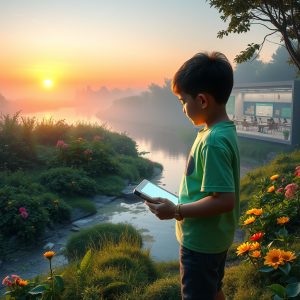
The Fragile Ecosystem of the Heart: How Emotional Currents Shape the River of Learning

The classroom is not merely a room of desks and chalkboards; it is a living, breathing ecosystem where the unseen currents of emotion flow beneath the surface of every lesson. Like a river carving its path through stone, these emotional currents shape the landscape of learning, determining which ideas take root and which are swept away by the relentless tide of distraction or disconnection. To teach is to navigate these waters, to understand that the heart’s geography is as complex and varied as the minds we seek to nurture.
The Unseen Tributaries of the Mind
Every child carries within them a network of tributaries—some wide and deep, others narrow and hidden—each representing the unique emotional experiences that have shaped their journey. For some, these tributaries are calm and steady, reflecting the security of a supportive home or the quiet confidence of a child who has always felt seen. For others, the waters are turbulent, churned by the storms of anxiety, the droughts of neglect, or the sudden floods of trauma. To ignore these emotional landscapes is to teach in a vacuum, as if the mind and heart were separate entities rather than intertwined threads of the same tapestry.
Inclusive education is not just about accommodating different learning styles or abilities; it is about recognizing that the emotional climate of the classroom is the soil in which all learning grows. A child who feels unsafe, unseen, or unvalued will not absorb the Pythagorean theorem or the nuances of Shakespeare with the same depth as one who feels anchored in belonging. The river of learning cannot flow freely if the emotional currents are dammed by fear or stagnation.
The Alchemy of Emotional Resonance
There is an alchemy to teaching that transcends curriculum and pedagogy. It is the quiet magic of emotional resonance—the way a teacher’s tone, a peer’s glance, or a moment of shared laughter can dissolve the barriers between a child and the material before them. This resonance is not something that can be scripted or standardized; it is the intangible force that transforms a lesson from a mere transfer of information into an experience that lingers in the soul.
Consider the child who struggles with reading, not because of a cognitive deficit, but because the words on the page feel like strangers in a foreign land. For them, the act of reading is not just about decoding letters; it is about navigating the emotional minefield of frustration, shame, or the fear of being left behind. A teacher who understands this does not simply assign more phonics drills. Instead, they create a bridge—perhaps through a shared story, a moment of vulnerability, or the simple act of sitting beside the child and saying, “I see you.” In that moment, the emotional current shifts, and the river of learning begins to flow again.
The Geography of Belonging
Belonging is not a destination; it is a landscape that must be continually cultivated. In the classroom, this landscape is shaped by the smallest of gestures—a smile, a nod, a pause to listen—and by the larger structures that govern how space, time, and attention are allocated. An inclusive classroom is one where every child can see themselves reflected in the curriculum, the conversations, and the very air they breathe. It is a place where differences are not merely tolerated but celebrated as essential threads in the fabric of the community.
Yet, the geography of belonging is fragile. It can be eroded by the subtle exclusions of language, the unspoken hierarchies of ability, or the quiet assumption that some voices matter more than others. A child who is repeatedly told, directly or indirectly, that their way of thinking or being is not valued will eventually retreat into the shadows of their own mind. The river of learning narrows, its currents weakened by the weight of disconnection.
The Cartography of the Heart
To teach with emotional intelligence is to become a cartographer of the heart, mapping the invisible landscapes that shape each child’s experience of the world. It requires a willingness to see beyond the surface—to recognize that the child who acts out is not merely “disruptive” but may be crying out for connection, or that the quiet child in the corner is not “shy” but may be navigating the treacherous waters of social anxiety. It demands that we ask not just “What do you know?” but “How do you feel?” and “What do you need?”
This cartography is not a one-time endeavor; it is an ongoing process of listening, observing, and adapting. It is the work of noticing when a child’s emotional tributaries are running dry and finding ways to replenish them—whether through a moment of one-on-one connection, a shift in the classroom environment, or the simple act of validating their experience. It is the understanding that emotional wellbeing is not a luxury but a prerequisite for learning, and that the health of the ecosystem depends on the care we take in tending to its most fragile parts.
The River’s Endless Flow
The classroom is a microcosm of the world, and the emotional currents that flow through it do not end at the door. They carry forward into the lives of the children who pass through, shaping how they see themselves, how they relate to others, and how they navigate the challenges and joys of life. A teacher who tends to these currents is not just instructing minds; they are nurturing souls, planting seeds that will grow long after the final bell has rung.
Perhaps the greatest lesson we can offer is not found in textbooks or standardized tests, but in the quiet moments when a child realizes they are not alone in their struggles, that their voice matters, and that the classroom is a place where they are seen, heard, and valued. In these moments, the river of learning flows freely, carrying with it the promise of a future where every child can navigate the waters of life with confidence, compassion, and a deep sense of belonging. The currents may shift, the landscape may change, but the river endures—eternal, ever-flowing, and alive with possibility.