The Whispering Walls: How Classrooms Speak in the Language of Belonging
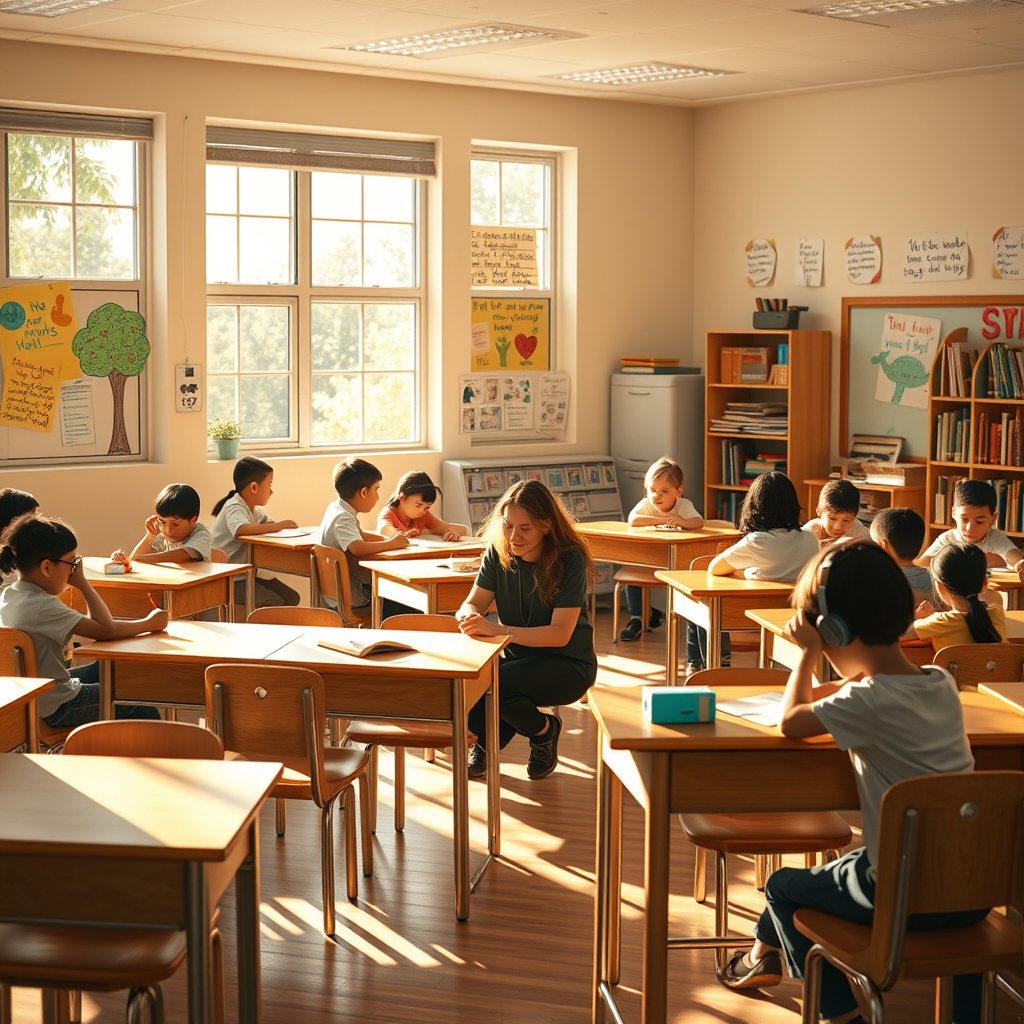
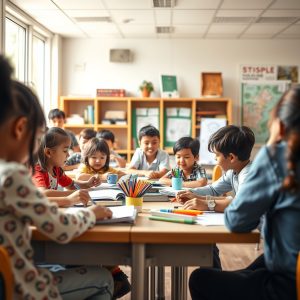
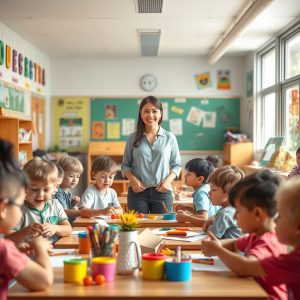
The first time I stepped into a classroom designed for every child, I felt the walls breathe. Not in the way of drafty windows or settling foundations, but in the quiet, insistent rhythm of belonging. The desks were arranged in clusters, not rows, as if inviting conversation rather than demanding silence. The shelves held books with spines worn from many hands, some large, some small, some trembling with uncertainty. The walls themselves were alive—covered in student work that celebrated not just the “right” answers, but the brave attempts, the wild guesses, the questions that lingered like morning mist.
The Myth of the “Normal” Learner
We have spent centuries building schools around the myth of the “normal” learner—a child who sits still, absorbs information like a sponge, and regurgitates it on command. But what if there is no such thing as normal? What if the spectrum of human cognition is as vast and varied as the colors in a sunset, each hue essential to the beauty of the whole? Neurodiversity is not a trend or a buzzword; it is the recognition that the human mind is not a factory assembly line but a wild, untamed garden, where every plant grows in its own time and in its own way.
Inclusive education does not ask us to lower standards; it asks us to expand them. It does not demand that we teach less; it challenges us to teach differently. The child who struggles to read may compose symphonies in their mind. The student who cannot sit still may be the one who notices the details no one else sees. The quiet observer in the corner may be weaving stories more intricate than any textbook could contain. When we design classrooms for the mythical “average,” we erase the very diversity that makes learning possible.
The Alchemy of Small Moments
Inclusion is not a grand gesture. It is not a policy signed in a boardroom or a training module completed in an afternoon. It is the sum of a thousand small moments—the way a teacher kneels to meet a child’s eyes, the pause before answering a question to give a shy student time to gather their thoughts, the choice to display a piece of work not because it is perfect, but because it is theirs. These moments are the invisible threads that weave a classroom together, turning a room of individuals into a community.
I remember a student, let’s call him Jamie, who would rock in his seat during lessons, his fingers tapping out rhythms only he could hear. The other children would sometimes stare, and I would feel the old, familiar pull to “correct” his behavior, to make him sit still like the others. But one day, I noticed something: when Jamie rocked, his answers were sharper, his ideas more vivid. His body was not a distraction; it was a tool, a way of keeping his mind engaged. So instead of asking him to stop, I asked the class to listen—to the words, not the movement. And in that small shift, Jamie became not a problem to be solved, but a voice to be heard.
The Weight of Unseen Struggles
Not all barriers are visible. Some children carry the weight of anxiety like an invisible backpack, their minds crowded with worries that have no name. Others grapple with learning disabilities that make the simplest tasks feel like climbing mountains. And then there are those who bear the scars of a world that has already decided they do not belong—children who have been told, in ways both subtle and overt, that they are too much or not enough.
Social Emotional Learning (SEL) is often framed as a set of skills to be taught, like multiplication tables or grammar rules. But what if it is something deeper? What if it is the art of seeing the child behind the behavior, of recognizing that a slammed door is not defiance but despair, that a withdrawn silence is not disinterest but fear? The most powerful SEL does not come from a curriculum; it comes from the relationships we build, the safety we create, and the unspoken promise that every child is seen, valued, and held.
The Classroom as a Living Organism
A truly inclusive classroom is not a static space. It is a living, breathing organism, constantly adapting to the needs of those within it. Differentiated instruction is not a strategy; it is a mindset. It is the understanding that no two children learn the same way, and that the goal is not uniformity but growth. It is the willingness to let go of the lesson plan when a student’s question takes the class down an unexpected path. It is the courage to say, “I don’t know, but let’s find out together.”
This kind of teaching is messy. It does not fit neatly into spreadsheets or standardized tests. It requires teachers to be both artists and scientists, to balance structure with spontaneity, rigor with compassion. It demands that we see education not as a product to be delivered but as a relationship to be nurtured. And it asks us to trust that the children in our care are not empty vessels to be filled, but whole human beings, capable of teaching us as much as we teach them.
The Unfinished Symphony
Inclusive education is not a destination. It is a journey, one that requires us to question our assumptions, to challenge our biases, and to embrace the beautiful, chaotic diversity of the human experience. It is not about creating a perfect system, but about building spaces where every child can find their place within the imperfect, glorious whole. The walls of such a classroom do not confine; they hold. They do not silence; they amplify. And in their quiet, persistent way, they whisper the most important lesson of all: You belong here.
The day I left that first inclusive classroom, I carried the sound of those whispering walls with me. They reminded me that education is not about shaping children into a mold, but about helping them discover the shape of their own souls. And perhaps, in the end, that is the only lesson that truly matters.