The Unwritten Curriculum: How the Spaces Between Lessons Shape a Child’s Soul
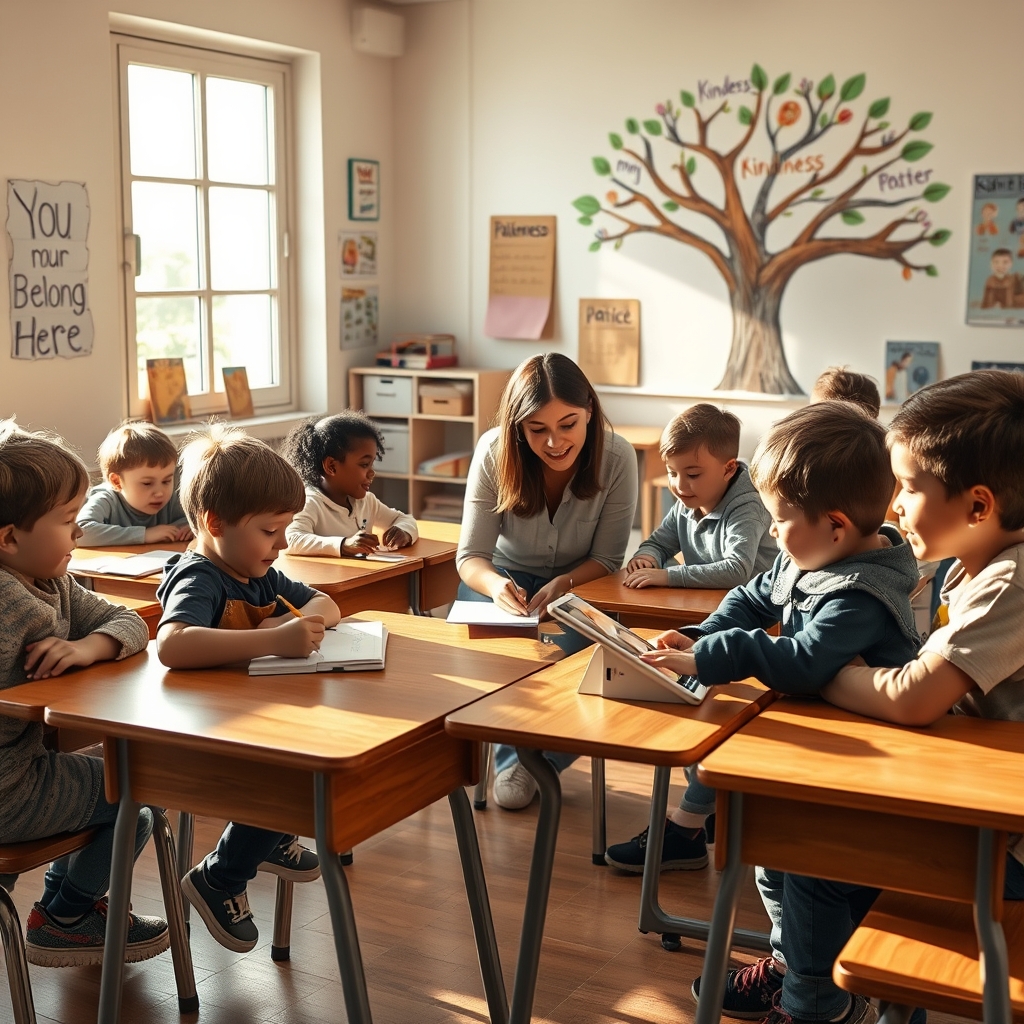
The classroom is not merely a place of instruction; it is a living organism, breathing in the quiet sighs of children who are still learning how to name their own emotions. We measure success in test scores and benchmarks, yet the most profound lessons are often the ones that slip through the cracks of the curriculum—lessons of belonging, resilience, and the fragile art of being seen. These are the threads that weave the unwritten curriculum, the silent pedagogy that shapes not just what a child knows, but who they become.
The Alchemy of Presence
There is a moment in every teacher’s day when the lesson plan dissolves into something far more essential. It happens in the pause between a question and an answer, in the way a child hesitates before raising their hand, in the flicker of uncertainty that crosses their face when they realize they do not yet have the words to articulate what they feel. This is the space where true learning begins—not in the transmission of facts, but in the quiet alchemy of presence. A teacher’s attention, when given without condition, becomes a mirror in which a child first glimpses their own worth.
Yet, how do we teach presence in a system that demands measurable outcomes? The answer lies not in the what, but in the how. It is in the way we listen when a student stumbles over a word, not to correct, but to affirm. It is in the way we design a classroom where every child, regardless of ability or background, finds a corner that feels like home. This is the heart of inclusive education—not as a strategy, but as a sacred trust. When we create spaces where children feel safe to be imperfect, we are not just teaching them; we are healing them.
The Myth of the Neutral Classroom
We like to imagine that education is a neutral act, that knowledge exists in a vacuum, untouched by the messy realities of human emotion. But the truth is far more complicated. Every lesson carries with it the weight of the unseen—the child who did not sleep because of hunger, the one who flinches at raised voices, the one who has learned to mask their confusion behind a veneer of indifference. The classroom is never neutral; it is a microcosm of the world outside, with all its fractures and fault lines.
This is where the concept of differentiated instruction transcends its technical definition and becomes something far more radical: an act of love. To differentiate is not merely to adjust the pace or the method of instruction; it is to acknowledge that each child arrives in the classroom with a unique constellation of needs, fears, and dreams. It is to say, without words, I see you, and you matter. When we embrace this truth, we move beyond the performative gestures of inclusion and into the realm of the transformative. We stop asking children to fit into the mold of the classroom and instead ask the classroom to expand to hold them.
The Language of Belonging
Belonging is not a policy; it is a language. It is spoken in the way we greet a child at the door, in the way we remember the name of their pet or the story they shared about their weekend. It is heard in the silence that follows a mistake, when a teacher chooses patience over punishment, understanding over reprimand. This language is not taught in professional development workshops or outlined in an Individualized Education Plan. It is learned in the quiet moments of connection, in the unspoken understanding that every child is more than their struggles, more than their labels.
Social-emotional learning, when done well, is not a separate subject to be checked off a list. It is the air that fills the room, the invisible thread that binds a community together. It is in the way a child learns to name their frustration before it turns to anger, in the way they practice empathy by listening to a peer’s story. These are not soft skills; they are the foundation upon which all other learning rests. Without them, knowledge remains hollow, a collection of facts without context or meaning.
The Weight of the Unseen
There are children in every classroom who carry burdens we cannot see. The child with anxiety who smiles through their panic, the one with a learning disability who has learned to hide their confusion behind a mask of compliance, the one who has never known what it feels like to be truly heard. These are the ghosts in the classroom, the silent witnesses to a system that often fails to see them. And yet, they are not powerless. They are waiting, watching, hoping for a sign that they are not alone.
This is where neurodiversity awareness becomes more than a buzzword. It is a call to action, a reminder that the classroom must be a place where every mind is celebrated, not in spite of its differences, but because of them. When we design lessons that honor multiple ways of thinking, we are not just accommodating differences; we are enriching the learning experience for everyone. The child who sees the world in pictures teaches the one who thinks in words. The child who moves to learn reminds the one who sits still that there are many paths to understanding. In this way, inclusion becomes a gift, not a compromise.
The Teacher as Gardener
A teacher is not a sculptor, shaping passive clay into a predetermined form. A teacher is a gardener, tending to the unique needs of each seedling, knowing that some will grow quickly while others need time to unfurl. This is the essence of holistic education—not a method, but a mindset. It is the understanding that a child’s growth cannot be measured solely by academic progress, but by the quiet, incremental steps they take toward becoming whole.
This is why professional development must go beyond strategies and techniques. It must delve into the deeper questions: How do we cultivate empathy in ourselves so that we can model it for our students? How do we create classrooms that are not just inclusive in name, but in spirit? How do we ensure that every child, regardless of their challenges, feels seen, heard, and valued? These are not questions with easy answers, but they are the ones that matter most.
The unwritten curriculum is not found in textbooks or lesson plans. It is written in the way a child’s face lights up when they finally understand a concept, in the way they learn to trust themselves because someone else believed in them first. It is in the quiet moments when a teacher chooses connection over correction, understanding over judgment. These are the lessons that linger long after the school year ends, the ones that shape not just what a child knows, but who they are. And perhaps, in the end, that is the only education that truly matters.