The Soul’s Crucible: How the Fire of Real-World Skill Acquisition Forges the Architecture of a Life
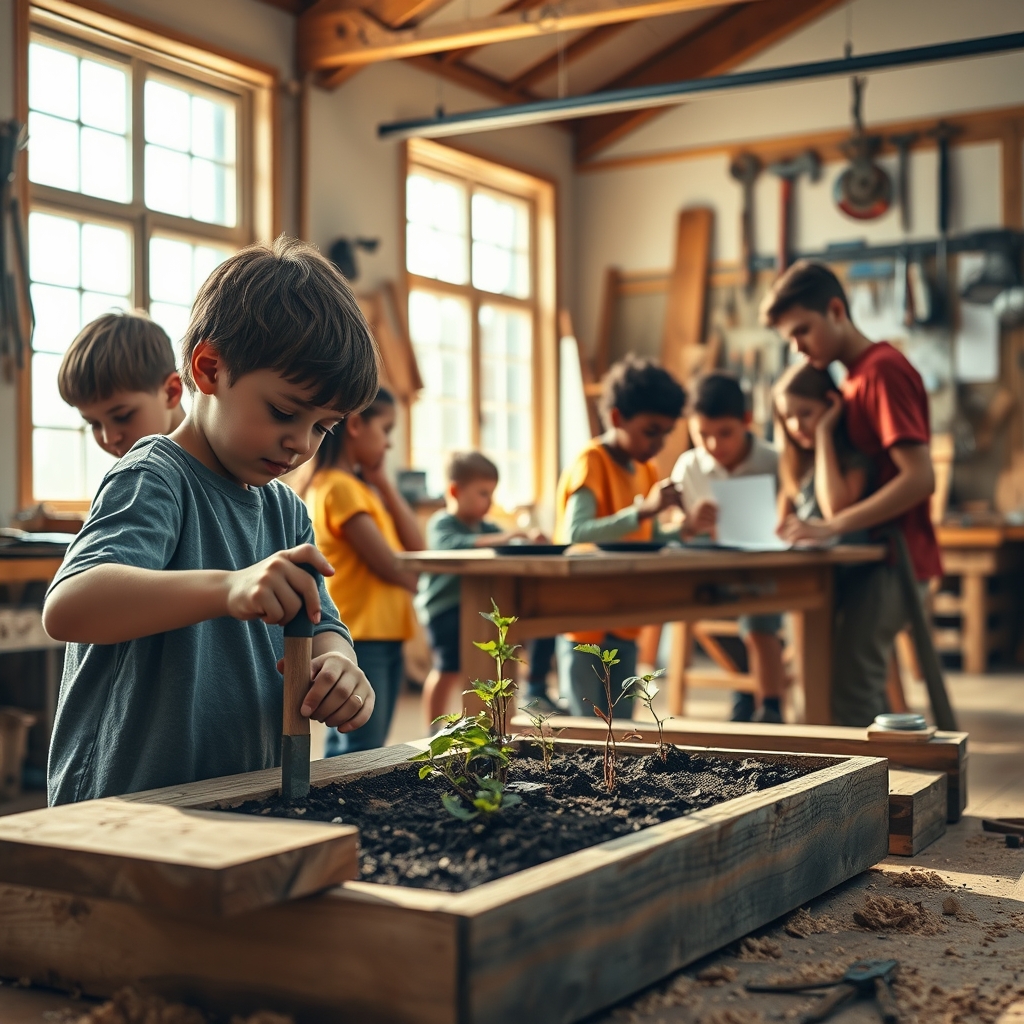
The first time I held a hammer in my hand, I was twelve years old, standing in the middle of a sunlit workshop, the scent of sawdust thick in the air. It wasn’t a toy, nor was it a prop in some staged classroom activity. It was real—heavy, solid, and humming with the quiet promise of creation. That moment wasn’t just about learning how to drive a nail into wood; it was about discovering that my hands could speak a language I hadn’t known existed. The workshop wasn’t a place of grades or tests, but a sanctuary where the currency was curiosity, and the reward was the slow, satisfying bloom of competence. This, I realized, was the heart of real-world skill acquisition: not the memorization of facts, but the alchemy of turning raw potential into something tangible, something that could stand on its own.
The Unseen Curriculum of the Hands
There is a kind of learning that lives in the bones, not just the brain. It’s the kind that seeps into you when you’re kneeling in the dirt, planting seeds and watching them push through the soil, stubborn and alive. It’s the kind that settles into your shoulders when you’re balancing a budget for a school project, the numbers suddenly feeling less like abstract symbols and more like the weight of responsibility. These experiences don’t just teach skills; they teach presence. They demand that you show up—not as a passive recipient of knowledge, but as an active participant in the act of creation. The classroom, in these moments, expands beyond four walls. It becomes the garden, the workshop, the community kitchen, the local market. The world itself becomes the textbook, and every interaction a lesson in how to navigate it.
I remember the first time I failed at something that mattered. Not a test, not an assignment, but a project that had taken weeks of planning—a small business venture with my classmates, selling handmade goods at a local fair. We had calculated costs, designed products, even practiced our sales pitches. But when the day came, the rain poured, the foot traffic was sparse, and our carefully crafted items remained stubbornly unsold. The disappointment was a physical thing, a weight in my chest. But what followed was even more important: the realization that failure wasn’t the end. It was a teacher, one that showed me how to adapt, how to pivot, how to find the lesson hidden in the mess. That’s the gift of real-world skill acquisition—it doesn’t just prepare you for success; it prepares you for life, with all its unpredictability and imperfections.
The Alchemy of Doing
There’s a quiet magic in the act of doing. It’s the way a child’s eyes light up when they finally master a skill they’ve struggled with—the first time they ride a bike without training wheels, or solve a math problem that once seemed impossible. But it’s also the way adults, too, rediscover the joy of learning when they’re given the space to explore without fear of judgment. Real-world skill acquisition is inherently democratic. It doesn’t care about your age, your background, or your prior knowledge. It only asks that you bring your curiosity, your persistence, and your willingness to try. In this way, it levels the playing field, offering everyone the chance to discover what they’re capable of.
I’ve seen this magic at work in the most unexpected places. In a classroom where students built a tiny house from scratch, learning carpentry, plumbing, and teamwork along the way. In a school garden where children grew vegetables that would later be cooked in the cafeteria, connecting the dots between soil and supper. In a coding club where kids designed their own video games, not just as a fun project, but as a way to understand the logic and creativity behind the technology they use every day. These experiences don’t just teach skills; they build confidence. They show learners that they are not just consumers of knowledge, but creators of it. That their ideas have value, and their efforts can leave a mark on the world.
The Ripple Effect of Competence
When a child learns to cook a meal, they’re not just gaining a practical skill. They’re learning about nutrition, about culture, about the way food connects people. When they build a bookshelf, they’re not just working with wood; they’re learning about geometry, about patience, about the satisfaction of seeing a project through from start to finish. These skills ripple outward, touching every aspect of their lives. They become more than just abilities; they become lenses through which the world is understood.
I’ve watched students who struggled with traditional academics blossom when given the chance to learn through doing. A boy who couldn’t sit still in a classroom found his focus in the rhythm of a pottery wheel. A girl who dreaded math discovered its beauty when she used it to design a quilt. These moments of revelation don’t just change how students see school; they change how they see themselves. They begin to understand that intelligence isn’t a fixed trait, but something that can be grown, nurtured, and expanded through effort and experience. This is the true power of real-world skill acquisition: it doesn’t just teach; it transforms.
The Architecture of a Life Well Lived
There’s a reason why the most memorable lessons are often the ones that involve our hands, our hearts, and our whole selves. They stick with us because they’re not just about absorbing information; they’re about becoming. When we learn by doing, we’re not just preparing for a test or a grade. We’re preparing for life—the messy, beautiful, unpredictable journey of it. We’re learning how to adapt, how to create, how to connect with others, and how to find meaning in the work we do. These are the skills that build not just careers, but lives. They are the architecture of a life well lived, forged in the fire of experience, one small, deliberate act at a time.
The workshop where I first held that hammer still stands, its walls now lined with the creations of countless other hands. Some of those hands were steady, some were shaking, but all of them left their mark. That’s the beauty of real-world skill acquisition—it doesn’t just build things; it builds people. And in the end, that’s the most important work of all. The world doesn’t need more passive consumers of knowledge; it needs creators, thinkers, doers. It needs people who understand that learning isn’t something that happens to them, but something they actively participate in, every single day. The hammer in my hand that day wasn’t just a tool; it was an invitation. An invitation to step into the world not as a spectator, but as a builder, ready to shape not just wood, but a life.