The Soul’s Crucible: How the Fire of Experiential Learning Forges the Architecture of a Child’s Future
There is a moment, fleeting yet eternal, when a child’s eyes widen not with wonder, but with recognition. It is the instant when the abstract becomes tangible, when the lesson leaps from the page and embeds itself in the marrow of their bones. This is the alchemy of experiential learning—a crucible where theory and practice collide, and something far more precious than knowledge is born: understanding. It is not enough to tell a child that the world is vast; they must feel the weight of a passport in their palm, hear the unfamiliar cadence of a foreign tongue, or taste the salt of an ocean they’ve only read about in books. These are the moments that carve the architecture of their future, brick by brick, not with mortar and stone, but with memory and meaning.
The Classroom Without Walls
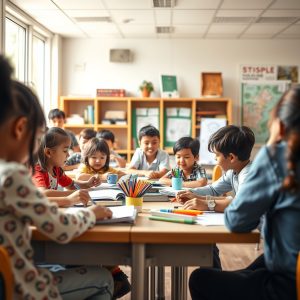
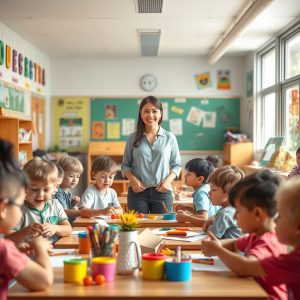
I remember the first time I stepped into a classroom that had no walls. It was not a physical absence—there were still bricks and beams, windows and doors—but the boundaries that typically confined learning had dissolved. The children were not seated in rows, eyes fixed on a chalkboard, but scattered like seeds on the wind, each engaged in a pursuit that spoke to the unique rhythm of their curiosity. One child was crouched in the garden, her fingers brushing the soil as she whispered to the earth, asking it questions only she could hear. Another was perched on a stool in the corner, his brow furrowed as he sketched the skeletal structure of a bird’s wing, his sketchbook a testament to the silent dialogue between observation and imagination. There were no bells to signal the end of a period, no rigid schedule to dictate the flow of discovery. Instead, there was time—glorious, unhurried time—to linger in the spaces where questions bloomed like wildflowers.
This was not a scene from a utopian dream, but a lived reality in a school that had dared to reimagine education as something fluid, something alive. The teachers were not sages on a stage, but guides on the side, their role not to dispense wisdom, but to fan the flames of inquiry. They understood that learning is not a linear path, but a labyrinth, and that the most profound lessons are often found in the detours. A child who struggles with fractions might discover an affinity for them when measuring ingredients for a recipe, or a student who zones out during history lectures might come alive when standing in the shadow of a monument, the weight of centuries pressing upon their shoulders. These are the classrooms where the soul of education breathes, where the air hums with the electric charge of possibility.
The Alchemy of Failure and Fire
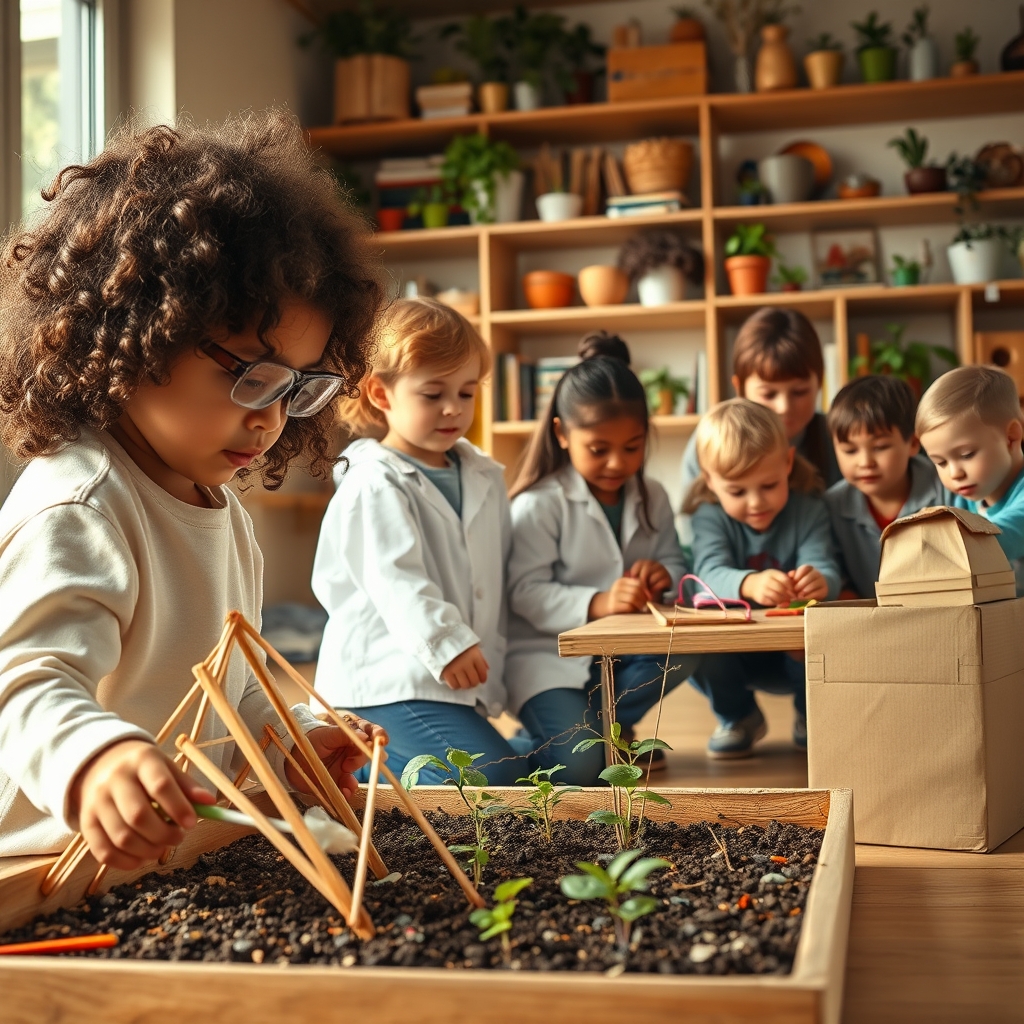
Yet, experiential learning is not without its crucibles. There is fire here, the kind that tempers steel and forges resilience. I recall a project where a group of students was tasked with building a bridge from popsicle sticks and glue. The parameters were simple: it had to span a certain distance and support a specific weight. What unfolded was a masterclass in failure, collaboration, and the quiet triumph of perseverance. The first attempt collapsed under its own weight, a heap of sticks and shattered dreams. The second fared no better, the glue proving too weak to hold the structure together. It was not until the third, fourth, and fifth attempts that the students began to understand the delicate balance between tension and compression, the importance of triangular supports, the necessity of patience in allowing the glue to set. When the final bridge held, not just the required weight but twice that, the cheers were not for the success, but for the journey—the moments of frustration, the whispered debates, the hands that steadied trembling sticks.
This is the fire that forges character. It teaches children that failure is not a verdict, but a stepping stone, and that the most valuable lessons are often learned in the ashes of what did not work. In a world that increasingly values instant gratification, experiential learning is a counterbalance, a reminder that growth is not a sprint, but a marathon, and that the most enduring structures are built slowly, with care and intention. It is in these moments of struggle that children learn the true meaning of resilience—not as a buzzword, but as a lived experience, a muscle that grows stronger with each challenge overcome.
The Symphony of Small Hands
There is a symphony in the way children learn when given the freedom to explore. It is not the grand, orchestrated performance of a traditional classroom, but the quiet, improvisational melody of discovery. I have seen it in the way a group of five-year-olds collaborates to build a fort from cardboard boxes, their small hands working in tandem, their voices a chorus of ideas and negotiations. One child suggests reinforcing the walls with duct tape, another insists on a drawbridge made from a shoelace and a paperclip. There are disagreements, of course—moments when one child’s vision clashes with another’s—but these are not roadblocks. They are opportunities to practice empathy, to listen, to compromise. The fort that emerges is not just a structure, but a testament to the power of collective creativity, a physical manifestation of what happens when children are given the space to dream together.
This is the heart of collaborative learning environments: the understanding that education is not a solitary pursuit, but a shared journey. It is in these spaces that children learn the art of conversation, the give-and-take of ideas, the beauty of seeing the world through another’s eyes. They learn that their voice matters, but so do the voices of their peers, and that the most innovative solutions often emerge from the intersection of diverse perspectives. It is a lesson that extends far beyond the classroom, a skill that will serve them in boardrooms and community centers, in laboratories and living rooms, long after they have left the halls of their school.
The Unseen Curriculum
What is often overlooked in discussions about experiential learning is the unseen curriculum—the lessons that are not written in textbooks or outlined in lesson plans, but are woven into the fabric of daily life. These are the moments when a child learns the value of patience while waiting for a seed to sprout, or the importance of responsibility when caring for a classroom pet. They learn empathy when a classmate stumbles, not because they are told to, but because they see the hurt in their eyes and feel the instinctive pull to help. They learn courage when they stand before their peers to share an idea that feels fragile, like a bird with newly formed wings. These are the lessons that shape not just the mind, but the heart, the lessons that linger long after the facts and figures have faded from memory.
In a world that often measures success by test scores and college acceptances, it is easy to forget that education is not just about filling a child’s mind, but about nurturing their soul. Experiential learning reminds us that the most profound lessons are not those that can be memorized, but those that are lived. It is in the garden where a child learns the patience of growth, in the kitchen where they discover the chemistry of transformation, in the playground where they negotiate the delicate balance of competition and camaraderie. These are the moments that shape them, the crucibles where the architecture of their future is forged, not with blueprints and rulers, but with curiosity, courage, and the quiet certainty that they are capable of more than they ever imagined.
The fire of experiential learning does not burn brightest in the grand gestures, but in the small, everyday moments—the hands that reach out to steady a wobbling tower of blocks, the eyes that light up when a hypothesis is proven true, the voices that rise in unison to celebrate a shared triumph. It is in these moments that children learn not just about the world, but about themselves, and the infinite possibilities that lie within. And perhaps, that is the greatest lesson of all.