The Soul’s Cartographer: How Adaptive Education Maps the Hidden Valleys of a Child’s Potential
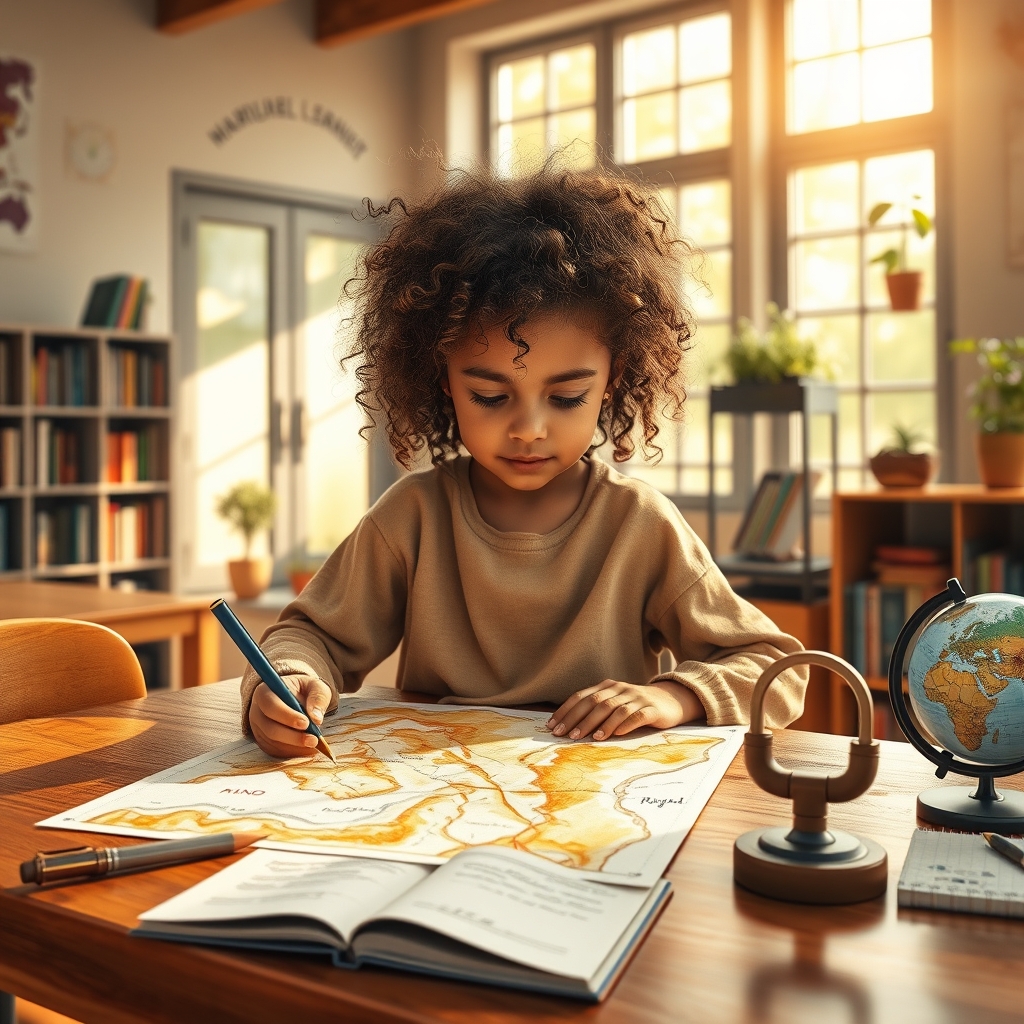
There is a quiet magic in watching a child discover the shape of their own mind. It is not the kind of magic that arrives with fanfare or fireworks, but the slow, deliberate kind—the kind that unfolds like a map being drawn in real time, each contour revealing itself only when the light hits it just right. This is the essence of adaptive education: not a rigid path carved into stone, but a living, breathing cartography of potential, where every hill and valley is acknowledged, every detour honored, and every wrong turn reframed as an invitation to explore further.
The Unseen Compass of Curiosity
I remember the first time I realized how deeply a child’s curiosity could guide their learning. It was in a classroom where the walls were not barriers but porous membranes, allowing the world outside to seep in. A student, let’s call her Mira, had spent weeks fixated on the way shadows moved across the floor. What began as idle observation soon became a full-fledged inquiry: Why did the shadows stretch and shrink? Why did they blur at the edges? Her questions were not met with a sigh or a dismissal but with a gentle nudge—”What do you think?”—and the tools to find out. A protractor, a flashlight, a notebook. The lesson was not about light or angles; it was about the act of questioning itself, about the quiet thrill of realizing that the world was not a fixed thing but a puzzle waiting to be solved.
Adaptive education does not ask children to fit into preordained molds. Instead, it asks: What are you drawn to? What makes your eyes light up? What makes your fingers itch to touch, to build, to dismantle? It is a radical act of trust, this belief that a child’s curiosity is not a distraction but a compass, pointing toward the landscapes they are meant to explore. And in that exploration, they begin to see themselves not as passive recipients of knowledge but as active cartographers of their own minds.
The Alchemy of Wrong Turns
There is a particular kind of silence that descends when a child realizes they have taken a wrong turn. It is not the silence of defeat but the hush of something shifting, of the ground beneath them tilting just enough to reveal a new perspective. In traditional classrooms, wrong answers are often met with correction, a swift red pen slashing through the mistake. But in spaces where adaptive strategies thrive, wrong turns are not dead ends—they are detours, rich with possibility.
I once watched a group of students tackle a project on sustainable farming. Their initial plan—a hydroponic system powered by solar panels—collapsed when they realized the math didn’t add up. The easy response would have been to scrap the idea, to label it a failure. But their teacher, instead of steering them toward a safer path, asked: What did this teach you? The question hung in the air, heavy with implication. It was not a dismissal but an invitation to dig deeper, to ask why the numbers had betrayed them, to consider what they might have overlooked. In the end, their revised design was not just functional but elegant, a testament to the way failure, when met with curiosity, can become the most patient of teachers.
The Geography of Empathy
Adaptive education is not just about tailoring learning to the individual; it is about recognizing that every child carries within them a unique geography of strengths, struggles, and untapped potential. Some students move through the world like explorers, eager to chart every unknown territory. Others tread carefully, their steps measured, their eyes scanning for hidden pitfalls. And then there are those who seem to move in circles, not because they lack direction but because they are still learning the shape of their own compass.
What does it mean to teach with empathy as your guide? It means seeing the child who struggles with fractions not as someone who “can’t do math” but as someone who might think in pictures, in stories, in three dimensions. It means recognizing that the student who zones out during lectures is not disengaged but perhaps processing the world in a way that doesn’t fit neatly into the confines of a 45-minute lesson. It means creating a classroom where every child, regardless of how they learn, feels seen—not just for what they produce but for who they are becoming.
The Living Map
Perhaps the most beautiful thing about adaptive education is that it refuses to treat learning as a destination. There is no final summit, no point at which the map is complete. Instead, the journey itself is the education, each step a brushstroke on the ever-evolving canvas of a child’s mind. The role of the teacher, then, is not to lead but to walk alongside, to point out the landmarks when they appear, to offer a hand when the path grows steep, and to remind the child, again and again, that they are the ones holding the compass.
I think of Mira now, years later, her notebooks filled with sketches of light and shadow, her mind alight with questions she hasn’t yet answered. She is not the same child who first traced the movement of the sun across the classroom floor. She has grown, as all children do, but what remains is the quiet certainty that her curiosity is not a fleeting thing but a force, a current pulling her ever forward. And in that current, she is not just learning—she is becoming. The map is still being drawn, its edges rough, its paths winding, but it is hers, entirely hers, and that is where the magic lies.