The Quiet Revolution: How Project-Based Learning Rewrites the Soul of Education
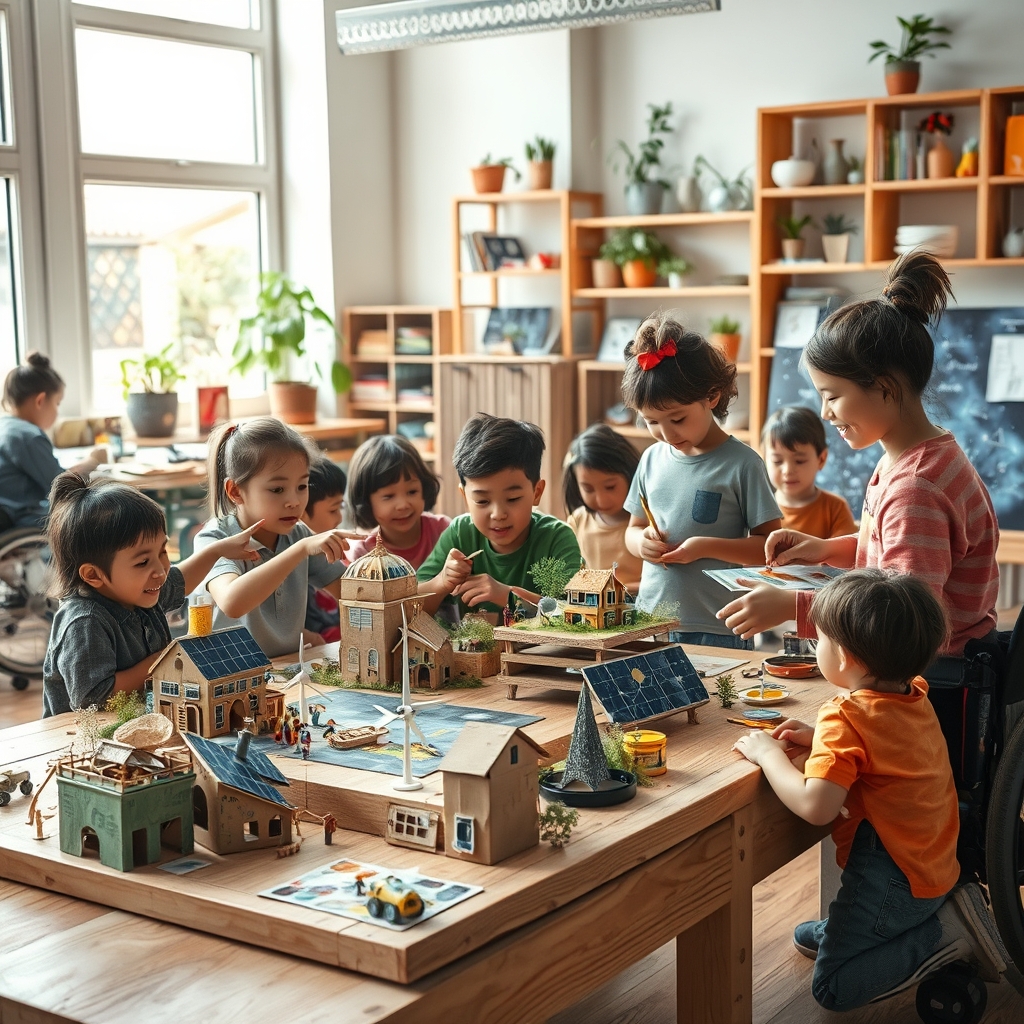
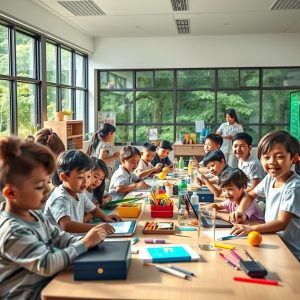
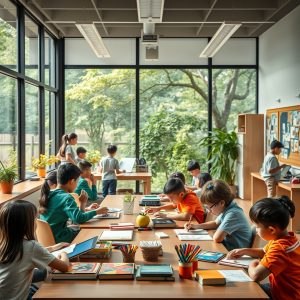
The first time I watched a classroom transform into a living, breathing organism, I understood what it meant to witness alchemy. Not the kind that turns base metals into gold, but the kind that turns curiosity into creation, questions into quests, and silence into symphonies of shared discovery. It was a Tuesday morning, or perhaps a Thursday—time had blurred into something fluid, something alive. The children were not sitting in neat rows, eyes fixed on a chalkboard, but scattered like seeds on fertile ground, each group huddled around a different project: a miniature ecosystem in a glass jar, a mural of constellations that told stories older than time, a debate about the ethics of artificial intelligence. There were no raised hands, no ticking clocks, only the hum of engagement, the quiet rustle of minds at work.
The Unseen Architecture of Learning
Project-based learning does not build classrooms; it builds worlds. It is the difference between handing a child a map and asking them to memorize the names of rivers, and placing them at the edge of a forest with a compass, a notebook, and the whispered invitation: What will you discover? The traditional model of education often treats knowledge as a fixed destination, a series of checkpoints to be reached and left behind. But project-based learning understands that knowledge is not a place—it is a journey, one that bends and branches with every question asked, every failure endured, every small triumph celebrated.
I remember a child named Eli, who had spent years being told he was “behind.” His teachers spoke of him in hushed tones, as if his struggles were a secret to be kept, a flaw in the system’s design. But when his class began a project on urban gardening, something shifted. Eli, who had never shown much interest in textbooks, became the architect of their composting system. He researched, he experimented, he failed, he tried again. By the end of the term, the garden was thriving, and so was he. Not because he had suddenly mastered long division or memorized the periodic table, but because he had found something far more valuable: a reason to believe in his own mind.
The Alchemy of Real-World Questions
What makes project-based learning so potent is its refusal to separate knowledge from meaning. In a world where facts can be summoned with the tap of a finger, the true skill lies not in remembering, but in doing—in taking the raw material of information and shaping it into something that matters. A project on climate change is not just a research paper; it is a call to action. A study of local history is not just a timeline; it is an excavation of identity. When children are given the space to ask, How does this connect to my life? How can I use this to change the world?, education stops being a transaction and becomes a transformation.
I once visited a school where fifth-graders were tasked with redesigning their town’s recycling program. They interviewed waste management workers, studied landfill data, and presented their findings to the city council. One girl, small for her age with a voice that trembled when she spoke, stood before the room and said, “We’re not just learning about recycling. We’re learning that our voices matter.” That is the quiet revolution of project-based learning: it teaches children that they are not passive recipients of knowledge, but active participants in the world’s unfolding story.
The Fragile Ecosystem of Collaboration
But project-based learning is not a solitary endeavor. It is a dance, a negotiation, a sometimes messy collision of ideas and egos and half-formed thoughts. It requires children to navigate the delicate balance between their own vision and the needs of the group, to learn when to lead and when to follow, when to speak and when to listen. These are not skills that can be taught through worksheets or standardized tests. They are learned in the crucible of shared struggle, in the moments when a project teeters on the edge of collapse and someone—often the quietest voice in the room—finds a way to pull it back.
I think of a group of middle schoolers I observed as they built a model bridge out of popsicle sticks. There were arguments, of course—about design, about materials, about who got to glue what. But there were also moments of grace: the boy who noticed his teammate’s frustration and offered to take over for a while, the girl who suggested a compromise that no one else had considered. When the bridge finally stood, wobbling but unbroken, they didn’t just see a structure. They saw a testament to what they could accomplish together, even when the path was uncertain.
The Risk of Letting Go
Of course, project-based learning is not without its challenges. It demands something of teachers that traditional education often does not: the willingness to let go of control. To step back and allow children to stumble, to fail, to find their own way. It requires a shift in perspective, from seeing oneself as the keeper of answers to becoming a guide on the side, a fellow traveler on the road of discovery. This can be terrifying. What if the project veers off course? What if the children don’t learn what they’re “supposed” to learn? What if, in the end, it all falls apart?
But here’s the secret: it will fall apart. And that is not a failure—it is the point. Because the most profound lessons are not found in the neat resolution of a problem, but in the messy, unpredictable process of trying to solve it. When a project collapses, children learn resilience. When a plan goes awry, they learn adaptability. When a team fractures, they learn the hard, beautiful work of repair. These are the lessons that last, the ones that shape not just what children know, but who they become.
The Soul’s Curriculum
Project-based learning is not a method; it is a philosophy. It is the belief that education should not be about filling vessels, but about igniting fires. It is the understanding that the most important things we teach children cannot be measured on a test: the courage to try, the humility to listen, the curiosity to question, the empathy to connect. It is the recognition that every child carries within them a unique constellation of passions and potentials, and that our job as educators is not to dim their light, but to help them find the fuel to burn even brighter.
I have seen classrooms where children’s eyes light up not because they’ve gotten the right answer, but because they’ve asked the right question. Where the air hums with the energy of creation, where mistakes are not feared but embraced, where learning is not a chore but a calling. These are the classrooms that do not just teach children what to think, but how to think. How to wonder. How to care. How to be. And in a world that often feels fractured and uncertain, that may be the most revolutionary act of all.
Perhaps the greatest gift of project-based learning is that it does not ask children to leave their souls at the classroom door. It invites them to bring their whole selves—their questions, their dreams, their fears, their flaws—and to see them not as obstacles, but as the raw material of their education. It teaches them that learning is not something that happens to them, but something that happens through them, something they shape with their own hands, their own minds, their own hearts. And in doing so, it does not just prepare them for the future. It helps them create it.