The Symphony of Small Hands: How Collaborative Learning Composes the Soul of a Child’s Future
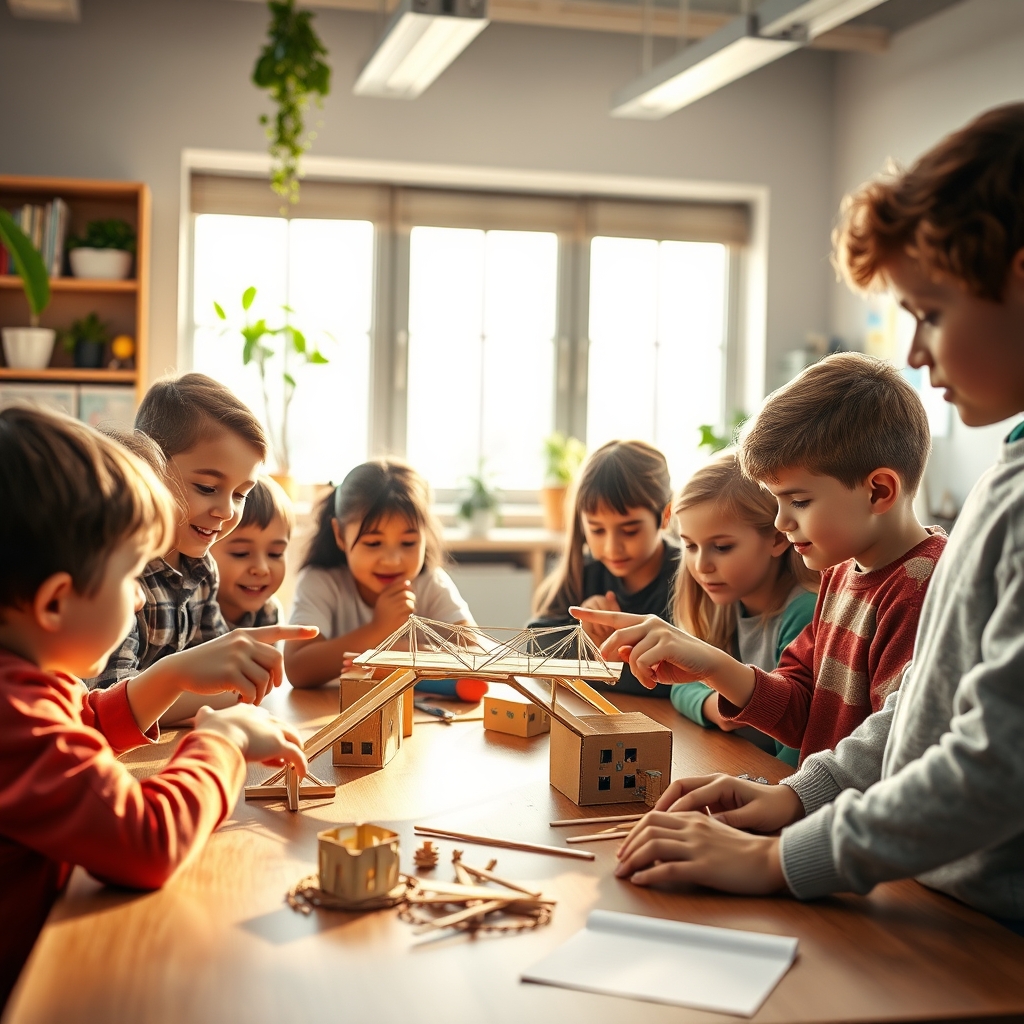
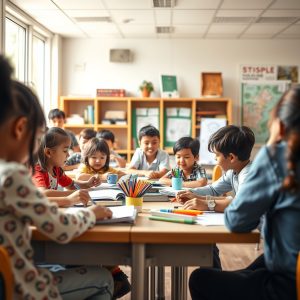
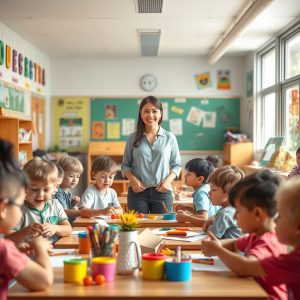
The first time I witnessed a classroom hum with the quiet energy of collaboration, it was as if I had stumbled upon a hidden orchestra—each child an instrument, each idea a note, each disagreement a dissonance that resolved into harmony. There were no soloists, no conductor dictating the rhythm. Instead, there was a living, breathing composition, one that shifted and swelled with the unpredictable beauty of shared discovery. It was not the kind of learning I had known as a child, where desks stood in rigid rows and silence was the price of focus. This was something else entirely: a space where the soul of education was not measured in test scores, but in the way a child’s eyes lit up when another’s idea sparked their own.
The Alchemy of Shared Questions
What happens when we invite children to lean into the unknown together? Not as competitors, but as co-conspirators in the grand experiment of understanding? The answer lies in the alchemy of shared questions. A child who might hesitate to voice an uncertainty alone finds courage in the chorus of “I don’t know either” or “What if we tried this?” There is a sacred vulnerability in admitting that the path forward is unclear, and yet, in that admission, the first steps toward clarity are taken. The classroom becomes a laboratory of curiosity, where hypotheses are tested not for grades, but for the sheer thrill of uncovering something new.
I remember a moment when a group of eight-year-olds were tasked with designing a bridge from popsicle sticks. One child suggested a suspension design, another argued for arches, and a third, quieter voice proposed weaving the sticks like a basket. The debate was not about who was right, but about what might hold the most weight. They built three versions, tested them, and when the woven design collapsed under the first book, there was no blame—only a collective “Huh. So that didn’t work.” The next iteration was stronger, not because an adult had corrected them, but because they had corrected each other, gently, with the shared goal of solving a problem rather than proving a point.
The Geography of Trust
Collaborative learning is not merely a pedagogical strategy; it is the cultivation of trust. Trust that a child’s idea is worth hearing, even if it is half-formed. Trust that mistakes are not failures, but signposts pointing toward a better way. Trust that the quietest voice in the room might hold the key to unlocking a puzzle that has stumped the loudest. This trust is not built overnight. It is forged in the small, daily acts of turning to one another instead of to the teacher for answers, in the practice of listening not to respond, but to understand.
In a world that often equates success with individual achievement, collaborative learning is a quiet rebellion. It teaches children that their worth is not tied to being the smartest in the room, but to being the kind of person others want to think alongside. It is a lesson in empathy, in the art of seeing the world through another’s eyes and realizing that their perspective might reveal something yours never could. When a child learns to value the collective over the individual, they are not just learning to work in a group—they are learning to be human in the deepest sense of the word.
The Unseen Curriculum of Belonging
There is an invisible thread that runs through every collaborative learning experience, one that binds children to one another in ways that transcend the lesson at hand. It is the thread of belonging. When a child contributes an idea and sees it woven into the fabric of a group’s work, they begin to understand that they are not just a student in a classroom—they are a vital part of something larger than themselves. This sense of belonging is the foundation upon which all other learning is built. Without it, education is merely the transmission of information. With it, education becomes the transformation of a child’s sense of self and their place in the world.
I have seen this transformation in the way a child’s posture changes when they realize their voice matters. The slump of uncertainty straightens into the quiet confidence of someone who knows they are seen. The hands that once fidgeted nervously in their lap now reach out to gesture as they speak, as if their words are not just sounds, but something tangible, something that can be shaped and shared. This is the power of collaborative learning: it does not just teach children what to think, but how to think together, how to build something greater than the sum of their individual parts.
The Echo of Small Mercies
In the rush to prepare children for an uncertain future, we often overlook the small mercies that make the journey worthwhile. The way a child’s face softens when a classmate says, “I get what you’re saying now.” The collective gasp when a group’s experiment yields an unexpected result. The laughter that erupts when a plan goes awry, not in frustration, but in the shared joy of resilience. These moments are the heartbeat of collaborative learning. They are the reminders that education is not a race to the finish line, but a series of small, human connections that make the path worth walking.
There is a story I often think of, about a teacher who asked her students to build a model of their ideal community. The children worked in groups, each contributing their vision of what the world should look like. One group designed a city with towering skyscrapers and bustling streets. Another created a village nestled in the mountains, where everyone knew each other’s names. A third built a floating island, where homes were connected by bridges over a sparkling sea. When the models were complete, the teacher asked the children what they had learned. One child, who had been quiet for most of the project, looked at the three models side by side and said, “We all want the same things. We just see them differently.” In that moment, the classroom was not just a room with four walls—it was a microcosm of the world, a place where differences were not just tolerated, but celebrated as the very thing that made their collective vision richer.
The symphony of small hands is not a grand, sweeping composition. It is made up of the quiet notes, the soft harmonies, the moments of dissonance that resolve into something beautiful. It is the sound of children learning not just from their teachers, but from each other, from the world around them, and from the quiet voice inside that whispers, “You belong here.” And in that belonging, they find not just the tools to navigate the future, but the courage to shape it into something worth inheriting.