The Soul’s Apprenticeship: How Real-World Skill Acquisition Crafts the Architecture of a Life Well Lived
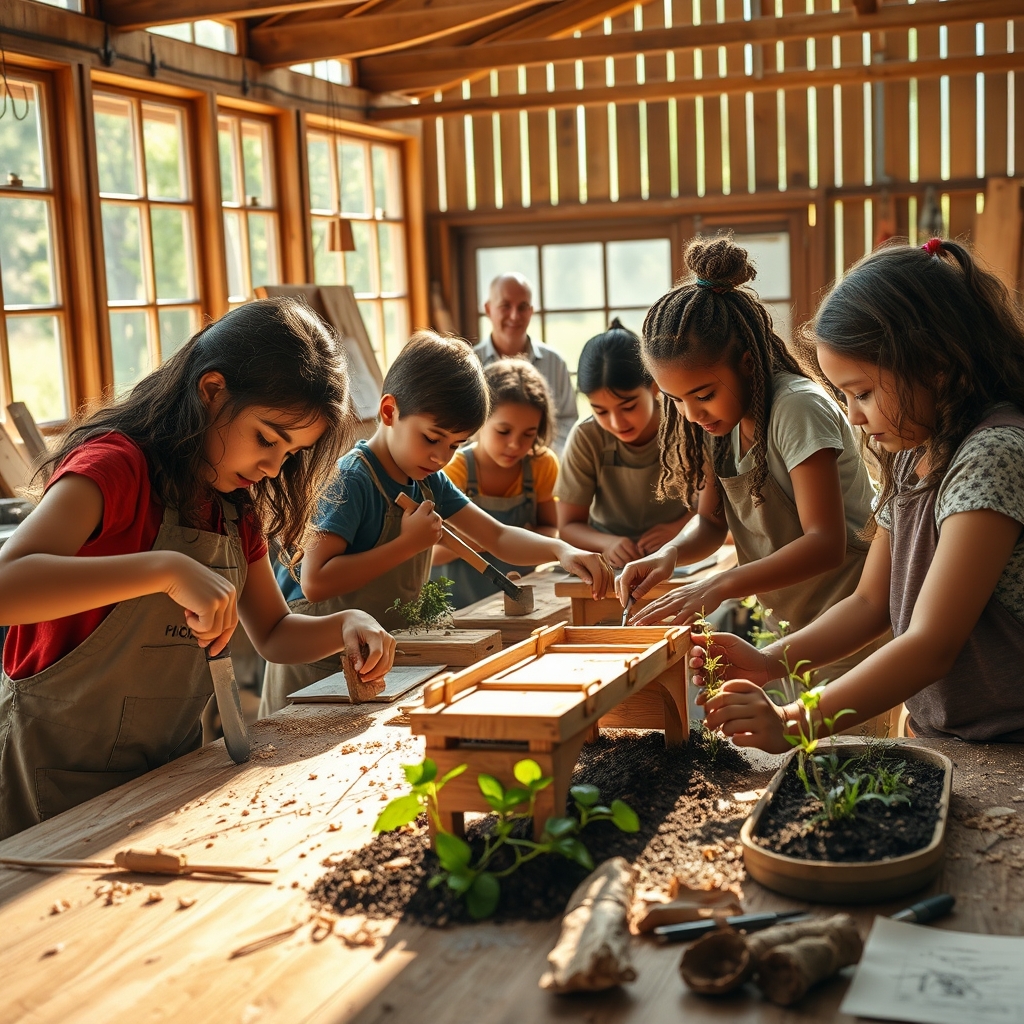
The first time I held a chisel against seasoned oak, my hands trembled not from fear but from the sheer weight of possibility. The grain whispered stories of sunlit afternoons and winter storms, and I realized that education was never meant to be confined to four walls. It was meant to be lived, breathed, and carved into the very fiber of our being. This was the beginning of my apprenticeship—not to a trade, but to life itself, where every splinter and shaving became a lesson in patience, precision, and the quiet humility of creation.
The Alchemy of Doing
There is a kind of magic in the act of making, a transformative alchemy that turns raw materials into meaning. When a child builds a birdhouse from scraps of wood, they are not merely constructing a shelter for winged creatures; they are constructing a shelter for their own burgeoning confidence. The hammer’s strike becomes a heartbeat, the saw’s song a lullaby, and the finished product a testament to what their hands—and by extension, their minds—are capable of. This is the essence of project-based learning, where the classroom extends beyond desks and whiteboards into the tangible, messy, glorious world of doing.
Yet, how often do we strip away the opportunity for such alchemy in the name of efficiency or standardization? We measure success in test scores and grades, forgetting that the most profound lessons are often learned in the spaces between questions and answers. The child who struggles to solve a math problem on paper may find the solution in the act of dividing a pizza among friends, where fractions become not abstract symbols but slices of shared joy. The student who zones out during a lecture on climate change may become a passionate advocate after planting a garden and watching the delicate balance of life unfold before their eyes.
The Classroom Without Walls
Imagine a school where the curriculum is not a rigid scaffold but a living, breathing entity that adapts to the rhythms of the world outside. A place where students learn geometry by designing a community garden, where history is not memorized but relived through oral storytelling sessions with elders, and where literature comes alive in the form of plays performed under the open sky. This is the promise of experiential school transitions—a shift from passive absorption to active participation, where the boundaries between learner and teacher blur, and knowledge is co-created rather than dispensed.
In such an environment, failure is not a mark of inadequacy but a stepping stone. The bridge a student designs may collapse under the weight of its own ambition, but in that collapse lies the blueprint for resilience. The business they start may falter, but the lessons in adaptability and grit will outlast any balance sheet. These are the real-world skills that no textbook can teach, the kind that shape not just careers but character. They are the threads that weave the tapestry of a life well lived, where every stitch is a choice, every knot a challenge, and every pattern a testament to growth.
The Symphony of Collaboration
No great work is ever created in isolation. The cathedrals of Europe were not built by a single hand but by generations of artisans, each contributing their unique skill to a shared vision. Similarly, the most meaningful learning experiences are often collaborative, where students become both teachers and learners, and the classroom transforms into a microcosm of the world they will one day inherit. In this symphony of collaboration, every voice has a part to play, and every contribution, no matter how small, enriches the whole.
Consider the student who struggles with social anxiety but finds their voice in a group project, where their ideas are met with curiosity rather than judgment. Or the child who has always seen themselves as “not a math person” until a peer explains a concept in a way that finally makes sense. These moments of connection are the heartbeat of a collaborative learning environment, where empathy is not just taught but lived. They remind us that education is not a solitary journey but a shared pilgrimage, where the destination is less important than the bonds forged along the way.
The Quiet Revolution of Small Hands
There is a revolution underway, one that does not make headlines but changes lives. It is the revolution of small hands—hands that plant seeds, build bridges, write stories, and heal wounds. It is the revolution of students who are no longer passive recipients of knowledge but active architects of their own learning. This is the promise of student-centric education, where the curriculum bends to the needs of the learner, not the other way around. Where a child’s curiosity is not a distraction but a compass, guiding them toward their own unique path of discovery.
Yet, this revolution requires more than just a shift in pedagogy; it demands a shift in perspective. It asks us to see education not as a means to an end but as a lifelong apprenticeship in the art of being human. It challenges us to create spaces where students can explore, fail, and grow without the weight of judgment. And it reminds us that the most valuable skills are not those that can be measured on a test but those that enable us to navigate the complexities of life with grace, resilience, and an unshakable sense of purpose.
As I sit here now, the oak I once carved long since polished and repurposed, I am struck by how much of my own education happened outside the classroom. The lessons I carry with me are not the ones I memorized for exams but the ones I lived—the blisters on my hands from a day of labor, the quiet pride of seeing my work serve a purpose, the humility of realizing how much I still have to learn. These are the lessons that shape us, the ones that linger long after the textbooks are closed and the diplomas are framed. They are the soul’s apprenticeship, a lifelong journey of becoming, where every experience is a teacher, and every challenge a chance to grow.