The Breathing Classroom: How Tech-Enabled Early Education Nurtures the Soul of Inquiry
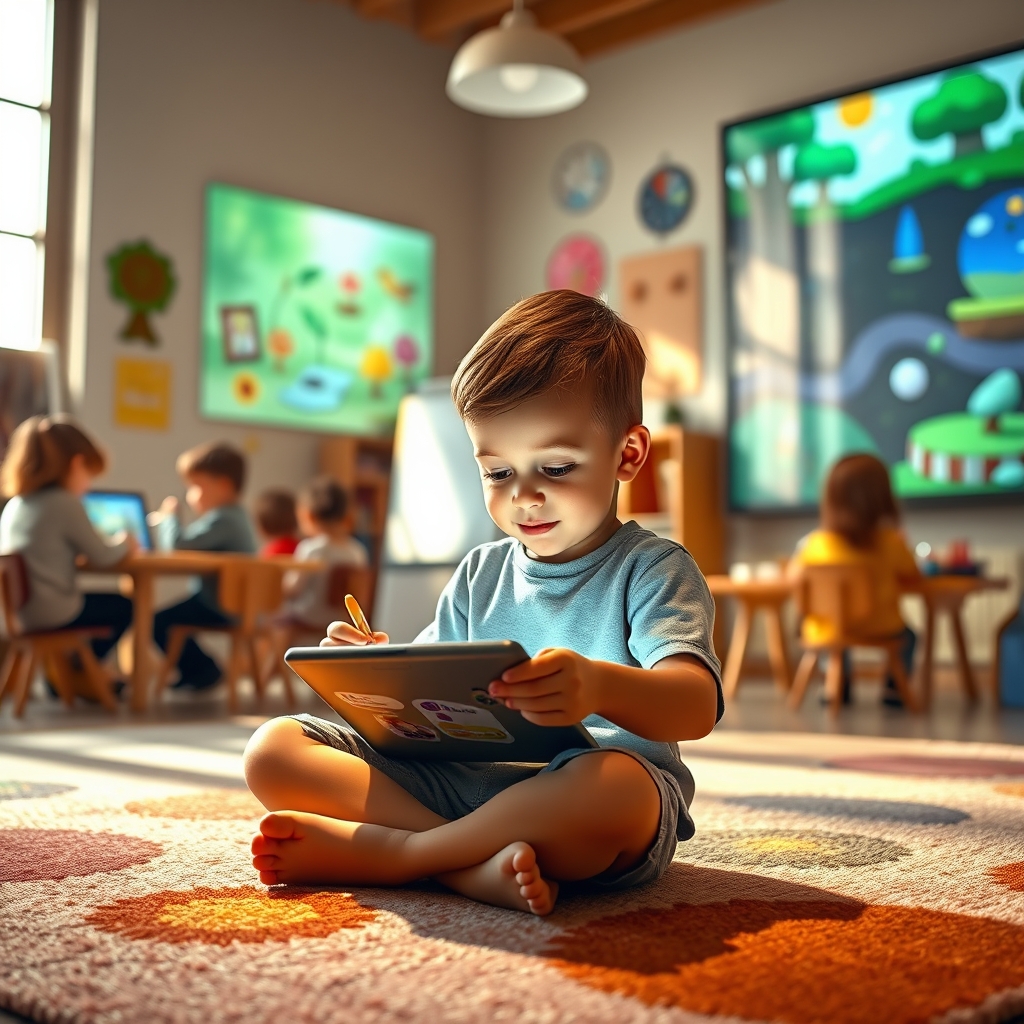
The first time I watched a child’s face light up as a digital storybook responded to their touch, I felt the quiet hum of something sacred. Not the cold glow of a screen, but the warmth of a door swinging open—one that had always been there, just waiting for the right key. Early education, when woven with intention and technology, becomes less about instruction and more about invitation. It is the art of saying, Come, see what you can discover, without ever uttering a word.
The Alchemy of Curiosity and Code
There is a moment, fleeting yet profound, when a child realizes that their actions shape the world around them. A tap on a tablet brings a character to life; a voice command summons a story from the ether. These are not mere tricks of programming—they are the first whispers of agency. In a tech-enabled early classroom, the boundary between learner and creator blurs. The child is no longer a passive recipient of knowledge but an active participant in its unfolding. The screen becomes a mirror, reflecting not just images, but the child’s own capacity to wonder, to experiment, to fail and try again.
Yet, for all its potential, technology in early education is often met with skepticism. Critics warn of overstimulation, of the erosion of human connection, of children losing themselves in the glow of pixels. But what if the opposite is true? What if technology, when wielded with care, becomes a bridge rather than a barrier? A tool that doesn’t replace the teacher but amplifies their reach, allowing them to meet each child where they are—whether that child is tracing letters in sand, building a virtual ecosystem, or simply sitting in silence, absorbing the rhythm of a story read aloud by a voice that never tires.
The Symphony of Small Hands and Smart Tools
Imagine a classroom where every child’s hands are busy, not with worksheets, but with creation. One child molds clay into shapes while a digital projector casts their shadow onto a wall, turning it into a dancing silhouette. Another taps a screen to mix colors, watching as the hues blend in real time, their choices mirrored on a larger canvas. A third listens to a story through headphones, their fingers tracing the words on the page as the narrator’s voice guides them. These are not isolated activities but threads in a tapestry, each one contributing to a larger narrative of exploration.
This is the promise of tech-enabled early education: a space where the digital and the tactile coexist, where the boundaries between play and learning dissolve. It is not about replacing the sensory richness of the physical world but about enhancing it. A child who struggles to hold a pencil may find their voice through a speech-to-text app. A child who is shy in group discussions may bloom in a virtual forum where their words can be crafted with care. The technology does not dictate the learning; it adapts to it, bending like a reed in the wind to meet the child’s needs.
The Heartbeat of the Responsive Classroom
At the core of this approach is responsiveness—a curriculum that listens as much as it teaches. In a traditional classroom, the pace is often set by the clock or the calendar, by the need to cover a certain amount of material by a certain time. But in a tech-enabled, student-centric space, the rhythm is different. It is the rhythm of the child’s breath, of their curiosity, of the questions that bubble up unbidden and demand to be answered. The teacher is no longer the sole keeper of knowledge but a guide, a co-explorer, someone who helps the child navigate the labyrinth of their own mind.
This shift is subtle but revolutionary. It requires a reimagining of the teacher’s role—not as a figure of authority, but as a fellow traveler on the journey of discovery. It asks educators to embrace uncertainty, to trust that the child’s path, however winding, is valid. And it demands that technology be used not as a crutch, but as a catalyst, a spark that ignites the flame of inquiry and keeps it burning bright.
The Unseen Threads of Connection
Perhaps the most beautiful aspect of tech-enabled early education is its ability to weave connections—between children, between ideas, between the classroom and the wider world. A child in a rural village can collaborate on a project with a child in a bustling city, their screens becoming windows into each other’s lives. A teacher can share a lesson with parents, inviting them into the learning process in ways that were once impossible. The classroom expands beyond its four walls, becoming a living, breathing entity that grows and evolves with the children it serves.
But these connections are not just about geography or convenience. They are about something deeper: the recognition that every child’s journey is unique, yet interconnected. The child who struggles with numbers may find solace in music, their fingers dancing across a digital keyboard as they compose a melody that explains fractions better than any textbook. The child who is drawn to nature may create a virtual garden, their observations of real plants feeding into a simulation that teaches them about ecosystems. The technology does not replace the human touch; it amplifies it, allowing each child to see themselves reflected in the learning process.
The Quiet Revolution of Small Moments
It is easy to get lost in the grand vision of what tech-enabled early education can be—the promise of personalized pathways, of adaptive strategies, of classrooms that bend and flex to meet the needs of every child. But the true magic lies in the small moments, the ones that often go unnoticed. The way a child’s eyes widen when they realize they can control a robot with their voice. The quiet pride in their voice when they share a story they’ve written with the help of an app. The way they lean into a screen not to escape the world, but to engage with it more deeply.
These moments are the building blocks of a new kind of education—one that is not just about preparing children for the future, but about helping them live fully in the present. It is an education that honors the child’s innate curiosity, that sees their struggles not as failures but as opportunities for growth. And it is an education that recognizes that technology, when used with intention, can be a powerful ally in the quest to nurture the whole child—their mind, their heart, their soul.
The classroom of the future is not a place of cold machines and sterile screens. It is a living, breathing space, where technology and humanity intertwine, where every child is seen, heard, and valued. It is a place where the soul of inquiry is not just preserved but celebrated, where the act of learning is as natural as breathing. And perhaps, in the quiet hum of a child’s first discovery, we catch a glimpse of what education was always meant to be.