The Quiet Alchemy of Small Hands: How the Unseen Labor of Inclusion Weaves the Fabric of Belonging
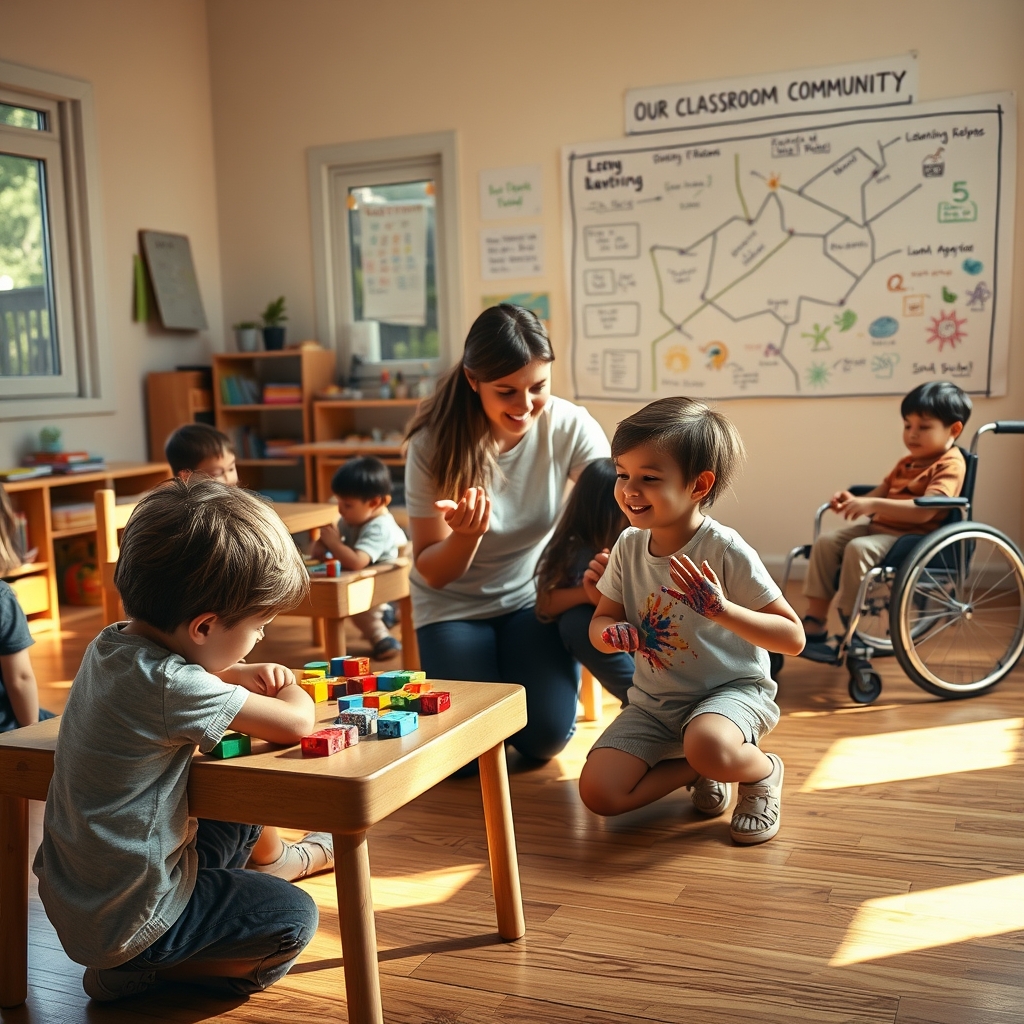
The classroom hums with the quiet electricity of young minds at work, a symphony of rustling papers, whispered questions, and the occasional burst of laughter that ripples through the room like a stone skipped across still water. But beneath this familiar cadence lies another rhythm, one that is often overlooked—the steady, unrelenting pulse of inclusion. It is not the grand gestures, the sweeping reforms, or the polished policies that truly shape the soul of an inclusive classroom. Rather, it is the small, almost invisible acts—the way a teacher kneels to meet a child’s eyes, the pause before answering a question to ensure every voice is heard, the deliberate placement of a desk to invite rather than isolate—that weave the fabric of belonging.
The Invisible Labor of Small Hands
Inclusion is not a destination but a practice, a daily alchemy of intention and attention. It is the teacher who notices the child lingering at the edge of the playground, not out of disinterest, but because the cacophony of shouts and laughter feels like a storm to their senses. It is the moment when that teacher sits beside them, not with a directive to “join in,” but with a quiet question: “Would you like to tell me about the patterns you see in the clouds?” It is the student who, without prompting, slides a pencil across the table to a classmate who forgot theirs, a gesture so small it might go unnoticed, yet so profound it echoes in the heart of the receiver long after the lesson ends.
These acts are not recorded in lesson plans or measured in standardized tests. They do not come with a manual or a step-by-step guide. They are the unscripted, spontaneous moments that arise from a deep understanding that every child carries within them a universe of needs, strengths, and vulnerabilities. To teach inclusively is to hold space for these universes, to recognize that the child who struggles to read may see the world in colors more vivid than words can capture, or that the student who disrupts the class is not defiant but drowning in a sea of stimuli they cannot name.
The Myth of the Perfect Classroom
We have been sold a myth—the idea that an inclusive classroom is one where every child fits seamlessly into a preordained mold, where differentiation is a neatly packaged strategy rather than a messy, ongoing negotiation. But the truth is far more beautiful and far more human. An inclusive classroom is not a place where every child is the same; it is a place where every child is seen. It is not a space free of conflict or frustration, but one where these struggles are met with curiosity rather than judgment, where mistakes are not failures but invitations to grow.
Consider the child with autism who finds solace in the corner of the room, lining up blocks in precise, repetitive patterns. To an outsider, it might look like disengagement. But to the teacher who takes the time to observe, it is a language—a way of making sense of a world that often feels chaotic. The alchemy lies in bridging the gap between that child’s world and the collective experience of the classroom, not by forcing conformity, but by finding the threads that connect them. Perhaps it is through a shared love of numbers, or the quiet joy of sorting objects by color. Perhaps it is simply by acknowledging the beauty in their unique way of being.
The Geography of Belonging
Belonging is not a static state but a living, breathing geography, shaped by the contours of our interactions. It is the way a classroom is arranged—not just for efficiency, but for connection. The semicircle of desks that invites conversation, the cozy nook where a child can retreat when overwhelmed, the walls adorned not just with academic posters but with the artwork and words of the students themselves. These are the landmarks of an inclusive space, the physical manifestations of a philosophy that says: “You are here, and you matter.”
Yet, the true geography of belonging extends beyond the physical. It lives in the language we use, in the stories we choose to tell, and in the silences we allow. It is in the way we respond when a child says, “I can’t,” not with a dismissive “Yes, you can,” but with a gentle, “Tell me what’s making it hard.” It is in the way we celebrate not just the achievements that fit neatly into rubrics, but the quiet victories—the moment a child who never speaks raises their hand, the day a student who struggles with anger takes a deep breath instead of lashing out, the afternoon a group of children who once saw each other as “different” discover a shared passion for dinosaurs or space or the way raindrops race down a windowpane.
The Weight of Small Mercies
There is a weight to these small mercies, a gravity that anchors the soul of education. They are the antidote to the dehumanizing forces that often creep into our systems—the pressure to perform, the obsession with metrics, the relentless march toward “outcomes” that can leave little room for the messy, beautiful reality of human growth. In a world that often measures worth in data points, these acts of inclusion are a quiet rebellion, a reminder that education is not a transaction but a relationship.
Think of the teacher who stays after school to help a student with their reading, not because it is required, but because they see the flicker of shame in the child’s eyes when they struggle aloud. Think of the moment when a child who has been labeled “disruptive” is given a role in the classroom—a job, a responsibility—that allows them to shine in a way no test ever could. Think of the way a simple, sincere compliment—”I noticed how carefully you listened to your friend just now”—can ripple through a child’s day, altering the course of their self-perception in ways we may never fully know.
The Unseen Curriculum
These moments are the unseen curriculum, the lessons that are not written in textbooks but are etched into the hearts of those who experience them. They teach children that their worth is not contingent on their ability to conform, that their struggles are not flaws but part of their unique story, and that the classroom is a place where they can be both seen and celebrated for who they are. They teach teachers, too—that their role is not to mold children into a predetermined shape, but to nurture the seeds of potential that already exist within them, however they may grow.
And perhaps most importantly, they teach us all that inclusion is not a strategy to be mastered, but a way of being in the world. It is the recognition that every child, every person, carries within them a light that deserves to be seen, even—and especially—when it flickers in the shadows. It is the understanding that the work of inclusion is never truly done, because the needs of children are as vast and varied as the stars, and the journey toward belonging is one that we walk together, one small, deliberate step at a time.
The classroom, then, is not just a room filled with desks and chairs, but a living, breathing organism, shaped by the quiet alchemy of small hands. It is a place where the invisible labor of inclusion—those fleeting, often unnoticed moments of connection—weaves a tapestry so strong it can hold the weight of every child’s dreams. And in that tapestry, every thread, no matter how small, is essential, for it is the interplay of light and shadow, of strength and vulnerability, that creates the masterpiece of belonging.