The Soul’s Cartography: Mapping the Inner Landscapes of Inclusive Education
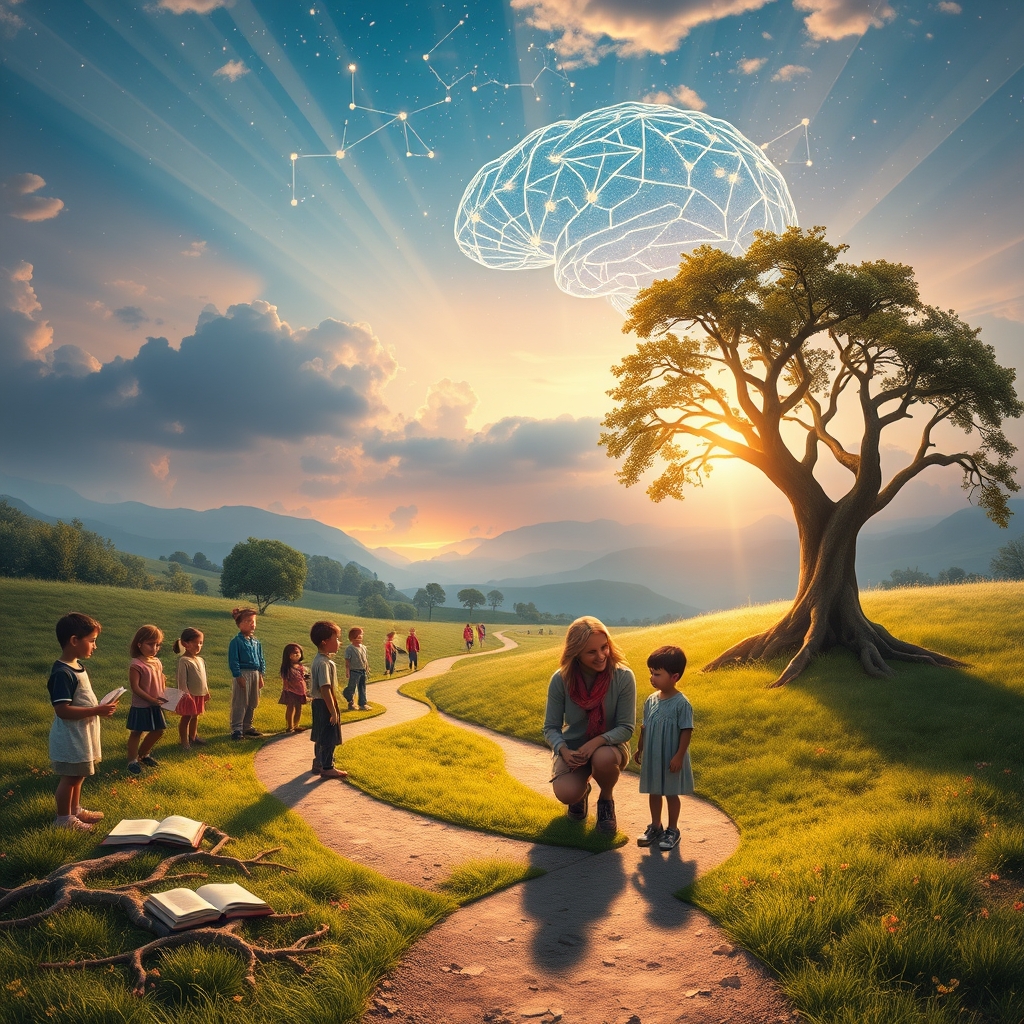
There is a quiet geography to every classroom, a terrain of emotions and thoughts that stretches far beyond the four walls of brick and mortar. It is a landscape not measured in miles or meters, but in the silent pulses of understanding, the unspoken currents of connection, and the fragile bridges built between one soul and another. To teach is to navigate this inner world, to become a cartographer of the unseen, charting paths through the valleys of doubt and the peaks of triumph that each child carries within them. Inclusive education is not merely a methodology or a set of strategies—it is an act of deep listening, a commitment to honoring the unique topography of every student’s experience.
The Unseen Compass of Empathy
Empathy is the compass that guides us through this terrain, though it is often mistaken for something softer, something less essential. We speak of it in hushed tones, as if it were a luxury rather than the very foundation upon which learning stands. Yet empathy is not passive; it is an active force, a muscle that must be exercised daily in the subtle shifts of language, the intentional pauses in conversation, and the willingness to sit with discomfort when a child’s pain or frustration spills into the room. It is in the way a teacher kneels to meet a student’s eyes, not to lower themselves, but to elevate the moment into one of shared humanity. Empathy does not ask us to fix, but to witness—to hold space for the raw, unfiltered truth of another’s journey without flinching.
In the rush to implement the latest frameworks for social-emotional learning or behavioral intervention, we risk reducing empathy to a checklist, a series of steps to be followed rather than a way of being. But true empathy defies quantification. It is the quiet recognition that a child’s outburst is not a disruption to be managed, but a cry to be understood. It is the patience to wait when a student struggles to articulate their thoughts, not because they lack intelligence, but because their mind moves in ways that language has yet to catch up with. Empathy is the art of seeing the world through another’s eyes, even when those eyes see differently than our own.
The Myth of the Neutral Classroom
We have long clung to the illusion that education is a neutral endeavor, that the classroom is a blank slate upon which we inscribe knowledge without bias or preference. But neutrality is a myth, a fiction we tell ourselves to avoid the messier truth: that every lesson, every interaction, every glance or absence of one, carries weight. The classroom is not a vacuum; it is a living ecosystem, shaped by the histories, traumas, joys, and fears that each child brings with them. To pretend otherwise is to deny the very essence of what it means to teach.
Inclusive education demands that we abandon this myth. It asks us to acknowledge that the playing field was never level, that the rules of engagement have always favored some while leaving others to stumble. It requires us to confront the uncomfortable reality that our own perceptions are colored by our experiences, and that what we deem “normal” or “acceptable” is often a reflection of our own limitations rather than an objective truth. This is not a call to despair, but an invitation to humility—a reminder that our role is not to mold students into our image, but to help them discover their own.
The Alchemy of Adaptive Learning
If empathy is the compass, then adaptive learning is the map—a dynamic, ever-evolving guide that responds to the shifting contours of a child’s needs. It is not a one-size-fits-all solution, but a deeply personal process, one that requires us to set aside our preconceived notions of how learning “should” look. For some, this might mean breaking lessons into smaller, more digestible pieces. For others, it might involve incorporating movement, art, or music into the curriculum to engage parts of the brain that traditional methods cannot reach. Adaptive learning is not about lowering standards; it is about redefining them, about recognizing that mastery takes many forms and that intelligence is not a monolith.
Yet adaptive learning is often misunderstood as a series of accommodations, a checklist of adjustments to be made for those who “can’t keep up.” This perspective misses the point entirely. Adaptive learning is not a concession; it is an acknowledgment that the human mind is infinitely varied, and that education should reflect this diversity. It is the understanding that a child who struggles to read may have a gift for spatial reasoning, or that a student who finds it difficult to sit still may possess an extraordinary capacity for creative problem-solving. When we embrace adaptive learning, we are not just meeting students where they are—we are celebrating the unique ways in which they engage with the world.
The Weight of Words
Language is the currency of the classroom, the tool with which we build or dismantle the walls that separate us. The words we choose carry immense power, shaping not only how students see the world, but how they see themselves. A single phrase—”You’re so smart” or “You just need to try harder”—can either lift a child up or weigh them down, reinforcing their sense of belonging or deepening their isolation. Inclusive education requires us to wield language with intention, to recognize that the labels we assign—whether “gifted,” “struggling,” or “behavioral”—can become self-fulfilling prophecies, for better or for worse.
This is not to say that we should avoid honest feedback or shy away from difficult conversations. On the contrary, it is in these moments that our words matter most. The difference lies in how we frame them. Instead of saying, “You’re not good at this,” we might ask, “What part of this feels challenging to you?” Instead of labeling a child as “disruptive,” we might observe, “I notice you’re having a hard time focusing today. What do you need?” Language, when used thoughtfully, becomes a bridge rather than a barrier, a way to connect rather than to categorize.
The Unfinished Symphony of Belonging
Belonging is not a destination, but a living, breathing thing—a symphony that is never quite finished, its notes shifting and evolving with each new voice that joins the chorus. Inclusive education is the ongoing work of tuning this symphony, of ensuring that every instrument, no matter how unconventional, has a place in the music. It is the recognition that harmony is not about uniformity, but about the beautiful dissonance that arises when different voices come together. Some will play softly, their contributions barely audible above the rest. Others will rise in bold, vibrant crescendos, impossible to ignore. But all are necessary, all are valued, all are part of the whole.
This work is not easy. It requires us to confront our own biases, to question the systems we have inherited, and to resist the urge to retreat into the familiar when the path forward feels uncertain. But it is work worth doing, for it is in the act of creating space for others that we discover the fullness of our own humanity. The classroom, at its best, is a microcosm of the world we wish to build—a place where every child, regardless of their abilities, their background, or their struggles, can find their voice and know, without a doubt, that they belong.
The soul’s cartography is never complete. There are always new lands to explore, new paths to forge, new stories to uncover. But if we approach this work with humility, with curiosity, and with an unwavering belief in the inherent worth of every child, we will find that the journey itself is the greatest lesson of all. For in the end, it is not the maps we create that matter most, but the hands we hold along the way.