The Garden of Forking Paths: Cultivating Belonging in the Labyrinth of Learning
The classroom is not a monolith. It is a living, breathing ecosystem where each child arrives bearing a unique constellation of strengths, struggles, and silent questions. To teach is to tend a garden where the soil is never uniform, where some seeds sprout overnight while others require years of patient nurturing. The myth of the “average student” is a ghost that haunts education, a specter that dissolves the moment we look too closely. What remains, then, is the quiet miracle of difference—not as an obstacle, but as the very terrain of learning.
The Alchemy of Attention
There is a kind of magic in the way a teacher’s gaze lingers just a second longer on the child who hesitates before raising their hand, or how a lesson plan bends ever so slightly to accommodate the student who learns not through words, but through touch, through rhythm, through the stubborn persistence of their own curiosity. This is not differentiation as a pedagogical buzzword, but as an act of devotion. The best educators are not those who master the art of uniformity, but those who become fluent in the language of individual minds.
Consider the child who stares out the window during math, not out of disinterest, but because numbers arrange themselves into shapes in their mind—shapes that shift and shimmer like constellations. Or the student who disrupts the class not to defy, but because the weight of unspoken anxiety has nowhere else to go. What if we stopped measuring success by how closely a child adheres to a predetermined path, and instead by how deeply they feel seen along the way?
The Unwritten Curriculum
Beneath the surface of lesson plans and standardized tests lies an unwritten curriculum, one that teaches children not just what to think, but how to be. This is the realm of social-emotional learning, of character education, of the quiet moments when a teacher chooses kindness over compliance, connection over control. It is here, in the unscripted spaces between subjects, that the soul of education is forged.
Yet this curriculum is often treated as secondary, an afterthought to the “real” work of academics. But what if it is the other way around? What if the ability to navigate frustration, to collaborate with those who think differently, to sit with uncertainty—what if these are the true measures of an educated mind? The child who learns to read but never learns to listen, to solve equations but never to empathize, has been taught only half the lesson.
The Architecture of Belonging
An inclusive classroom is not one where every child fits into the same mold, but one where the mold itself is reshaped to hold them all. This is the promise of neurodiversity awareness—not as a trend, but as a fundamental reimagining of what it means to learn. The autistic child who stims in the corner, the dyslexic student who decodes words like a cryptographer, the anxious learner who needs the safety of routine—each of them is not a problem to be fixed, but a perspective to be honored.
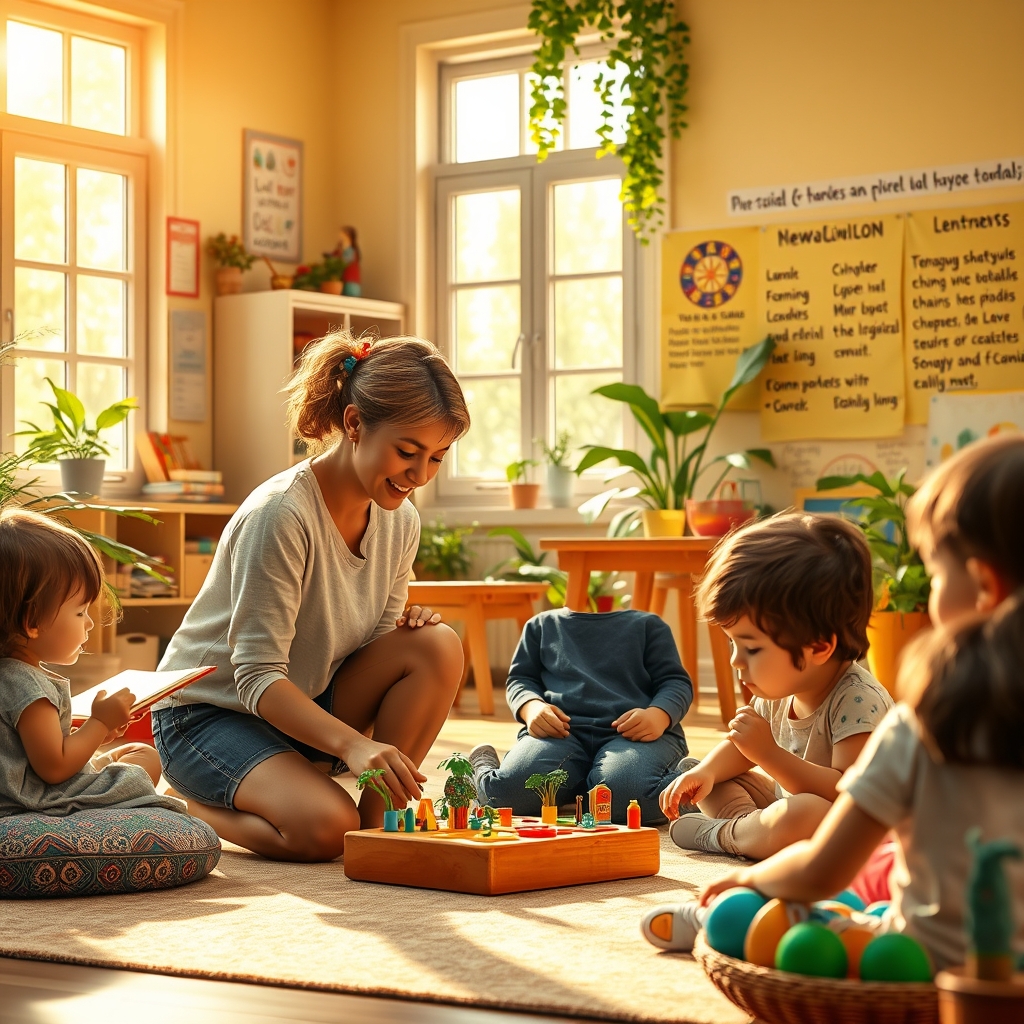
The physical space of a classroom can be a silent accomplice in this work. Flexible seating that allows for movement, quiet corners for retreat, visual schedules that offer predictability—these are not accommodations, but necessities. They are the scaffolding of belonging, the unspoken message that says: *You are here. You are wanted. You are enough.*
The Weight of Small Gestures
It is tempting to believe that transformation requires grand gestures—policy overhauls, sweeping reforms, the kind of change that makes headlines. But the truth is far more humble. The real work happens in the small, daily acts of attunement: the teacher who learns to recognize the difference between a child who is defiant and one who is overwhelmed, the lesson that is paused not because of a schedule, but because a student’s question has opened a door no one else saw. These are the moments that build trust, that turn a classroom from a place of instruction into a place of refuge.
There is a story told in some educational circles about a teacher who, when asked how she managed to reach a particularly challenging student, replied: *I didn’t do anything special. I just stopped trying to change him, and started trying to understand him.* This is the quiet revolution of inclusive education—not the imposition of a system, but the willingness to meet a child where they are, and to walk with them from there.
The Myth of the Finish Line
Education is not a race with a finish line, but a journey without end. The child who struggles today may flourish tomorrow, not because they have been fixed, but because they have been given the space to grow in their own time. The teacher who feels like a failure because a lesson didn’t land as planned may, in retrospect, realize that the real learning happened in the unplanned moment when a student’s eyes lit up with sudden understanding.
Perhaps the greatest gift we can offer a child is not the promise of perfection, but the assurance that they are not alone in their imperfection. That their mistakes are not failures, but signposts. That their differences are not flaws, but facets of a mind that is still unfolding. The classroom, at its best, is not a place where children are shaped to fit the world, but where the world is reshaped to hold them all—messy, magnificent, and endlessly surprising in their humanity.
The garden does not ask the rose to be a sunflower. It simply tends the soil, and lets the light in.