The Luminous Fractures: How the Cracks in Education Let the Light In
There is a quiet alchemy that happens in the spaces between what we teach and what we learn, between the curriculum we design and the souls we are entrusted to nurture. It is not found in the polished surfaces of lesson plans or the seamless execution of standardized tests, but in the luminous fractures—the moments where the system stumbles, where the script falters, and where something raw and real seeps through. These are the moments that define inclusive education, not as a set of strategies or a checklist of accommodations, but as a living, breathing philosophy that recognizes the sacredness of every child’s journey.
The Myth of the Perfect Classroom
We have been sold a myth—the idea that the perfect classroom is one of order, uniformity, and predictability. Desks in neat rows, hands raised in unison, a chorus of voices reciting answers in perfect harmony. But what if the perfect classroom is not a place of seamless execution, but one of beautiful chaos? What if the true measure of its success lies not in how well it adheres to a script, but in how it embraces the unexpected, the unplanned, the unscripted?
Inclusive education is not about smoothing over the rough edges of learning; it is about recognizing that those edges are where the most profound growth occurs. It is in the stutter of a child with a speech delay, the fidgeting of a student with ADHD, the quiet withdrawal of a child grappling with anxiety—these are not disruptions to be managed, but invitations to see the world differently. They are the cracks that let the light in, as Leonard Cohen once wrote, and in education, that light is the recognition of each child’s inherent worth and potential.
The Soul of Differentiated Instruction
Differentiated instruction is often reduced to a buzzword, a box to be ticked on a teacher’s to-do list. But at its core, it is an act of love—a recognition that no two minds are alike, and that the path to understanding is as unique as the child walking it. It is not about creating thirty different lesson plans for thirty different students, but about cultivating a classroom where every child feels seen, heard, and valued in their own way.
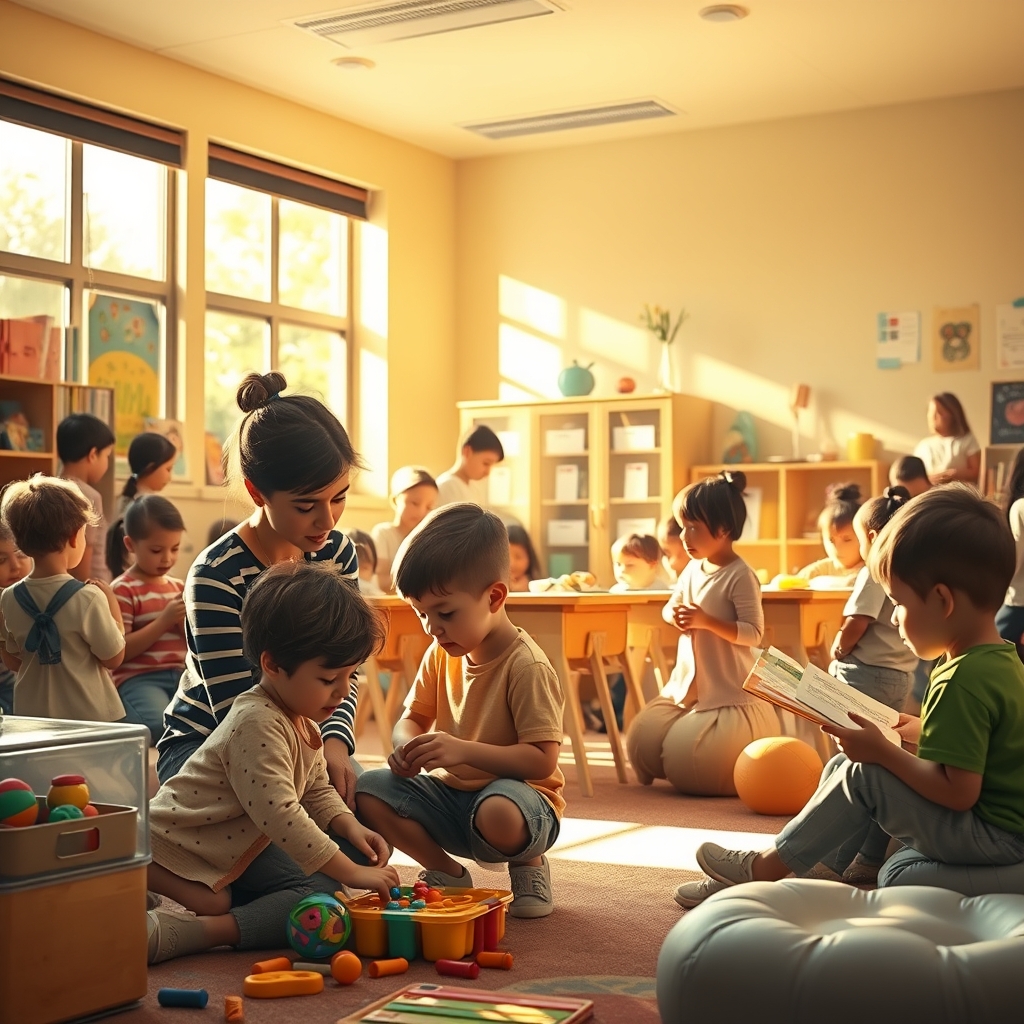
This is where the art of teaching meets the science of learning. It is in the way a teacher adjusts their tone for a child with autism, or provides a fidget tool for a student who needs to move to think. It is in the way they offer a quiet corner for a child overwhelmed by sensory input, or a visual schedule for a student who struggles with time management. These are not just strategies; they are acts of empathy, small but profound acknowledgments that every child’s mind is a universe unto itself.
The Weight of an Individualized Education Plan
An Individualized Education Plan (IEP) is more than a document; it is a promise. A promise that a child’s needs will not be overlooked, that their struggles will not be dismissed, and that their potential will not be limited by the constraints of a one-size-fits-all system. Yet, too often, IEPs become bureaucratic exercises, filled with jargon and legalese, detached from the lived experience of the child they are meant to serve.
The true power of an IEP lies not in its pages, but in the conversations it inspires—the collaboration between teachers, parents, and specialists, the shared commitment to a child’s growth, and the recognition that education is not a solo journey, but a collective endeavor. When an IEP is treated as a living document, one that evolves with the child, it becomes a testament to the belief that every child deserves a chance to thrive.
The Unseen Curriculum of Social Emotional Learning
We spend so much time focused on the tangible outcomes of education—test scores, grades, college acceptances—that we often overlook the invisible curriculum that shapes a child’s heart and mind. Social emotional learning (SEL) is not just a set of skills to be taught; it is the foundation upon which all other learning rests. It is the ability to recognize one’s emotions, to empathize with others, to build relationships, and to navigate the complexities of the world with resilience and grace.
In a world that often feels fragmented and divided, SEL is the glue that holds us together. It is the quiet moment when a teacher notices a child’s sadness and offers a word of comfort. It is the classroom discussion about kindness, where students share their own experiences of exclusion and inclusion. It is the way a school community comes together to support a student in crisis, not because it is required, but because it is the right thing to do. These are the lessons that last a lifetime, long after the facts and figures have faded from memory.
The Neurodiversity Paradox
Neurodiversity is both a celebration and a challenge—a recognition that the human mind is not a monolith, but a spectrum of infinite variation. Yet, in our eagerness to embrace this diversity, we sometimes fall into the trap of romanticizing it, as if the struggles of neurodivergent children are merely quirks to be celebrated rather than real challenges to be addressed. The truth is more nuanced: neurodiversity is not about erasing the difficulties that come with conditions like autism, ADHD, or dyslexia, but about creating a world where those differences are not just accepted, but valued.
This is where inclusive education becomes a radical act. It is not about making neurodivergent children fit into a neurotypical world, but about reshaping the world to make room for all kinds of minds. It is about recognizing that the child who struggles to sit still may be the one with the most creative ideas, that the student who avoids eye contact may be the one with the deepest insights, and that the child who learns differently is not broken, but simply wired in a way that the world has yet to fully understand.
The Teacher as Gardener
Teaching is often compared to gardening, and for good reason. Like a gardener, a teacher does not create the seeds they plant; they simply provide the conditions for growth. They water, they nurture, they prune, and they wait. They understand that growth is not linear, that some plants will flourish quickly while others take their time, and that some may never bloom in the way we expect. But they tend to each one with care, knowing that every seed carries within it the potential for something extraordinary.
Inclusive education is not a destination, but a journey—one that requires patience, humility, and a willingness to embrace the unknown. It is not about fixing children, but about creating spaces where they can discover who they are and who they are meant to become. It is about seeing the cracks not as flaws, but as opportunities for light to shine through, illuminating the path forward for us all. And in that light, we find the true purpose of education: not to mold children into a predetermined shape, but to help them grow into the fullest, most authentic versions of themselves.