
From Theory to Practice: Implementing Universal Design for Learning (UDL) in Schools
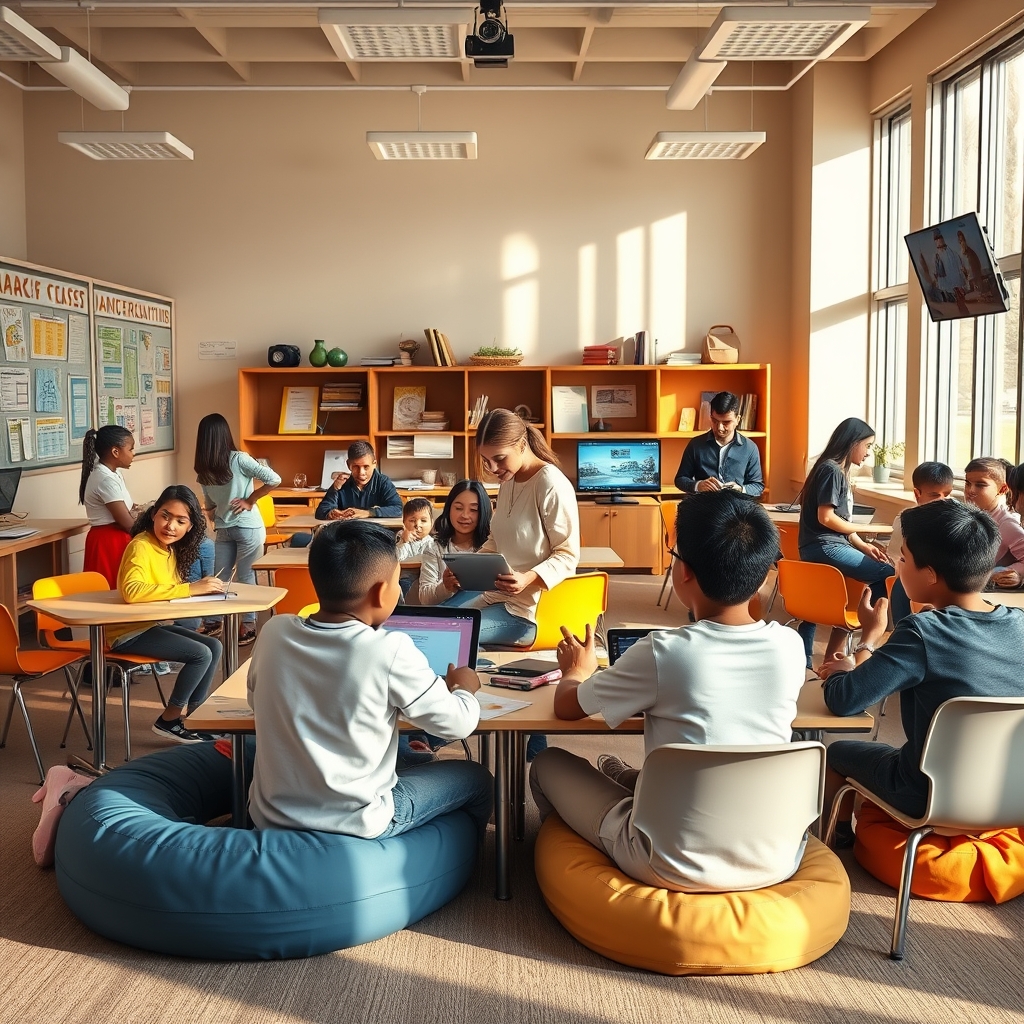
Imagine a classroom where every student, regardless of ability, background, or learning style, feels empowered to engage with the material in a way that suits them best. This is the promise of Universal Design for Learning (UDL), a framework that shifts the focus from a one-size-fits-all approach to education to one that is flexible, inclusive, and adaptive. While the principles of UDL are widely discussed in theory, the real challenge lies in translating them into everyday classroom practices. How can educators move beyond the conceptual and create learning environments that truly meet the diverse needs of all students?
The Foundations of UDL: More Than Just Accessibility
At its core, UDL is built on three guiding principles: providing multiple means of engagement, representation, and action and expression. These principles are not just about making learning accessible for students with disabilities—they are about designing learning experiences that are inherently flexible, allowing every student to thrive. The first principle, engagement, focuses on sparking interest and motivation. This could mean offering students choices in how they interact with content, whether through collaborative projects, independent research, or hands-on activities. The second principle, representation, ensures that information is presented in various formats—visual, auditory, kinesthetic, or text-based—so that students can access it in the way that works best for them. Finally, the third principle, action and expression, gives students different ways to demonstrate their understanding, whether through written assignments, oral presentations, digital media, or creative projects.
These principles are rooted in neuroscience, recognizing that learners vary in how they perceive, process, and respond to information. By embracing this variability, UDL moves away from the traditional model of education, which often assumes that all students learn in the same way. Instead, it acknowledges that diversity in learning is not an obstacle to overcome but an opportunity to enrich the educational experience for everyone.
Breaking Down Barriers: Practical Strategies for Implementation
Implementing UDL in the classroom requires more than just good intentions—it demands intentional planning and a willingness to rethink traditional teaching methods. One of the most effective ways to start is by conducting a curriculum audit. This involves reviewing existing lesson plans and materials to identify potential barriers to learning. For example, are there assignments that rely heavily on reading comprehension, which might disadvantage students with dyslexia? Are there opportunities for students to engage with the material in ways that align with their strengths? By asking these questions, educators can begin to modify their approach to be more inclusive.
Another practical strategy is to leverage technology as a tool for flexibility. Digital platforms and assistive technologies can provide students with alternative ways to access content, such as text-to-speech software for those who struggle with reading or speech-to-text tools for students who find writing challenging. Additionally, multimedia resources like videos, podcasts, and interactive simulations can make complex concepts more accessible and engaging. However, it’s important to remember that technology is not a cure-all—it should be used thoughtfully and in conjunction with other UDL strategies to ensure it enhances rather than complicates the learning experience.
Creating a Culture of Inclusivity
UDL is not just about individual lessons or activities—it’s about fostering a classroom culture where diversity is celebrated and every student feels valued. This starts with building relationships and getting to know students as individuals. What are their interests, strengths, and challenges? What motivates them to learn? By understanding these aspects of their students, educators can tailor their approach to better meet their needs. For instance, a student who is passionate about music might be more engaged in a lesson that incorporates rhythm or song, while a student who struggles with anxiety might benefit from a quiet space to work or the option to submit reflections privately rather than in front of the class.
Another key aspect of creating an inclusive culture is collaboration. UDL thrives in environments where students are encouraged to work together, share ideas, and learn from one another. Group projects, peer teaching, and cooperative learning activities can help students develop empathy and appreciation for different perspectives. Additionally, involving students in the design of their own learning experiences can empower them to take ownership of their education. For example, allowing students to choose between different project formats or assessment methods can increase their motivation and sense of agency.
Overcoming Challenges: Addressing Common Misconceptions
Despite its many benefits, implementing UDL is not without its challenges. One of the most common misconceptions is that UDL requires educators to create entirely new lesson plans from scratch. In reality, UDL is about modifying existing materials to make them more flexible and inclusive. For example, a traditional worksheet can be adapted by providing it in digital format with text-to-speech capabilities, or by offering alternative questions that allow students to demonstrate their understanding in different ways. The goal is not to reinvent the wheel but to make small, intentional changes that have a big impact.
Another challenge is the perception that UDL is only for students with disabilities. While UDL certainly benefits students with diverse learning needs, its principles are designed to support all learners. For instance, a student who is an English language learner might benefit from visual aids or bilingual resources, while a gifted student might thrive when given the opportunity to explore a topic in greater depth. By designing lessons with flexibility in mind, educators can create a learning environment that is truly universal.
The Role of Professional Development
For UDL to be successful, educators need ongoing support and professional development. This includes training on how to apply UDL principles in the classroom, as well as opportunities to collaborate with colleagues and share best practices. Schools can facilitate this by creating professional learning communities (PLCs) where teachers can discuss challenges, brainstorm solutions, and learn from one another. Additionally, administrators can play a crucial role by providing resources, such as funding for assistive technologies or access to UDL experts who can offer guidance and feedback.
It’s also important for educators to recognize that implementing UDL is an iterative process. There is no one-size-fits-all solution, and what works for one classroom or student may not work for another. By adopting a growth mindset and being open to experimentation, educators can continuously refine their approach and create learning experiences that are truly inclusive.
When educators embrace the principles of UDL, they do more than just adapt their teaching methods—they redefine what it means to learn. A classroom built on flexibility and inclusivity doesn’t just accommodate differences; it celebrates them, turning diversity into a strength rather than a challenge. The journey from theory to practice may require effort, creativity, and a willingness to step outside of traditional norms, but the result is a learning environment where every student has the opportunity to succeed. In this space, education is not about fitting students into a mold but about giving them the tools to shape their own path, ensuring that no one is left behind.