The Silent Symphony: How the Unspoken Rhythms of Inclusive Education Shape Young Minds
There is a quiet music that hums beneath the surface of every classroom, a rhythm often drowned out by the clamor of lesson plans, standardized tests, and the relentless ticking of the clock. It is the symphony of inclusion—the unspoken dialogue between empathy and expectation, between the seen and the unseen, between the child who raises their hand without hesitation and the one who traces the grain of their desk with trembling fingers. This music does not announce itself with fanfare; it lingers in the pauses, in the way a teacher’s gaze lingers a second longer on a student who seems adrift, in the subtle shift of a lesson plan to make room for a voice that might otherwise go unheard.
The Alchemy of Belonging
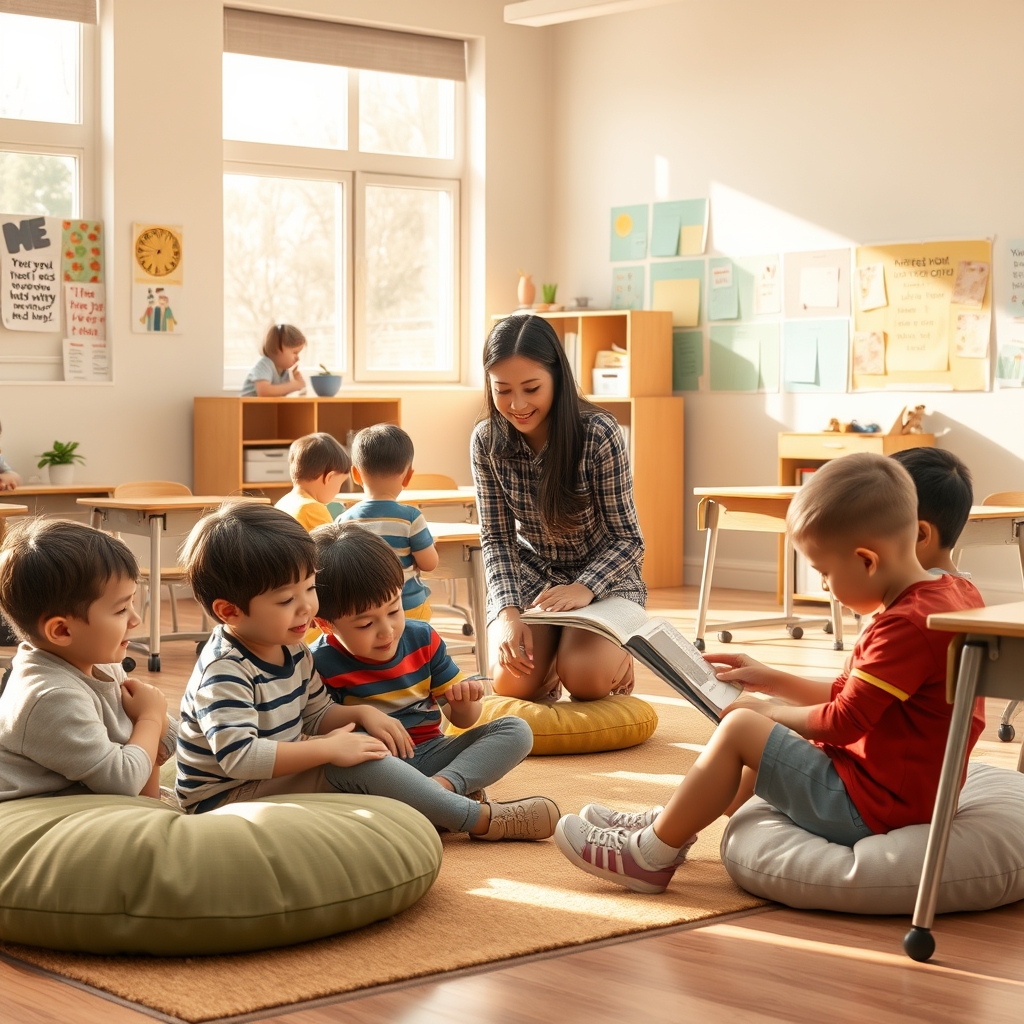
Inclusive education is not merely a methodology; it is an alchemy. It transforms the base metals of curriculum and pedagogy into something golden—the sense of belonging. But belonging is not a checklist to be ticked off, nor is it a policy to be enforced. It is a living, breathing entity, nurtured in the spaces between instruction and intuition. When a child with dyslexia is given the time to articulate their thoughts without the pressure of speed, when a student on the autism spectrum is allowed to stim freely in a corner of the room without judgment, when a child grappling with anxiety is met with patience rather than punishment—these are the moments when the alchemy takes hold. The classroom becomes more than a place of learning; it becomes a sanctuary where the soul is as valued as the mind.
Yet, the creation of such spaces is not without its tensions. The modern classroom is a microcosm of society’s contradictions, where the ideals of equity and inclusion often collide with the rigid structures of institutional expectations. Teachers are expected to be both architects and gardeners—designing frameworks that hold space for diversity while tending to the unique needs of each student. It is a delicate balance, one that requires not just skill, but a deep well of emotional resilience. The question lingers: How do we honor the individual without losing sight of the collective? How do we ensure that the pursuit of inclusion does not become another performative act, a hollow gesture that fades with the next educational trend?
The Invisible Curriculum
Beneath the surface of every lesson plan lies an invisible curriculum, one that teaches far more than the subject at hand. It is the curriculum of values—of kindness, of resilience, of the quiet strength that comes from knowing you are seen. Social-emotional learning is not a separate module to be slotted into the day’s schedule; it is the undercurrent that flows through every interaction, every conflict, every moment of triumph or despair. When a teacher models empathy in the way they mediate a disagreement between students, when they validate a child’s frustration instead of dismissing it, they are teaching the most profound lesson of all: that emotions are not obstacles to learning but the very soil in which it grows.
This invisible curriculum is particularly vital for students with special educational needs, for whom the traditional structures of schooling can often feel like a foreign language. For these children, the classroom can either be a place of alienation or a refuge where their differences are not just accommodated but celebrated. The challenge lies in designing learning environments that are adaptive without being patronizing, that offer support without singling anyone out. It is about creating a space where a child with ADHD can move without being labeled disruptive, where a student with a learning disability can ask for help without fear of judgment. These are not small feats; they require a reimagining of what education can and should be.
The Weight of the Individualized Plan
The Individualized Education Plan (IEP) is often hailed as the cornerstone of inclusive education, a document that promises to tailor learning to the unique needs of each child. Yet, for all its good intentions, the IEP can sometimes feel like a double-edged sword. On one hand, it offers a roadmap for educators, a way to ensure that no child falls through the cracks. On the other, it can become a bureaucratic maze, a series of checkboxes that reduce a child’s complex humanity to a list of deficits and accommodations. The danger lies in allowing the IEP to become a script rather than a guide, a rigid set of instructions that stifles rather than supports.
The true power of the IEP lies not in its ability to standardize support but in its potential to spark conversation. It should be a living document, one that evolves as the child grows, that is shaped not just by educators but by the child themselves. When a student is given a voice in their own IEP, when they are asked what they need to thrive rather than what they need to be fixed, the document transcends its bureaucratic origins. It becomes a testament to the child’s agency, a declaration that their learning is not something done to them but something they are an active participant in.
The Teacher as a Mirror and a Window
Teachers are often described as mirrors and windows—mirrors that reflect a child’s potential back to them, and windows that offer glimpses of worlds beyond their own. In an inclusive classroom, this dual role takes on even greater significance. A teacher must be a mirror for the child who struggles to see their own worth, reflecting back their strengths and possibilities. Simultaneously, they must be a window for the child who has never encountered difference, offering a view into the rich tapestry of human experience. This is no small task. It requires a deep well of self-awareness, a willingness to confront one’s own biases, and the humility to admit when one falls short.
Professional development in this context is not just about acquiring new strategies or techniques; it is about cultivating a mindset. It is about learning to see the classroom not as a static space but as a dynamic ecosystem, one where every child’s presence alters the balance. It is about understanding that inclusion is not a destination but a journey, one that requires constant reflection and adaptation. The most effective teachers are those who approach their work with a sense of curiosity, who see each challenge not as a barrier but as an opportunity to deepen their understanding of what it means to teach and to learn.
The symphony of inclusion is not a solo performance. It is a collective endeavor, one that requires the participation of every voice in the room. There are days when the music falters, when the rhythm stumbles, when the harmony feels just out of reach. But it is in these moments of imperfection that the true beauty of the endeavor reveals itself. For it is not the flawless execution of a lesson plan that leaves a lasting impact, but the quiet, persistent effort to create a space where every child feels seen, heard, and valued. The classroom is not just a place where minds are shaped; it is where hearts are nurtured, where the unspoken rhythms of human connection weave themselves into the fabric of young lives, leaving an imprint that lingers long after the final bell has rung.