The Soul’s River: How the Currents of Student-Centric Education Shape the Landscape of a Child’s Inner World
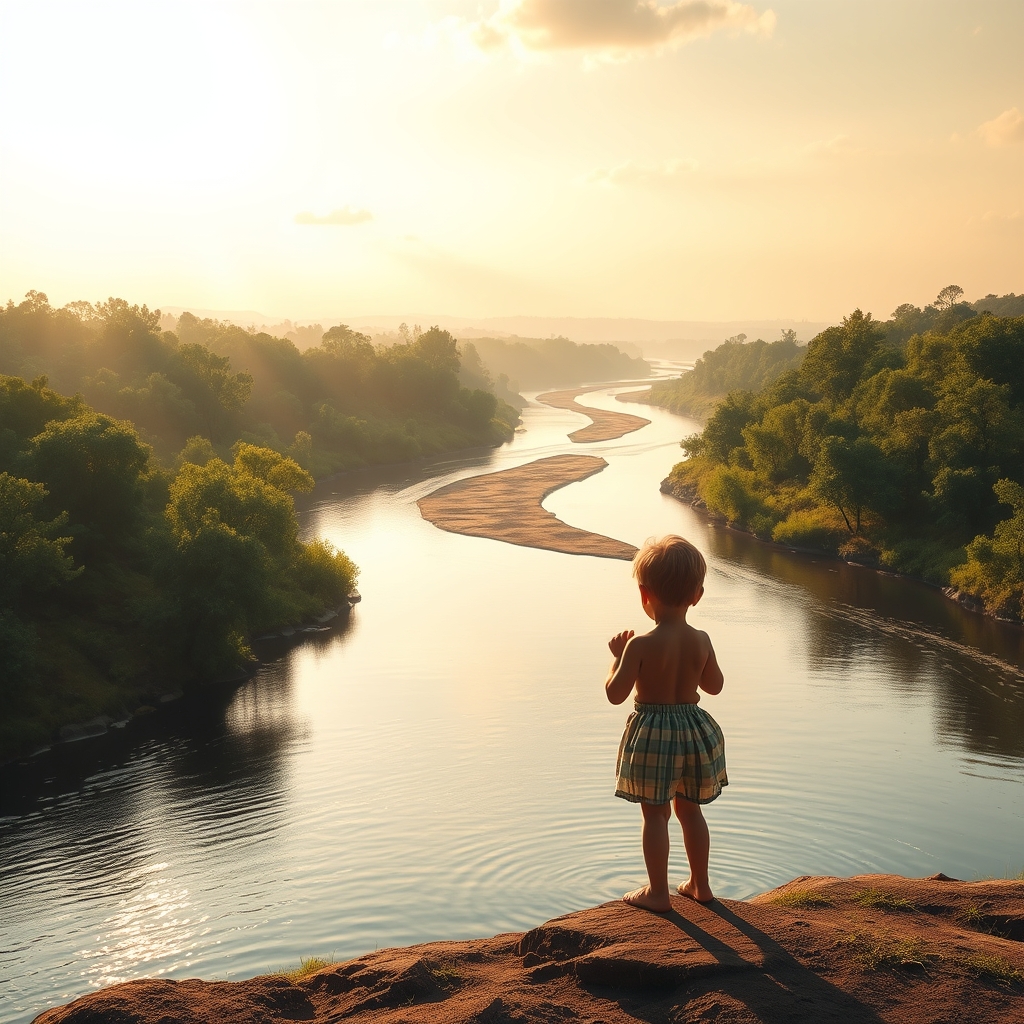
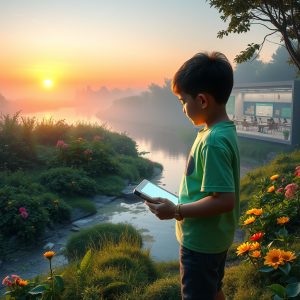
There is a river that flows not through valleys of stone and earth, but through the quiet, unseen landscapes of a child’s mind. It bends and twists, carving its own path, sometimes slow and meandering, other times rushing with the force of newfound curiosity. This river is not bound by maps or predetermined routes; it is shaped by the hands of those who tend to its banks, who understand that its course is as unique as the child who navigates its waters. In the heart of student-centric education, this river finds its voice, its rhythm, its purpose.
The Banks That Hold the Water
Every river needs its banks—those steady, unyielding edges that give shape to the water’s flow. In the realm of learning, these banks are the structures, the frameworks, the gentle but firm guidance that allows a child’s mind to explore without losing itself in the vastness of possibility. But what happens when those banks are not rigid walls, but flexible, responsive contours that shift with the needs of the river itself? This is the essence of a curriculum that breathes, that listens, that adapts. It is not a cage, but a cradle, holding space for the child to discover their own currents, their own depths.
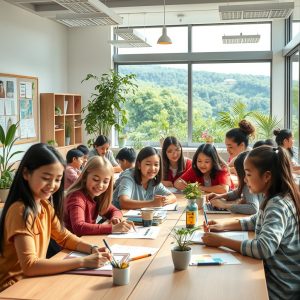
I remember the first time I saw a classroom where the walls were not barriers, but invitations. The desks were not rows of silent sentinels, but clusters of conversation, of collaboration, of hands reaching across divides to build something greater than themselves. The teacher was not a distant figure at the front, but a guide walking among the students, her voice a thread weaving through the tapestry of their discussions. There was no single path to follow, no rigid script to adhere to. Instead, there was a sense of possibility, of exploration, of the kind of freedom that only comes when you know you are seen, truly seen, for who you are.
The Currents of Curiosity
What drives the river forward? What keeps it from stagnating, from losing itself in the stillness of complacency? It is the current—the relentless, insatiable pull of curiosity. In a student-centric classroom, curiosity is not a fleeting spark, but a steady flame, nurtured and tended until it becomes a fire that lights the way. It is the question that lingers in the air long after the lesson has ended, the “what if” that refuses to be silenced, the wonder that turns the ordinary into the extraordinary.
I think of the children who are given the space to ask, to probe, to challenge. The ones who are not told what to think, but how to think. They are the ones who learn to navigate the river not by memorizing its bends, but by feeling its flow, by understanding that every question is a stepping stone, every mistake a lesson in disguise. Their learning is not a destination, but a journey, one that unfolds with each new discovery, each new connection made. And in that journey, they begin to see themselves not as passive recipients of knowledge, but as active participants in the creation of their own understanding.
The Stones That Shape the Flow
Every river encounters obstacles—rocks that jut out from the water, forcing it to change course, to find new ways forward. In the landscape of learning, these obstacles are the challenges, the struggles, the moments of frustration that threaten to dam the flow of progress. But in a student-centric environment, these stones are not barriers to be avoided; they are opportunities to be embraced. They are the places where resilience is forged, where adaptability is born, where the river learns to carve its own path.
I have seen children face these stones with a courage that belies their years. The child who struggles with reading but finds solace in storytelling, weaving words into worlds that exist only in their imagination. The child who falters in math but discovers a passion for building, for creating, for seeing the numbers come to life in the structures they design. These are not failures, but detours, moments where the river finds a new way to flow, a new direction to explore. And in those moments, the child learns something far more valuable than any lesson in a textbook: they learn that they are capable, that they are resilient, that they are not defined by their struggles, but by how they rise above them.
The Delta of Discovery
Eventually, every river reaches its delta—the place where its waters fan out into countless channels, each one a path to the sea. In the journey of learning, this delta is the moment when the child begins to see the connections between their education and the world beyond the classroom. It is the place where theory becomes practice, where knowledge becomes action, where the river of their learning spills over into the vast ocean of real-world experience.
This is where project-based learning takes root, where children are not just passive observers, but active creators. They build, they design, they solve, they innovate. They see the impact of their work not just in grades or test scores, but in the tangible, lived experiences of their communities. A garden planted in the schoolyard becomes a lesson in biology, ecology, and teamwork. A mural painted on a city wall becomes a story of history, culture, and expression. A business plan for a student-run café becomes a masterclass in economics, leadership, and entrepreneurship. These are not just projects; they are bridges, connecting the classroom to the world, the child to their future.
The Sea of Belonging
And what lies beyond the delta? The sea—a vast, boundless expanse where all rivers eventually find their home. In the journey of learning, this sea is the sense of belonging, the deep, abiding knowledge that you are part of something greater than yourself. It is the understanding that your voice matters, that your ideas have value, that your presence enriches the world around you. In a student-centric classroom, this sea is not a distant horizon, but a tangible reality, a place where every child is welcomed, celebrated, and empowered to be their truest self.
I have seen this sea in the eyes of children who once felt invisible, who now stand tall, their voices ringing out with confidence. I have seen it in the way they reach out to one another, not in competition, but in collaboration, in the quiet understanding that their success is intertwined with the success of those around them. This is the promise of student-centric education—not just to teach, but to transform, to create spaces where children can grow not just in knowledge, but in wisdom, not just in skill, but in soul.
The river does not ask for permission to flow; it simply does, carving its path through the landscape of time and experience. In the same way, a child’s learning journey is not a straight line, but a winding, unpredictable current, shaped by the hands of those who tend to its banks. And when those hands are gentle, when they listen more than they direct, when they trust the river to find its own way, something magical happens. The child begins to see themselves not as a vessel to be filled, but as a force to be reckoned with, a current of curiosity and creativity that has the power to shape not just their own future, but the world around them. And in that moment, the river becomes more than a metaphor—it becomes a way of life, a testament to the endless, boundless potential that lies within every child.