
The Soul’s Crucible: How the Fire of Customized Educational Support Forges the Hidden Resilience of a Child’s Spirit
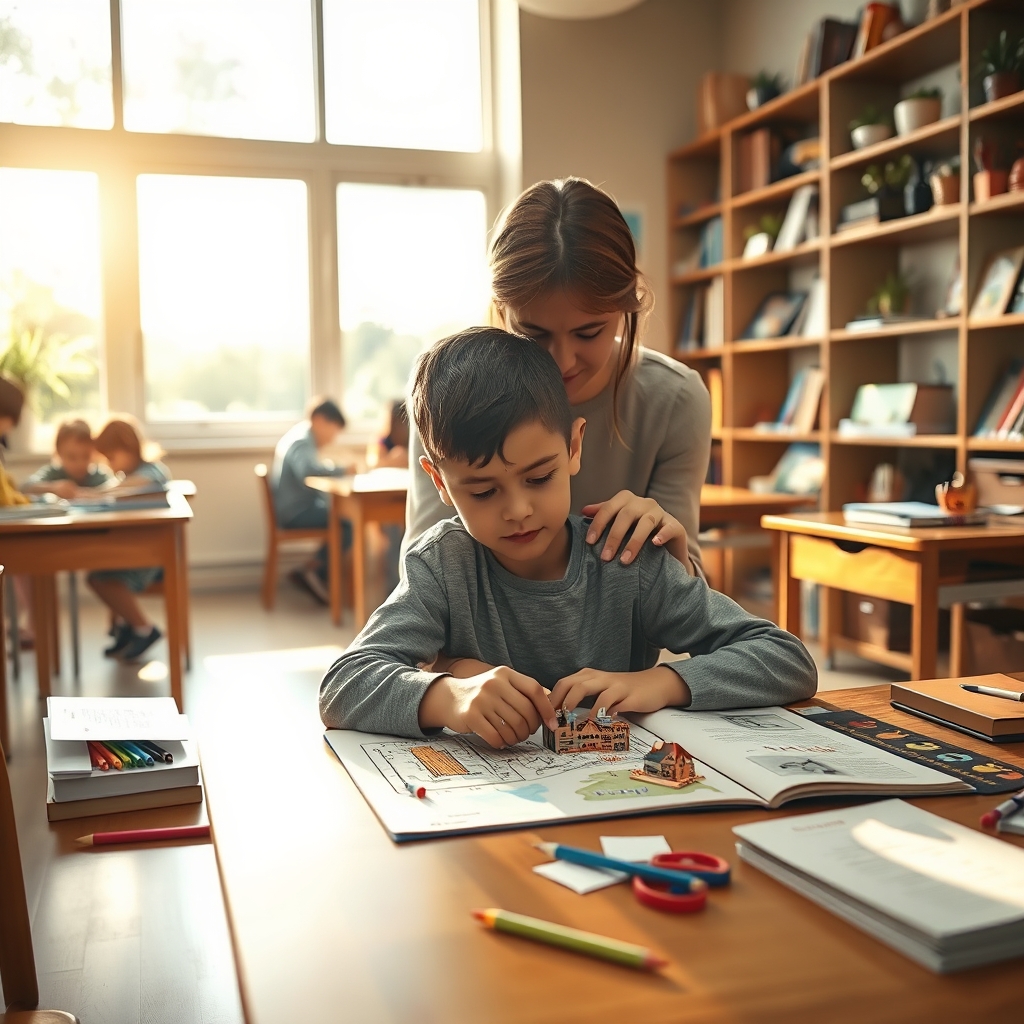
There is a quiet alchemy that unfolds when a child’s education is not a rigid mold, but a living, breathing entity—shaped by their questions, their stumbles, their quiet triumphs. It is the alchemy of customized educational support, where the curriculum does not merely instruct, but listens. Where the classroom is not a stage for performance, but a sanctuary for becoming. This is the space where resilience is not taught, but tenderly coaxed into existence, like a seedling pushing through concrete, unaware of its own strength until the moment it breaks through.
The Unseen Scaffolding of a Child’s Inner World
Every child carries within them a landscape of untold stories—fears that whisper in the dark, curiosities that hum like distant melodies, and dreams that flicker like candlelight in a storm. Traditional education often asks them to leave these landscapes at the door, to step into a world of standardized answers and measured progress. But what if, instead, we built bridges into those hidden valleys? What if the curriculum bent to meet them where they stood, rather than demanding they conform to its shape?
Customized educational support is not about lowering expectations; it is about redefining them. It is the art of recognizing that a child who struggles with numbers may see the world in vibrant patterns, or that the one who fidgets through lectures might design entire cities in their imagination. It is the quiet work of a teacher who does not see a deficit, but a different way of knowing. And in that recognition, something miraculous happens: the child begins to see themselves not as a problem to be fixed, but as a mind to be understood.
The Alchemy of Small Adjustments
It does not always require grand gestures. Sometimes, it is the extra five minutes spent explaining a concept in a different way. Sometimes, it is the choice to let a student write a song instead of an essay, or to build a model instead of taking a test. These are not concessions; they are conversations. They say, I see you. Your way of learning is not wrong—it is simply yours. And in that validation, the child learns that their mind is not a puzzle to be solved, but a landscape to be explored.
Consider the student who freezes at the sight of a blank page, not because they lack ideas, but because the weight of perfection paralyzes them. A teacher who offers a voice recorder, or a series of prompts that feel like conversation rather than command, is not just accommodating a difficulty—they are reclaiming the child’s voice. They are saying, Your thoughts matter more than the format in which they arrive. And in that moment, the child’s relationship with learning shifts. The fear of failure softens into the courage to try.
The Ripple Effect of Being Seen
When a child’s education is tailored to their rhythm, something deeper than academic progress unfolds. They begin to trust themselves. They learn that their struggles are not evidence of inadequacy, but signposts pointing toward their unique way of engaging with the world. This is the foundation of resilience—not the ability to endure hardship without breaking, but the capacity to rise again, knowing that the breaking itself was part of the becoming.
I remember a student, small for his age, who carried the weight of a label: slow learner. The words clung to him like a second skin, until a teacher noticed the way his eyes lit up when he spoke about the stars. She brought in a telescope. She let him teach a lesson on constellations. She did not remove the challenges he faced in other subjects, but she gave him a place where his mind could soar. And in that place, he learned that his worth was not tied to a single measure of success. He learned that his mind, like the universe, was vast and full of light.
The Quiet Rebellion of Student-Centric Education
This is the quiet rebellion of customized educational support: it refuses to see children as vessels to be filled, but as fires to be kindled. It understands that the most powerful learning does not happen when a child is passive, but when they are engaged—when their curiosity is the compass, and their questions are the map. It is not about making education easier; it is about making it more meaningful. About ensuring that no child leaves the classroom feeling invisible, or worse, believing that their way of thinking is a flaw rather than a gift.
In a world that often measures success in narrow terms, customized educational support is an act of defiance. It says that a child’s potential cannot be contained within a single test score, a single grade, a single definition of intelligence. It says that the true measure of an education is not what a child knows, but how they have learned to see themselves. Have they been shaped into compliance, or have they been given the tools to shape their own path?
The Echo of What Could Be
Imagine a classroom where every child’s struggle is met not with frustration, but with curiosity. Where a teacher’s first question is not What did you get wrong? but What were you trying to understand? Where the goal is not to produce identical minds, but to nurture the unique brilliance of each one. This is not a utopian dream; it is the reality of schools and educators who understand that the soul of learning is not in the answers, but in the questions. Not in the destination, but in the journey of discovery.
Customized educational support does not ask children to fit into the system. It asks the system to expand—to make room for the child who learns by moving, the one who learns by creating, the one who learns by questioning everything. It is not a one-size-fits-all approach, because no child is one-size-fits-all. And in that expansion, something beautiful happens: children learn that their differences are not obstacles, but the very things that make their voices essential.
The fire of customized educational support does not forge a child into something new. It reveals what was always there—the resilience, the creativity, the quiet strength that no standardized test could ever measure. It is the gentle art of seeing a child not as they are, but as they could be, and then walking beside them as they grow into that possibility. And in that journey, they learn the most important lesson of all: that their mind is not a vessel to be filled, but a flame to be tended, a light that, once kindled, will burn bright enough to illuminate their own path forward.