The Soul’s Compass: Navigating the Luminous Threads of a Child’s Inquisitive Odyssey
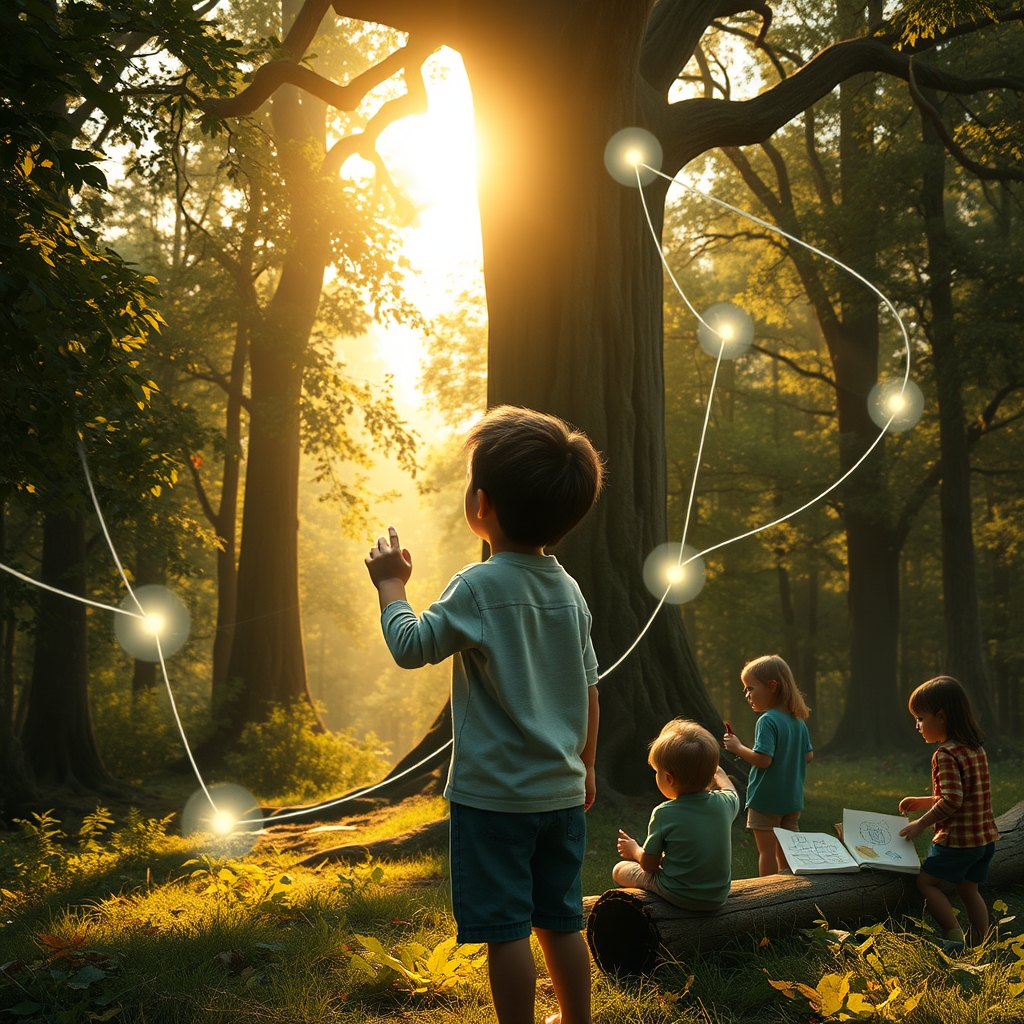
The first time a child’s fingers brush against the rough bark of an ancient oak, or their eyes widen at the sight of a caterpillar’s slow, deliberate crawl, something deeper than curiosity stirs within them. It is not merely the question of what they are seeing, but the quiet, insistent whisper of why—a whisper that lingers long after the moment has passed, weaving itself into the fabric of their being. This is the essence of an inquisitive odyssey, a journey not mapped by textbooks or confined to the four walls of a classroom, but one that unfolds in the unseen valleys of the heart, guided by the luminous threads of personalized learning.
The Cartography of Wonder
Every child carries within them an invisible atlas, its pages blank but humming with potential. The lines of this atlas are not drawn by rulers or compasses, but by the questions they dare to ask, the failures they learn to embrace, and the small victories that light their way. Traditional education often treats these questions as detours, distractions from the predetermined path of standardized curricula. Yet, it is precisely these detours that lead to the most profound discoveries—not just of the world, but of the self. When a child is given the space to explore their own questions, to stumble and rise again, the atlas begins to fill with the contours of their unique landscape. The mountains they climb are not made of stone, but of challenges they choose to face; the rivers they cross are not of water, but of ideas they dare to navigate.
This is the promise of adaptive education strategies—an approach that does not seek to mold the child to fit the system, but to shape the system around the child’s evolving needs. It is a dance of responsiveness, where the curriculum bends like a reed in the wind, flexible enough to accommodate the unexpected, yet sturdy enough to provide support. The teacher, in this paradigm, is not a distant figure at the front of the room, but a fellow traveler, a guide who walks beside the child, pointing out the hidden trails and helping them decipher the signs along the way. The classroom becomes less a place of instruction and more a laboratory of wonder, where every experiment—whether it succeeds or fails—adds another layer to the child’s understanding of themselves and the world.
The Alchemy of Collaboration
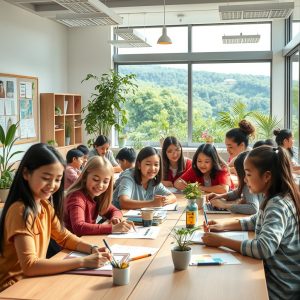
Yet, no journey is meant to be taken alone. The most transformative odysseys are those shared with others, where the collective wisdom of a group becomes the lantern that lights the path. Collaborative learning environments are not merely about working together; they are about the alchemy that occurs when diverse minds converge, each bringing their unique perspective to the table. In these spaces, a child learns that their voice matters, not because it is the loudest, but because it is theirs. They discover the power of listening—not just to the words of others, but to the unspoken emotions, the hesitations, the bursts of inspiration that arise when minds meet.
Consider the quiet child in the corner, the one who rarely speaks but whose eyes miss nothing. In a traditional classroom, they might be overlooked, their potential untapped. But in a collaborative setting, their silence becomes a strength, a space for observation and reflection that others might rush past. When they do speak, their words carry the weight of careful thought, and the group leans in, recognizing the value of what they have to offer. This is the magic of empathy-driven schooling: it does not demand uniformity, but celebrates the richness of difference. It teaches children that their individuality is not a barrier to connection, but the very thing that makes connection possible.
The Hearth of Community
No odyssey exists in isolation. Behind every child’s journey stands a community—a network of parents, mentors, peers, and even the broader world, all playing a role in shaping their path. Community-supported learning is not a new concept, but its modern incarnation is far more dynamic than the one-room schoolhouses of the past. Today, it is a living, breathing ecosystem, where the boundaries between school and home, between learning and life, blur into something fluid and organic. Parents are no longer passive observers, but active participants, their involvement not limited to parent-teacher meetings or homework help, but woven into the very fabric of the child’s education.
Imagine a classroom where a parent’s expertise—whether in carpentry, coding, or storytelling—becomes a lesson for the entire group. Or a school where local artists, scientists, and entrepreneurs are not just guest speakers, but integral parts of the learning experience. This is the power of interactive parental involvement and community-supported learning: it transforms education from a solitary pursuit into a shared endeavor, one where the child sees their own growth reflected in the eyes of those around them. It teaches them that learning is not something that happens to them, but something they are a part of, something they can shape and contribute to in their own way.
The Unseen Threads of Growth
At the heart of this odyssey lies a simple truth: education is not about filling a vessel, but about kindling a fire. The fire of curiosity, of resilience, of empathy—qualities that cannot be measured by tests or grades, but that burn brightly in the hidden chambers of the soul. Holistic development programs understand this. They do not treat the child as a collection of subjects to be mastered, but as a whole being, with a heart that feels, a mind that questions, and a spirit that yearns for meaning. These programs are not add-ons or extras; they are the very foundation of a child’s growth, nurturing not just their intellect, but their emotional well-being, their creativity, their sense of belonging in the world.
When a child is given the space to explore their passions, to fail without fear, and to rise with newfound strength, something remarkable happens. They begin to see themselves not as passive recipients of knowledge, but as active creators of their own destiny. They learn that the path is not always straight, that detours and setbacks are not obstacles, but opportunities to grow. And perhaps most importantly, they learn that their journey is not theirs alone. It is intertwined with the journeys of others, a tapestry of shared experiences, challenges, and triumphs that bind them to the world in ways they never imagined.
The soul’s compass does not point to a single destination, but to the infinite possibilities that lie along the way. It is not a tool for navigation, but a reminder that the journey itself is the purpose—that every step, every question, every moment of doubt or discovery is a thread in the luminous tapestry of a life well-lived. And when a child learns to trust that compass, to follow the quiet pull of their own curiosity, they find that the path was never hidden after all. It was there all along, waiting for them to take the first step.