The Soul’s Anvil: How the Fire of Real-World Skill Acquisition Forges the Unseen Architecture of a Life
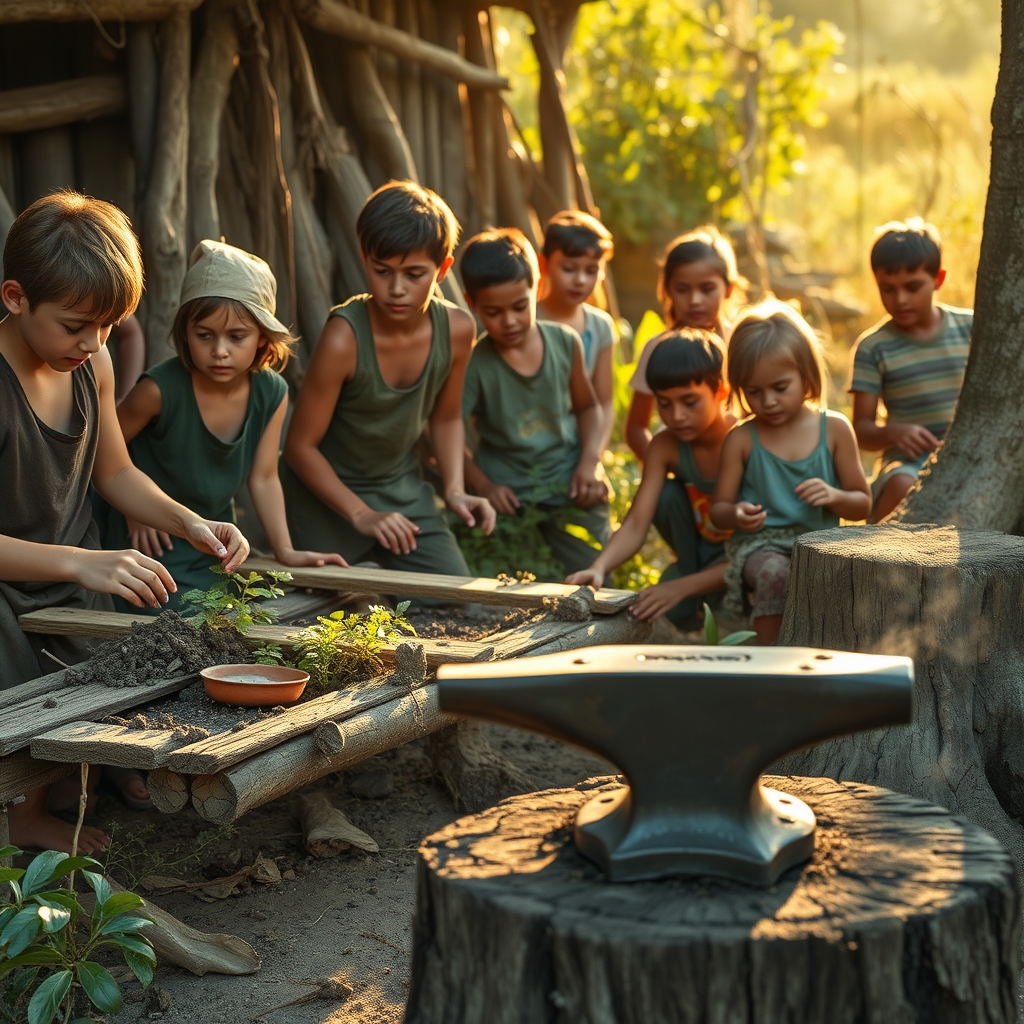
There is a quiet alchemy that happens when a child’s hands first brush against the raw, unyielding edges of the world. It is not the polished surface of a textbook, nor the sterile glow of a screen, but the grit of soil beneath fingernails, the resistance of wood against a saw, the stubborn persistence of a knot that refuses to be untied. These are the moments when learning ceases to be an abstraction and becomes something tangible, something that breathes and bleeds and demands to be understood. This is the fire of real-world skill acquisition, the anvil upon which the unseen architecture of a life is forged.
The First Spark: When Theory Meets the Earth
I remember the first time I watched a group of children build a bridge out of scavenged materials in an empty lot behind their school. They had spent weeks studying engineering principles, calculating load-bearing capacities, sketching designs in notebooks filled with eraser smudges and half-formed ideas. But it was not until they stood in the dirt, arguing over the angle of a plank or the strength of a rope, that the equations in their textbooks suddenly made sense. The bridge was wobbly, uneven, a far cry from the sleek structures they had admired in photographs. Yet, when the first child tentatively stepped onto it and the structure held, there was a collective intake of breath, a shared understanding that something profound had just occurred.
This is the essence of experiential learning—not the passive absorption of facts, but the active engagement with the world’s resistance. It is in the blisters on a child’s hands after a day of gardening, the frustration of a circuit that refuses to light up, the triumph of a meal cooked from scratch. These experiences do not merely teach skills; they teach resilience, adaptability, the quiet confidence that comes from knowing one can shape the world rather than merely observe it.
The Forging of Identity: Who We Become in the Doing
There is a peculiar magic in the way real-world skills shape not just what we know, but who we are. A child who learns to sew does not merely acquire the ability to mend a torn hem; they learn patience, the value of precision, the quiet satisfaction of creation. A teenager who spends a summer working on a farm does not just understand the cycle of growth; they develop a relationship with time, with labor, with the earth itself. These experiences seep into the bones, becoming part of the invisible scaffolding that holds up a life.
I have seen it in the way a once-shy student stands a little taller after leading a community project, their voice no longer trembling when they speak. I have witnessed the transformation of a disengaged learner who, after designing and building a small library for their neighborhood, suddenly sees themselves as someone who can make a difference. These are not just academic outcomes; they are the slow, steady forging of identity. The anvil does not care about grades or test scores. It cares about the weight of a hammer in your hand, the heat of the fire on your skin, the moment when you realize you are capable of more than you thought.
The Unseen Curriculum: What the World Teaches When We Stop Talking
There is a curriculum that exists beyond the walls of a classroom, one that is written in the language of experience. It is the lesson of failure when a carefully planned project collapses, the humility of asking for help when your own hands are not enough, the quiet joy of seeing your work serve a purpose beyond yourself. This is the education that no standardized test can measure, the kind that lingers long after the details of a lesson have faded from memory.
Consider the child who spends a year raising chickens. They learn about biology, certainly, but they also learn about responsibility when they wake before dawn to feed their flock. They learn about loss when a predator takes one of their birds, about economics when they sell eggs to their neighbors, about community when those same neighbors come to rely on their weekly deliveries. These are the lessons that shape character, that teach a child what it means to be part of something larger than themselves.
The Alchemy of Collaboration: When Many Hands Shape the Fire
Real-world skill acquisition is rarely a solitary endeavor. It is in the shared labor of building, creating, problem-solving that the most profound learning often occurs. There is a unique kind of magic in the way a group of children can transform a pile of discarded wood into a play structure, or how a team of teenagers can turn an empty lot into a thriving garden. These projects demand more than individual effort; they require communication, compromise, the ability to see beyond one’s own perspective.
I have watched children argue over the best way to construct a fort, only to see them emerge from the debate with a deeper understanding of each other’s strengths. I have seen teenagers who once struggled to work together discover the quiet satisfaction of a shared goal, the way their differences become assets rather than obstacles. This is the heart of collaborative learning—not the forced group work of a classroom assignment, but the organic, messy, beautiful process of creation that happens when people come together to make something real.
The Echo of the Anvil: How Skills Shape the Soul
The skills we acquire in the real world do more than prepare us for adulthood; they shape the way we see ourselves and our place in the world. A child who learns to cook does not just gain the ability to feed themselves; they develop a relationship with nourishment, with care, with the act of providing for others. A teenager who learns to code does not just gain a marketable skill; they learn to think in systems, to see the invisible structures that govern our digital lives.
These experiences leave echoes, reverberations that shape the soul in ways we cannot always articulate. They teach us that we are not passive recipients of knowledge, but active participants in the world’s unfolding. They remind us that learning is not something that happens to us, but something we do—with our hands, our minds, our hearts. And perhaps most importantly, they show us that the world is not a fixed, unchangeable place, but something we can shape, one skill, one project, one act of creation at a time.
The fire of real-world skill acquisition does not burn brightly in every classroom, but where it does, it leaves its mark. It is in the calloused hands of a child who has learned to build, the steady gaze of a teenager who has learned to lead, the quiet confidence of a young person who knows they are capable of more than they ever imagined. These are the moments when the anvil does its work, when the unseen architecture of a life begins to take shape, forged not in the abstract, but in the grit and heat of the world itself.