The Language of Light: How Shadows in the Classroom Teach Us to See Differently
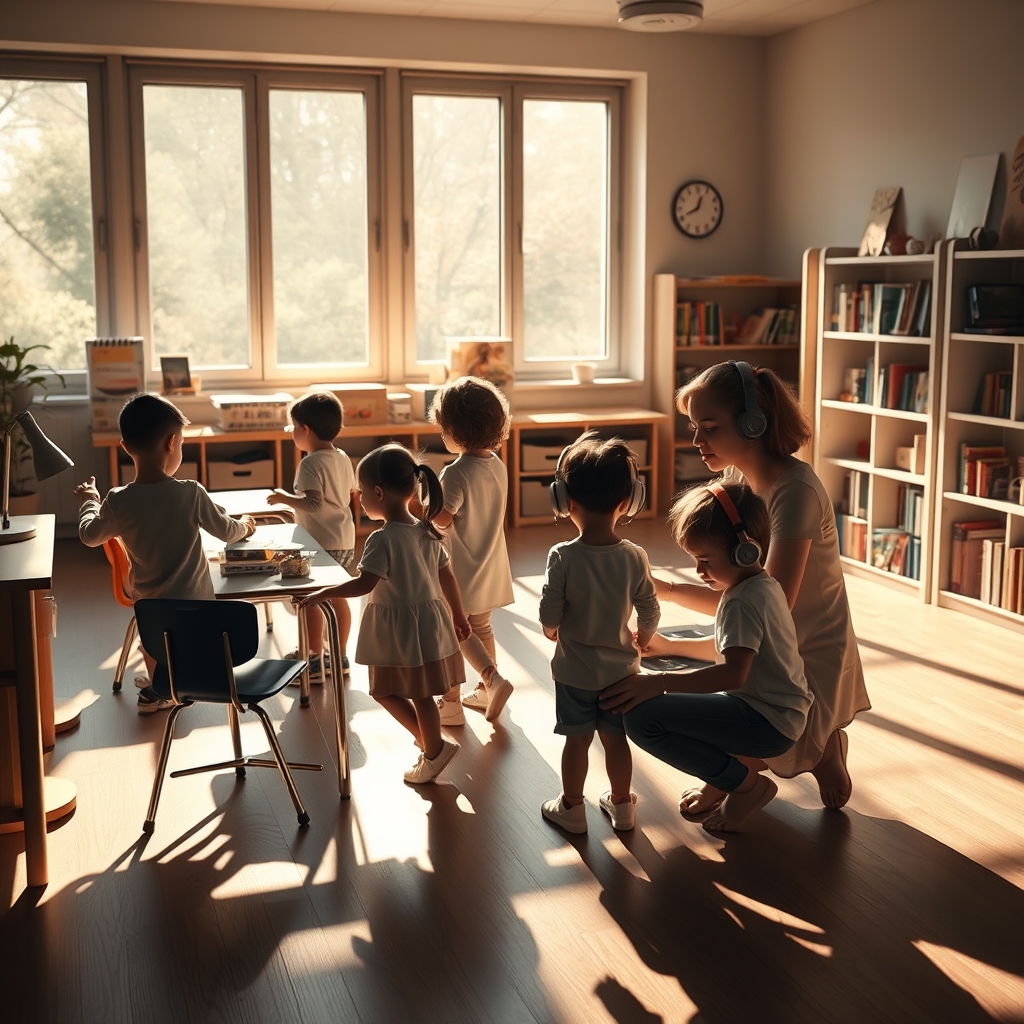
There is a quiet alchemy that happens in the moments when the classroom hums with something deeper than lesson plans and learning objectives. It is the alchemy of light and shadow, of what is seen and what is felt but never spoken. In the hush between questions, in the way a child’s fingers trace the edge of a desk when they think no one is watching, there lies a language more profound than words. This is the language of inclusion—not as a strategy, but as a way of seeing. Not as a checkbox, but as a practice of presence.
The Myth of the Perfectly Lit Room
We have been taught to believe that the ideal classroom is one bathed in even, unobstructed light—bright, clear, and free of shadows. The walls should be neutral, the seating arranged for maximum visibility, the lesson plans meticulously differentiated to ensure no child is left in the dark. But what if the shadows are not the enemy? What if they are, in fact, the very places where real learning begins?
Consider the child who sits slightly apart, not because they are disengaged, but because the glare of the overhead lights hurts their eyes. Or the student who flinches at sudden movements, their nervous system wired differently, their world a series of flickering impressions rather than a steady stream. For them, the classroom is not a uniform space but a landscape of shifting intensities. To demand that they adapt to the light is to ask them to erase part of themselves. True inclusion does not mean eliminating shadows; it means learning to navigate them together.
The Unseen Geography of Need
Every classroom is a map of invisible borders—lines drawn not by geography, but by need. There is the child who needs silence to think, the one who needs movement to process, the one who needs to hear the same instruction three times before it lands. These are not deficits; they are topographies of being. Yet too often, we treat them as obstacles to be overcome rather than landscapes to be explored.
Differentiated instruction is not a technique; it is an act of cartography. It requires us to read the contours of each student’s inner world—the peaks of their strengths, the valleys of their struggles—and to design learning experiences that meet them where they are. This is not about lowering standards; it is about expanding them. It is about recognizing that a child who learns to read at six is not failing if they learn to read at eight, so long as the path they take is paved with dignity.
The Poetry of Small Adjustments
Inclusion is not a grand gesture. It is not a policy or a program, though those things can help. It is the sum of a thousand small decisions—the choice to dim the lights for a child with sensory sensitivities, the decision to let a student fidget with a stress ball during a test, the willingness to sit with a child in silence when words fail them. These are not accommodations; they are acts of love.
And yet, how often do we overlook them? How often do we mistake compliance for belonging, quiet for engagement, stillness for focus? The child who sits perfectly still may not be absorbing the lesson; they may simply be holding their breath. The child who answers every question may not be thriving; they may be performing. The language of light is not about what is visible on the surface, but about what shimmers beneath.
The Risk of Seeing Too Clearly
There is a danger in believing that we can ever fully see another person. The more we try to illuminate the shadows, the more we risk flattening the complexity of the human experience. A child with a learning disability is not just a set of challenges to be managed; they are a universe of curiosity, fear, resilience, and wonder. A classroom that seeks to include must also leave room for mystery—for the parts of a child that cannot be measured, quantified, or neatly categorized.
This is where the art of teaching becomes sacred. It is not about fixing what is broken, but about holding space for what is whole. It is about recognizing that a child’s struggles are not separate from their strengths, but intertwined with them. The same mind that struggles to decode words may see patterns in music that others miss. The same child who finds it hard to sit still may notice details in the natural world that others overlook. Inclusion is not about making everyone the same; it is about making room for everyone to be fully themselves.
The Classroom as a Living Organism
A truly inclusive classroom is not a static space, but a living, breathing organism. It shifts and adapts, not just to the needs of the students, but to the rhythms of the day, the mood of the group, the unspoken currents that flow beneath the surface. It is a place where a lesson plan can be abandoned mid-sentence because a child’s question has opened a door no one knew was there. It is a place where a behavioral intervention is not a script to be followed, but a conversation to be had.
This kind of classroom does not happen by accident. It is the result of teachers who are willing to be vulnerable, to admit when they do not have all the answers, to learn alongside their students. It is the result of schools that value emotional intelligence as much as academic achievement, that see social-emotional learning not as a separate subject, but as the foundation of all learning. It is the result of a system that understands that equity is not about giving everyone the same thing, but about giving everyone what they need to thrive.
And so, the language of light is not just about what we see, but about how we choose to see. It is about looking at a child who is struggling and asking not, “What is wrong with you?” but “What is happening for you?” It is about recognizing that the shadows in the classroom are not voids to be filled, but spaces waiting to be explored. It is about understanding that inclusion is not a destination, but a way of traveling—together, with all our light and all our shadows, toward a place where every child knows they belong.