The Soul’s Crucible: How the Fire of Inquisitive Growth Mindsets Forges the Unseen Bridges of Learning
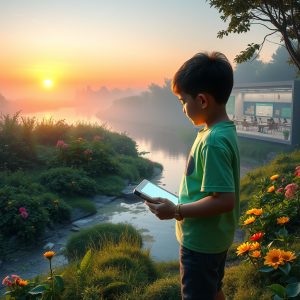
There is a quiet moment, just before dawn, when the world holds its breath. The air is still, the shadows soft, and the mind—unburdened by the weight of the day—begins to wander. It is in these hushed hours that I often find myself reflecting on the nature of learning, not as a structured path laid out by textbooks and syllabi, but as a living, breathing entity that grows within us, shaped by the questions we dare to ask and the curiosity we refuse to silence. This is the essence of an inquisitive growth mindset, a flame that does not merely illuminate the known but burns through the walls of the unknown, forging bridges where none seemed possible.
The Alchemy of Wonder
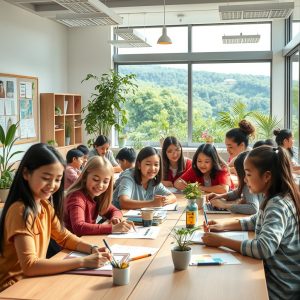
I remember the first time I witnessed the alchemy of wonder in a classroom. It was not in the grand gestures of a teacher delivering a lecture, nor in the polished pages of a textbook. It was in the hesitant raise of a hand, the furrowed brow of a child grappling with a question that had no easy answer. “Why does the sky change color at sunset?” a student asked, and in that simple query, I saw the spark of something profound. It was not just a question about light and atmosphere; it was an invitation to explore, to wonder, to connect the dots between science, art, and the poetry of the natural world. That moment was a crucible, a place where curiosity met possibility, and something new was born.
An inquisitive growth mindset is not a fixed trait but a muscle that strengthens with use. It thrives in environments where questions are not just tolerated but celebrated, where failure is not a verdict but a stepping stone. It is the difference between a classroom that teaches answers and one that teaches how to ask the right questions. The latter does not just fill minds; it ignites them. It transforms learning from a passive absorption of facts into an active, almost sacred, dialogue with the world.
The Unseen Bridges
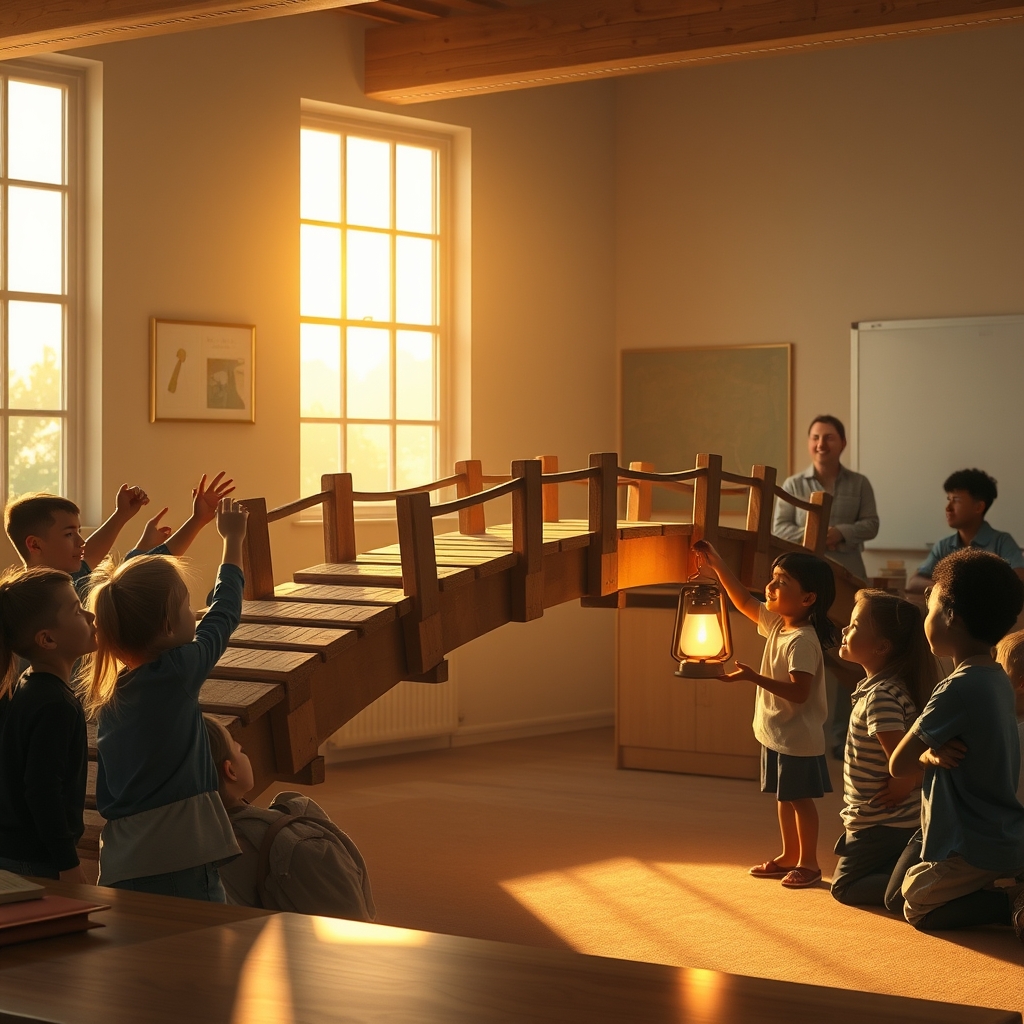
What is it that allows some learners to traverse the chasms of uncertainty while others falter? I have come to believe it is the presence of unseen bridges—those intangible structures built not of wood or steel but of resilience, adaptability, and the unshakable belief that growth is always within reach. These bridges do not appear on any map of education, yet they are the most critical pathways a learner will ever cross. They are forged in the moments when a student stumbles, not once but many times, and yet chooses to rise again. They are strengthened by the hands that reach out—not to carry, but to steady, to remind the learner that they are not alone in their journey.
In a world that often equates intelligence with speed, these bridges are a radical act of defiance. They say: “It is not how quickly you arrive, but how deeply you engage that matters.” They are built by the slow, deliberate work of reflection, by the courage to sit with discomfort, and by the humility to admit that we do not have all the answers. These bridges are not just for the gifted or the naturally curious; they are for every learner who dares to believe that their potential is not fixed but fluid, not a destination but a journey.
The Role of the Guide
If the learner is the traveler and curiosity the compass, then the educator is the guide who walks beside them, not ahead. The best guides do not lead with answers but with questions of their own. They do not dictate the path but illuminate the possibilities. They understand that their role is not to fill a vessel but to kindle a fire. This is the heart of student-centric education, where the learner’s voice is not just heard but amplified, where their interests are not just acknowledged but woven into the fabric of their journey.
I recall a teacher who, instead of assigning a traditional research project, asked her students to identify a problem in their community and design a solution. One student, passionate about environmental sustainability, chose to tackle the issue of food waste in the school cafeteria. What began as a simple inquiry—”Where does our uneaten food go?”—evolved into a full-fledged campaign to compost waste and educate peers. The project was messy, imperfect, and at times frustrating, but it was also alive with the energy of discovery. That student did not just learn about sustainability; she learned that her voice mattered, that her ideas could ripple outward and create change. That is the power of a guide who sees education not as a transfer of knowledge but as a co-creation of meaning.
The Fire That Does Not Consume
There is a fire that burns within every learner, but it is not the fire of consumption—of cramming, memorizing, and regurgitating. It is the fire of creation, of asking, “What if?” and “Why not?” It is the fire that does not destroy but transforms, that turns the lead of uncertainty into the gold of discovery. This fire is not fed by external rewards or the fear of failure but by the intrinsic joy of learning itself. It is the fire that keeps a child awake at night, not because they are anxious about a test, but because they are eager to explore an idea further, to see where it might lead.
Yet, this fire is fragile. It can be smothered by the weight of expectations, by the pressure to conform, or by the belief that learning is a race with a finish line rather than a lifelong journey. It is our responsibility—educators, parents, and communities—to nurture this fire, to protect it from the winds of doubt and the rains of discouragement. We do this not by shielding learners from challenges but by teaching them how to face them with courage and curiosity. We do this by creating spaces where questions are more important than answers, where struggle is not a sign of weakness but a testament to growth.
The Echoes of Learning
Years from now, the facts and figures we memorize may fade, but the echoes of our learning will remain. They will linger in the way we approach problems, in the empathy we extend to others, in the resilience we summon when faced with adversity. These echoes are not created by the content of our education but by the process—the way we were encouraged to think, to question, to connect. They are the proof that learning is not something we do but something we become.
I think of the student who, long after leaving school, still carries the habit of asking questions, of seeing the world not as a series of static facts but as a living puzzle waiting to be explored. I think of the adult who, when faced with a challenge, does not ask, “Can I do this?” but “How can I learn to do this?” These are the true measures of an education that values growth over grades, curiosity over compliance. They are the quiet victories of a system that dares to believe in the unseen bridges of learning, in the fire that does not consume but illuminates, in the soul’s unending journey toward understanding.
The dawn will break soon, and with it, the noise of the day will rush in. But for now, in this stillness, I am reminded that the most profound learning does not happen in the glare of the spotlight but in the quiet corners of the heart, where the questions we ask and the bridges we build shape not just what we know, but who we are. And perhaps, that is the greatest lesson of all—that the journey of learning is not a path we walk alone, but a landscape we co-create, one question, one bridge, one fire at a time.