The Soul’s Tapestry: How the Threads of Personalized Learning Weave the Invisible Map of a Child’s Heart
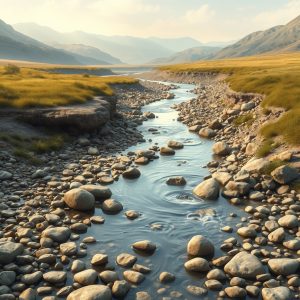
There is a quiet magic in the way a child’s mind unfurls—like the first light of dawn spilling over a landscape still half-dreaming, still half-wild. It does not arrive all at once, but in fragments: a question that lingers like the scent of rain on warm earth, a moment of frustration that hardens into resolve, a spark of joy that ignites something deeper than understanding. These are the threads of a learning journey, not plotted on any standardized chart, but woven into the very fabric of who they are becoming. And yet, so often, we treat education as if it were a straight path, a race to be won, rather than the meandering river it truly is—one that carves its own course through the bedrock of experience.
The Geography of a Child’s Curiosity
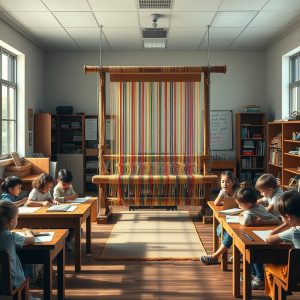
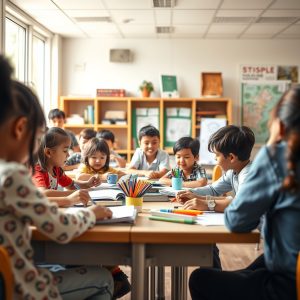
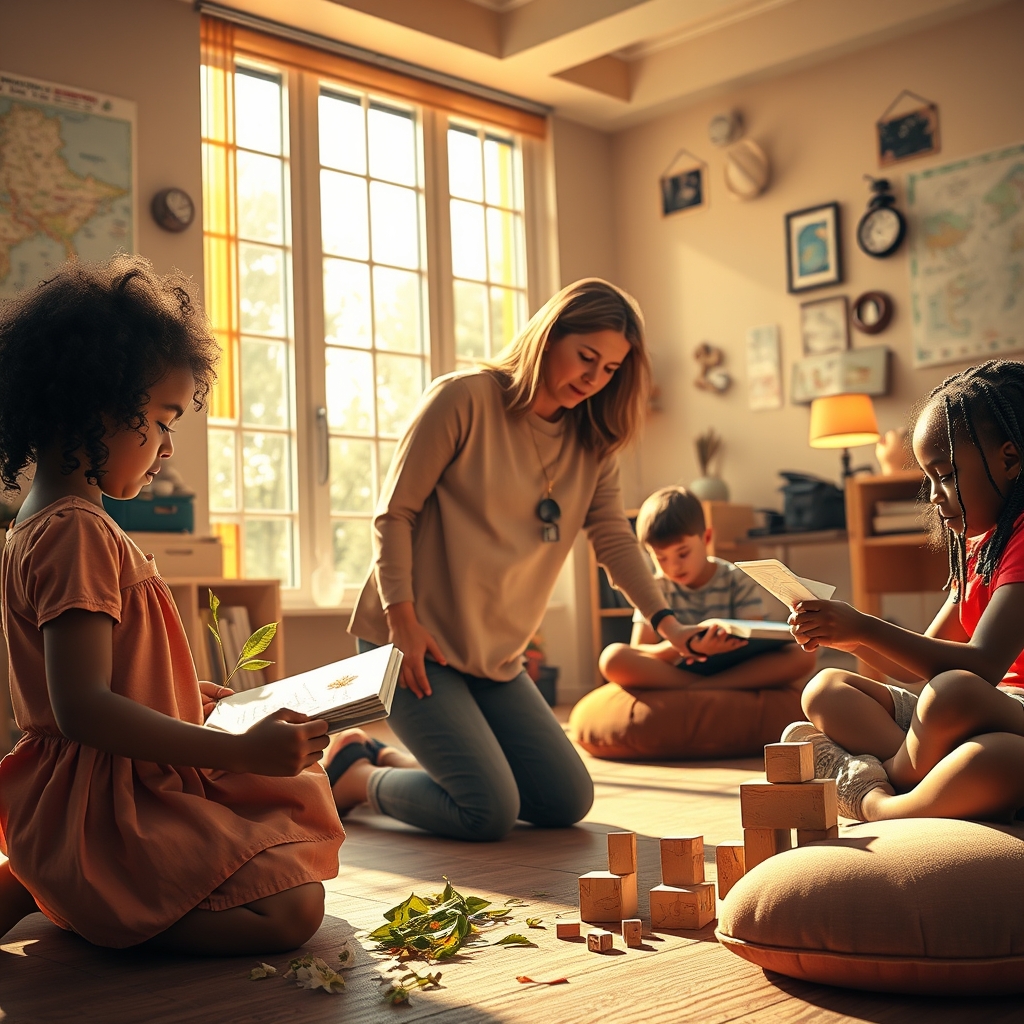
I remember the first time I saw a classroom that bent to the shape of its students rather than the other way around. It was not a place of rigid desks and silent compliance, but a living organism, pulsing with the energy of inquiry. Children clustered around tables, their voices overlapping like birdsong at dusk, each question a different note in the same unfolding melody. One child traced the veins of a leaf with reverent fingers, while another built a miniature city from blocks, her brow furrowed in concentration. A third sat cross-legged on the floor, lost in a book that had nothing to do with the day’s lesson but everything to do with the hunger in her eyes.
This was not chaos. This was the geography of curiosity, a landscape where every hill and valley was shaped by the child’s own footsteps. The teacher moved among them like a gardener tending to delicate shoots, offering water where it was needed, pruning where growth had stalled, but never dictating the direction of the branches. She understood what so many of us forget: that learning is not a destination, but a way of traveling.
The Alchemy of Being Seen
There is an alchemy in being truly seen—not just as a student, but as a person with a universe unfolding inside them. I recall a boy named Eli, who carried his quietness like a shield. In most classrooms, he would have been invisible, another face in the crowd, another name on a roster. But here, his silence was not mistaken for disengagement. His teacher noticed the way his fingers drummed against his thigh when a math problem frustrated him, the way his eyes lit up when the conversation turned to stars. She did not force him to speak, but she created spaces where his voice could emerge on its own terms—a whispered question during a stargazing field trip, a carefully drawn constellation map shared with the class, a poem about the night sky that left his classmates silent with wonder.
This is the heart of personalized learning: the understanding that no two journeys are the same, and that the most profound growth often happens in the spaces between the lesson plan and the child’s own rhythm. It is not about lowering standards, but about recognizing that the path to mastery is not a straight line. Some children sprint; others meander, pausing to examine every pebble along the way. Some need scaffolding; others need space to leap. The magic happens when we stop treating these differences as obstacles and start seeing them as the very essence of the journey.
The Living Curriculum
What if we reimagined the curriculum not as a fixed set of knowledge to be imparted, but as a living thing, responsive to the needs of the moment? I have seen classrooms where the walls themselves seemed to breathe, where the day’s lessons were not dictated by a textbook but by the questions that bubbled up from the children’s own lives. A unit on ecosystems became a study of the creek behind the school, where students measured water quality, identified species, and debated the ethics of human intervention. A history lesson transformed into a living museum, where children embodied the voices of the past, their words echoing with the weight of lived experience.
This is not just project-based learning; it is the recognition that the world itself is the greatest teacher. When children see their questions reflected in the curriculum, when they understand that their voices matter, something shifts. The classroom is no longer a place to endure, but a space to explore. The teacher is no longer the sole authority, but a guide, a fellow traveler on the road to discovery.
The Unseen Threads of Belonging
But perhaps the most powerful aspect of this kind of learning is the way it weaves the invisible threads of belonging. In a system that values conformity, it is easy to feel like an outlier, a square peg in a world of round holes. But when the classroom bends to accommodate the child, rather than the other way around, something extraordinary happens: the child begins to see themselves as part of something larger than themselves. They are not just a student; they are a contributor, a thinker, a creator. Their voice is not just tolerated; it is celebrated.
I think of a girl named Aisha, who struggled with reading until she discovered graphic novels. In most schools, she would have been labeled as behind, her progress measured against a rigid timeline. But here, her teacher recognized that her love of stories was the key to unlocking her potential. She was given time to explore visual narratives, to create her own comics, to see herself as a storyteller long before she mastered the mechanics of traditional reading. And when she finally did pick up a chapter book, it was not because she had been forced, but because she had come to see herself as someone who could.
The River and the Shore
Education is often compared to a journey, but perhaps it is more like a river—ever-changing, ever-moving, shaped by the land it flows through. The shore is not a fixed destination, but a shifting boundary, a place where the water meets the earth and something new is born. The most meaningful learning happens not when we try to control the river, but when we learn to navigate its currents, to trust its flow, to understand that its power lies in its ability to adapt.
And so, as we think about the future of education, perhaps the question we should be asking is not how to make children fit into the system, but how to make the system fit into the lives of children. What if we designed schools not as factories, but as ecosystems—vibrant, interconnected, alive with the energy of discovery? What if we saw each child not as a vessel to be filled, but as a flame to be kindled? The threads of their learning journeys are already there, waiting to be woven into something beautiful. All we have to do is step back, listen, and let the tapestry unfold.