The Soul’s Compass: How the Whisper of Curiosity Guides the Unseen Pathways of Learning
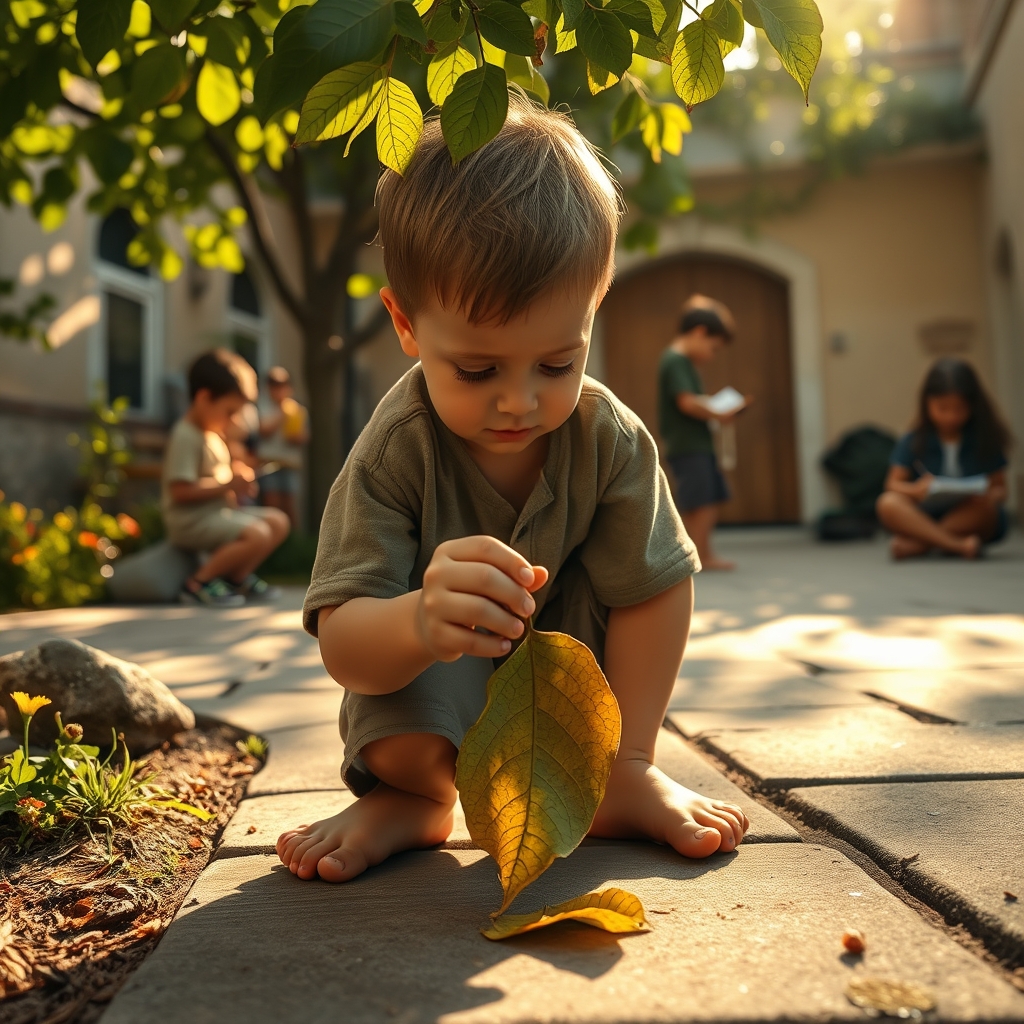
The first time I truly understood the power of a question, it wasn’t asked by a teacher, nor was it scribbled in the margins of a textbook. It came from a child—small, barefoot, standing in the middle of a sunlit courtyard, her fingers tracing the veins of a fallen leaf. “Why does the wind take some leaves and not others?” she wondered aloud, her voice barely rising above the rustle of the trees. In that moment, the world seemed to pause, as if the universe itself had leaned in to listen. There was no lesson plan, no standardized test, no rubric to measure the weight of her inquiry. Yet, in that simple, unscripted question, I glimpsed the quiet magic of a mind awakening—not because it was told to, but because it *wanted* to.
The Geography of Wonder
Education, at its most profound, is not a map but a compass. It does not dictate the path; it points toward the horizon and whispers, “Go.” The most transformative learning journeys are those that begin with a question, not an answer. They are the ones that unfold like a river carving its own course, guided by the contours of curiosity rather than the rigid lines of a preordained route. When we allow children to follow the pull of their own wonder, we do more than teach them facts—we teach them how to *think*, how to *feel*, how to *be* in a world that is vast, mysterious, and endlessly interpretable.
Yet, how often do we mistake the map for the territory? How often do we hand a child a set of directions and call it education, forgetting that the most important lessons are not the ones we deliver but the ones they discover? The soul of learning does not reside in the accumulation of knowledge but in the act of seeking it. It is the difference between being given a lantern and learning how to light one yourself. The former illuminates the path for a moment; the latter teaches you how to find your way in the dark.
The Alchemy of Listening
There is a kind of listening that transcends the ears. It is the listening of the heart, the kind that hears not just the words a child speaks but the unspoken longing beneath them. When a student asks, “Why do we have to learn this?” they are not always questioning the content. Sometimes, they are asking, “Does this matter to *me*?” And in that question lies the seed of engagement—or its absence. The most effective educators are not those who speak the loudest but those who listen the deepest, who recognize that every question is an invitation, every hesitation a doorway.
This is the essence of student-centric education: the understanding that learning is not a one-way transmission but a dialogue. It is the shift from “I will teach you” to “Let us discover this together.” When we create spaces where questions are not just tolerated but celebrated, where mistakes are not failures but signposts, we do more than educate—we empower. We tell children, in the most profound way possible, that their thoughts, their curiosities, their *voices* matter. And in that validation, we plant the seeds of a lifelong love of learning.
The Unseen Architecture of Belonging
No child learns in isolation. Even the most solitary moments of discovery are woven into the fabric of a larger community—a classroom, a family, a world. The most vibrant learning environments are those that recognize this truth, that understand education is not just about the individual but about the relationships that shape them. Collaborative learning is not merely a pedagogical strategy; it is a recognition of our fundamental interconnectedness. When children work together, they do more than solve problems—they learn empathy, patience, and the quiet art of seeing the world through another’s eyes.
Yet, collaboration is not just about group work or shared projects. It is about creating a culture where every voice is heard, where every child feels seen. It is the difference between a classroom where children *sit* together and one where they *belong* together. This is the soul of inclusive education: the understanding that diversity is not a challenge to be managed but a strength to be celebrated. When we embrace the unique perspectives, abilities, and backgrounds of every learner, we do more than teach tolerance—we cultivate a community where difference is not just accepted but cherished.
The Quiet Revolution of Small Hands
There is a revolution happening in education, and it is not happening in the halls of power or the pages of policy. It is happening in the quiet, unassuming moments—the child who builds a bridge out of popsicle sticks and learns more about physics than any textbook could teach; the student who plants a garden and discovers the slow, patient magic of growth; the teenager who organizes a community project and realizes, for the first time, the power of their own agency. These are the moments that define a life, the ones that linger long after the facts have faded.
Project-based learning is not just a method; it is a philosophy. It is the belief that the most meaningful lessons are not the ones we memorize but the ones we *live*. When children engage in real-world projects, they do more than apply knowledge—they *create* it. They learn that education is not something that happens *to* them but something they actively shape. They discover that their hands, their minds, their voices have the power to change the world, even if only in small ways. And in that discovery, they find something far more valuable than a grade: they find purpose.
The Fragile Ecosystem of the Heart
Education is not just about the mind; it is about the heart. The most brilliant lessons will fall flat if a child does not feel safe, seen, or valued. This is the essence of holistic development—the understanding that learning is not just an intellectual endeavor but an emotional and spiritual one. When we prioritize well-being, we do more than create happier students; we create *better* learners. A child who feels secure is a child who is free to take risks, to ask questions, to explore the unknown. They are not weighed down by the fear of failure but buoyed by the thrill of discovery.
Yet, well-being is not just about absence—absence of stress, absence of conflict, absence of struggle. It is about presence: the presence of connection, of meaning, of joy. It is the quiet assurance that someone sees you, that someone cares. This is the foundation of all learning, the invisible soil in which the seeds of curiosity take root. When we nurture the heart, we do more than prepare children for tests; we prepare them for life.
The wind does not choose which leaves to carry; it simply moves, and some leaves rise with it. So too with learning. The most transformative education is not the one that dictates but the one that invites—not the one that controls but the one that *liberates*. It is the whisper of curiosity that guides the unseen pathways of the soul, the quiet pull of wonder that draws us forward, step by step, into the unknown. And in that journey, we do not just learn about the world—we learn about ourselves.