
The Unseen Compass: How the Quiet Pull of Belonging Guides the Lost Back Home
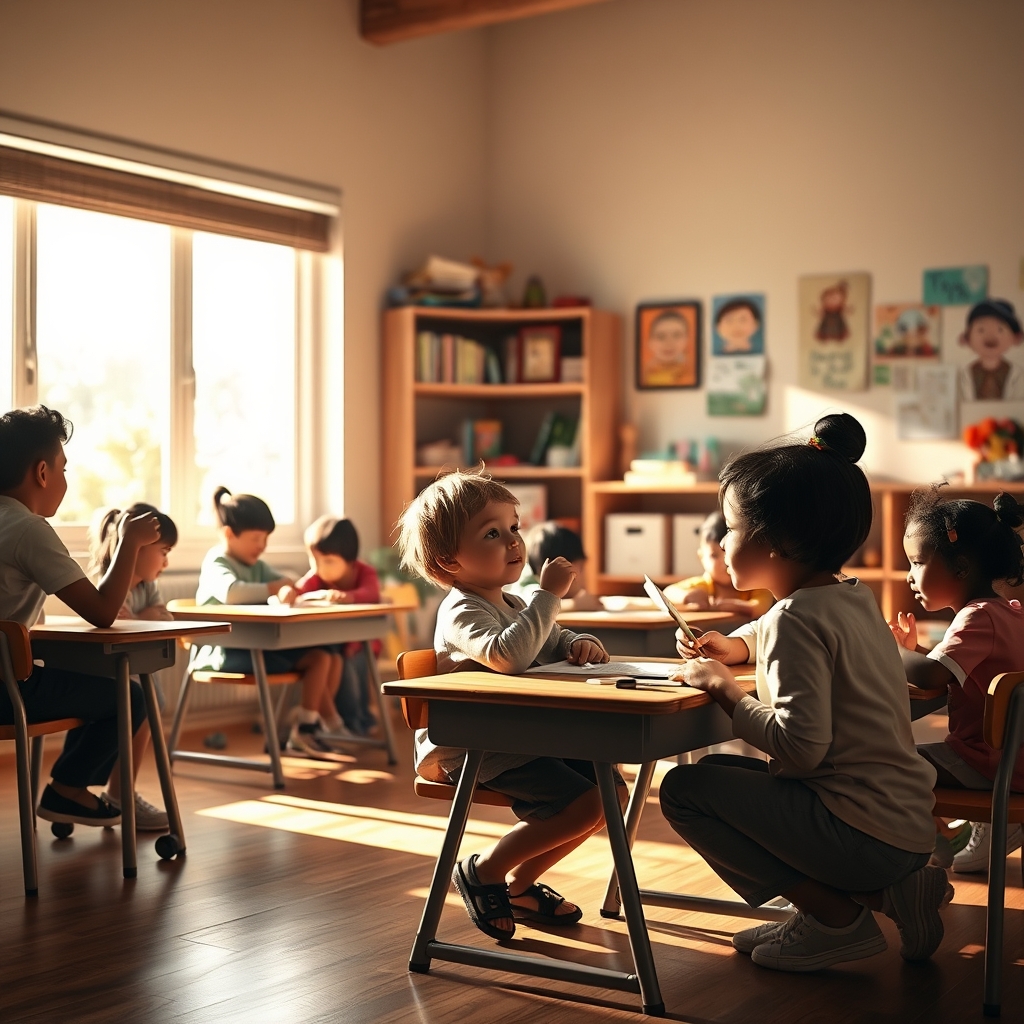
There is a moment, often unnoticed, when a child realizes they are not alone. It is not the grand gesture of inclusion—no fanfare, no applause, no carefully scripted lesson on empathy. It is quieter than that. It is the way a teacher lingers after class to ask if you’re okay, not because they suspect something is wrong, but because they’ve learned the shape of your silence. It is the way a peer slides a book across the table without a word, as if to say, I see you. It is the unspoken understanding that the classroom, for all its rules and routines, is also a place where the heart’s quietest needs are met with something deeper than answers—with presence.
The Geography of the Unseen
We speak often of inclusive education as if it were a destination, a fixed point on a map where every child arrives, suitcase in hand, ready to be welcomed. But belonging is not a place. It is a current, a subtle pull beneath the surface of the everyday, guiding the lost back toward the shore. The classroom is not just a room; it is a landscape of invisible contours—hills of anxiety, valleys of frustration, rivers of unspoken questions. The teacher’s role is not to flatten these contours but to teach children how to navigate them, to recognize that the terrain is not theirs alone to bear.
Neurodiversity is not a deviation from the norm; it is a different way of moving through the world. The child who stims in the corner is not broken; they are reading the room in a language the rest of us have forgotten. The student who struggles to sit still is not defiant; they are a creature of motion in a world that demands stillness. The quiet one at the back of the room is not disengaged; they are listening to frequencies the rest of us cannot hear. Inclusive education does not ask them to change. It asks us to expand our understanding of what it means to be present.
The Alchemy of Small Adjustments
Differentiated instruction is not a pedagogical trick; it is an act of devotion. It is the teacher who realizes that the same lesson can be delivered in a hundred different ways—a diagram for the visual learner, a story for the auditory one, a hands-on activity for the kinesthetic. It is the recognition that an Individualized Education Plan (IEP) is not a bureaucratic hurdle but a love letter to a child’s potential. It is the understanding that equity is not about giving every child the same thing; it is about giving each child what they need to thrive.
But how do we measure the weight of a small adjustment? How do we quantify the moment a child’s face lights up because someone finally took the time to explain something in a way that made sense? The metrics of education—test scores, attendance rates, graduation percentages—are blunt instruments. They cannot capture the quiet triumph of a child who, for the first time, raises their hand not because they are certain of the answer, but because they trust that their voice will be met with something other than judgment.
The Unwritten Curriculum of the Heart
We teach math and science and history, but the most important lessons are the ones we never plan. They are the lessons of resilience, of kindness, of the quiet courage it takes to show up when the world feels like a place that was not built for you. Social-emotional learning is not a unit in the curriculum; it is the air the classroom breathes. It is the way a teacher models empathy not through a lecture, but through the way they listen—really listen—to a child’s story. It is the way a classroom community rallies around a student who is struggling, not out of pity, but out of a shared understanding that we are all, in some way, fragile.
Mental health education is not a separate subject; it is woven into the fabric of the day. It is the teacher who notices when a student’s mood shifts, not because they are trained in psychology, but because they have learned to read the subtle language of human emotion. It is the way a school responds to a crisis—not with panic, but with a quiet, steady presence that says, You are not alone in this. It is the understanding that healing is not a linear process, but a spiral, and that sometimes the most important thing we can do is simply to hold space for a child’s pain.
The Architecture of Trust
An inclusive classroom is not built in a day. It is not the result of a single professional development workshop or a well-intentioned policy. It is the cumulative effect of a thousand small acts of courage—the teacher who admits they don’t have all the answers, the student who speaks up when they see an injustice, the administrator who listens when a parent says, This isn’t working for my child. It is the understanding that trust is not given; it is earned, day by day, through consistency, through honesty, through the quiet commitment to showing up, even when it’s hard.
Behavioral interventions are not about control; they are about connection. The child who acts out is not a problem to be solved; they are a story waiting to be heard. The strategies we use—positive reinforcement, restorative practices, trauma-informed care—are not tools to manipulate behavior; they are bridges to understanding. They are the way we say to a child, I see you. I hear you. You matter.
The classroom is not a machine; it is a garden. And like any garden, it requires patience, care, and the understanding that growth is not always visible. Some seeds take longer to sprout. Some need more water, more sunlight, more time. But if we tend to them with love, if we trust in the quiet pull of belonging, they will find their way toward the light. And in that moment, when a child realizes they are not alone, the classroom becomes more than a place of learning. It becomes a home.